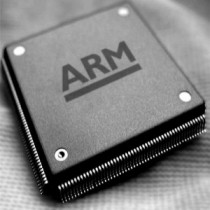
Chip manufacturer ARM Holdings had a record third-quarter despite slowdowns reported in most parts of the industry, in large part due to the insatiable demand for chips fitted to smartphones and tablets.
The Cambridge-based, UK firm reported revenue of £120.2 million ($192.3m), up 20% from the same time last year. Pre-tax profits were £55.8 million ($89.12m), up 38.8% on last year's figures slightly exceeding analysts' predictions of revenue around £116.5 million ($186.07m) and £51.1 million ($81.61m) profits.
The figures were helped in large part by 43% growth in the processor division with licensing revenue of £37.8 million ($60.37m). The company signed 28 new chip licenses this quarter, 14 of which are entirely new agreements.
"In mobile, ARM is benefitting from an increase in the Cortex-A family chips used in smartphones and tablets," ARM's chief executive, Warren East, said in a statement. "In fact, Cortex-A shipments into mobile devices grew 300 percent year-on-year." East also commented that the company shipped 1 billion chips for use in smartphones this quarter, and a further 900 million used in embedded devices.
Microcontroller sales, used in everyday appliances and toys saw shipments rise by 80% year-on-year. ARM's market share for 2010 was just 10%.
"In the third quarter of 2011, we saw a continued high level of design activity with many new customers licensing ARM technology for the first time, driven by end market requirements for smarter, low-power chips. Demand for our technology has come from a broad range of applications, from sensors to computers," ARM's CEO added.
ARM recently unveiled that its new super efficient Cortex A7 is to be paired with a Cortex A15, providing high performance and super efficiency in one package. The company also noted that the new Cortex A7 chip would make it easier to sell sub-$100 smartphones that ARM believes will help boost sales in developing regions.