Sign up for a new account or log in here:
Research in Motion has entered into an agreement with Microsoft that will allow them to use the software maker’s Extended File Allocation Table (exFAT) file system on select BlackBerry devices. RIM joins a number of other electronics manufacturers that have signed similar IP licensing agreements including Panasonic, Sanyo and Sony, just to name a few.
exFAT allows for audio and video files up to five times larger than was capable on previous FAT technology. The file system also increases the speed at which those files can be accessed in addition to enabling seamless data portability and transfers between computers and electronic devices.
“Today’s smartphones and tablets require the capacity to display richer images and data than traditional cellular phones,” said David Kaefer, general manager of Intellectual Property (IP) Licensing at Microsoft. “This agreement with RIM highlights how a modern file system, such as exFAT can help directly address the specific needs of customers in the mobile industry.”
A patent licensing agreement such as this normally wouldn’t be worth reporting but as The Verge points out, Microsoft is clearly looking to make a point here. The company is in the middle of a legal dispute with Motorola in Germany over the use of Microsoft’s legacy file system FAT. The agreement with RIM no doubt wants to show Google, Motorola and others that it’s simply easier to license patents rather than ending up in a courtroom battling it out.
One would have to assume that RIM is looking to add exFAT support in BlackBerry 10, the company’s next generation OS that should be released sometime early next year. Terms of the agreement were not made public.
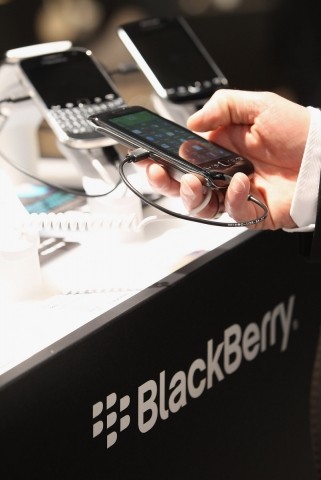
Is the phone pictured charging... itself?! xD
[link]
I can't imagine a phone needing larger file sizes than 2GB/4GB for audio/video. Maybe I'm not looking at the bigger picture. I have always assumed the main reason for exFat was larger volumes with compatibility for legacy operating systems not larger file capabilities.
Unlimited power!
I can't imagine a phone needing larger file sizes than 2GB/4GB for audio/video. Maybe I'm not looking at the bigger picture. I have always assumed the main reason for exFat was larger volumes with compatibility for legacy operating systems not larger file capabilities.
Transporting around HD movies... I use my phone as a replacement for a thumb drive nowadays. Also it can plug directly into a TV and be used as a portable movie player so even then, you can actually use the HD movies directly.
Also recording HD video will allow near unlimited length recordings.
I can't imagine a phone needing larger file sizes than 2GB/4GB for audio/video. Maybe I'm not looking at the bigger picture. I have always assumed the main reason for exFat was larger volumes with compatibility for legacy operating systems not larger file capabilities.
I understand you don't know much about video files but bigger file sizes can support high bitrates and longer lengths for videos. A good 720p rip will be around 4-5 GB so you won't notice any compression artifacts.
I did question the comment about file size being the reason for exFAT usage instead of volume size being the reason. If you did store large files, you wouldn't store many of them on a FAT32 volume. My question really wasn't as much about the use of exFAT as it was why the choice of exFAT over NTFS. The exFAT file system was developed long after Microsoft abandoned FAT32 for NTFS as an OS file system.
VOBs are broken into 1GB files. ExFAT wouldn't help with DVDs, but M2TS files would benefit.
Lets fall back to the original comment, what is it that sets the barrier of only getting 5 times larger audio and video files with exFAT? The file size limit of exFAT is 16 EiB (4 Billion times FAT32 file limitation), EiB is allot more than 5 times larger than GiB so what is the limitation of exFAT usage for audio and video?
As stated here;
Here's a technical note: For anyone trying to use an external HD to swap files between an Apple and a Microsoft computer. In theory, MacOS and Windows 7 are both fully compatible with the exFAT file system. MacOS since version 10.6.5. and Windows since XP.
But in reality when formatting your HD into exFAT you need to make sure to set the cluster size equal to or less than 1024 bytes. If you set the value higher you'll get a “unable to mount” error on a Mac. I haven't found much information about this online, however this thread on Apple Support describes the same problem.
sometimes they actually get used on cross-platforms. Extremely useful
to attach a camera or cellphone to ANY system and upload the contents.
We're talking better than DVD quality here. 720p @ 4-5GB with x264 codec looks a million dollars next to a raw DVD vob. SGS3 phone has a 720p screen natively too. You will see the difference even on a phone.
The NTFS security is a bit of a pain in the ass. If one machine attaches local administrator privileges to an NTFS formatted external device with no "Everyone" privileges then you throw that in another machine, how does it go if that admin account doesn't exist there? I've seen this happen. I had to throw a drive back in the original machine, open up the permissions then throw it back in the target.
I'd say they were just after a file system that was more portable minded. exFAT is just a better FAT32 without the burden of the security rubbish that NTFS has. Maybe the layout is more space/performance efficient as well? Just speculating there.
| Trending | Featured |
Get free exclusive content, learn about new features and breaking tech news.