Intel issues statement on Raptor Lake crashes, asks mobo makers to revise extreme BIOS defaults

zohaibahd

Posts: 977   +19
Staff
What just happened? Owners of Intel's latest 13th-gen Raptor Lake or 14th-gen Raptor Lake Refresh processors have been complaining about instability issues for a while. Now, the chip giant is finally shedding some light on what's causing the problems.
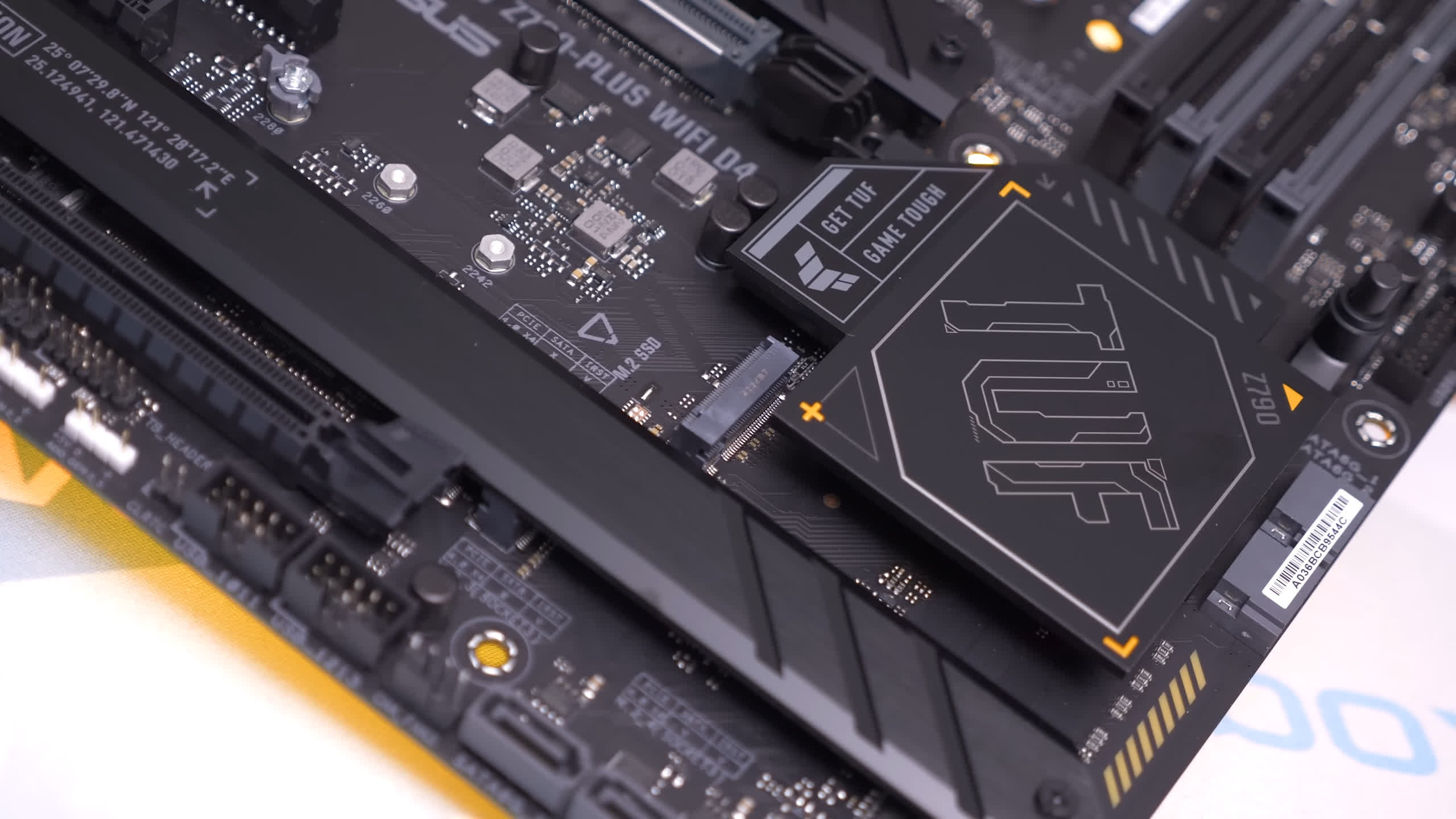
According to a leaked message seemingly intended for motherboard manufacturers, which was obtained by Igor's Lab, Intel says the root cause hasn't been pinpointed yet, but it has spotted a pattern. The company claims the stability headaches are mostly impacting unlocked, overclockable systems where manufacturers have gone a little overboard disabling safeguards in pursuit of pushing frequencies.

In the notice, Intel states it has "observed the majority of reports of this issue are from users with unlocked/overclock capable motherboards." It goes on to list some of the specific settings and protection mechanisms that have been switched off on many 600 and 700-series boards, like Current Excursion Protection, thermal velocity boost limits, C-state disabling, and jacking up power limits beyond recommended specs.

Essentially, in the endless battle for benchmarking crowns, some motherboard manufacturers have been shipping BIOSes primed for pushing Intel's latest chips way past their typical operating conditions out of the box. While great for boosting scores, it's also been a recipe for crashes, BSODs, and other instability symptoms under heavy workloads like gaming.

The company wants system builders to start implementing default BIOS profiles that stick to Intel's officially recommended ranges. It even says motherboard vendors should start showing warnings when users try enabling any unlocked or overclocking features that could destabilize things.

Intel's still digging into pinpointing the core issue but plans to publish official BIOS setting recommendations by May to help get things under control. In the meantime, a few manufacturers have already started rolling out BIOS updates to dial back some of the more extreme power profiles and limits.

Asus was first, pushing out new BIOS revisions with an "Intel Baseline Profile" for reining in the voltage and power thresholds. Gigabyte put out some beta BIOS builds last Friday aiming to enhance stability by killing off the "optimized" high-power presets thought to be inducing the crashes. MSI took a different approach, opting to release a guide showing users how to manually reset power and current caps back to Intel's recommended defaults.

Even Nvidia has weighed in, with its latest GeForce driver release notes pointing GPU owners with 13th- or 14th-gen Intel chips to troubleshooting resources if they're experiencing crashes, out-of-memory errors, or other instability – presumably from the same underlying issue.

So, if you've had problems with your shiny new Raptor Lake CPU going a little haywire, help is on the way. Just be ready to accept a bit of a performance tradeoff, at least until Intel and its partners can get a real fix implemented.

Permalink to story:

 
Sounds like Intel has a sort of "wink and nod" relationship with the mobo manufacturers here, or at least looked the other way.

The idea that there are mobos out there without a true stock setting is nuts. I think most people would assume that dropping a CPU in and not messing with the UEFI means the chip is running at stock settings, not at "MSI optimized defaults" or whatever, which is what I am gathering as this whole issue unravels.
 
Most users experienced enough to complain to intel would be using overclocked boards. So it makes sense that most reports are from overclocked boards. However the detail is in the number of non overclocked boards still reporting the issue.

There’s an issue and it lays with intel.
 
It's irrelevant anyway as all the CPU review sites finished their testing months ago in unlimited power mode and those numbers will continue to come up when you search for performance comparos, and they aren't going anywhere. Doesn't matter if you can't get that performance out of the box as they've already made the sale and how many will test it to find out?
 
Performance these days is good enough that overclocking is kinda silly, especially on the CPU side. While looking at benchmarks might convince people otherwise, I see old mid ranged CPUs capable of supporting 100FPS in modern games. I can't really "feel" anything over 120 and I don't start to notice FPS until it gets below 70. So as long as a CPU can play most games between 80 and 120FPS then I don't see a point.
 
Hardware unboxed showed that if the mobo allows 999W for 4096s then Intel regard that as in spec and not overclocked. Steve lays the blame directly on Intel that has been doing this for over a decade.

Asus says the Intel defaults are PL1 = PL2 = 253W. Gigabyte on the other hand claims Intel defaults are PL1= 125W and PL2 = 188W. Asus defaults only lose 5-10% performance compared to the let it rip defaults. Gigabyte's defaults lose more like 11-20%+. Asus' settings lower power by 40W and cpu runs much cooler. Gigabyte's obviously a lot less power but takes big hit in performance and is slower than 13600K often in games.

I would experiment with undervolting and/or power limits like PL1 = 150W, PL2 = 200W if I owned Intel.

Now my on my 5800X I'm using 117W PPT and curve optimizer with 26 negative on most cores except my preferred cores. My temperatures don't even go over 65C in stress test Cinebench R23, Prime95 and my package power is 119W. Yet my performance went up in all core tests Normal temps are in the 40-50s for most applications. And my fans never go beyond about 40% max RPM.
 
The company wants system builders to start implementing default BIOS profiles that stick to Intel's officially recommended ranges.
.....
Intel's still digging into pinpointing the core issue but plans to publish official BIOS setting recommendations by May to help get things under control.

If they do have official "recommended ranges" they can answer right on the spot instead of waiting until May.
Maybe yes.
Maybe no.
Maybe Intel may be the new Boeing.
 
It's irrelevant anyway as all the CPU review sites finished their testing months ago in unlimited power mode and those numbers will continue to come up when you search for performance comparos, and they aren't going anywhere. Doesn't matter if you can't get that performance out of the box as they've already made the sale and how many will test it to find out?
Which is why Intel owes all end users a refund.
 
Hardware unboxed showed that if the mobo allows 999W for 4096s then Intel regard that as in spec and not overclocked. Steve lays the blame directly on Intel that has been doing this for over a decade.

Asus says the Intel defaults are PL1 = PL2 = 253W. Gigabyte on the other hand claims Intel defaults are PL1= 125W and PL2 = 188W. Asus defaults only lose 5-10% performance compared to the let it rip defaults. Gigabyte's defaults lose more like 11-20%+. Asus' settings lower power by 40W and cpu runs much cooler. Gigabyte's obviously a lot less power but takes big hit in performance and is slower than 13600K often in games.

I would experiment with undervolting and/or power limits like PL1 = 150W, PL2 = 200W if I owned Intel.

Now my on my 5800X I'm using 117W PPT and curve optimizer with 26 negative on most cores except my preferred cores. My temperatures don't even go over 65C in stress test Cinebench R23, Prime95 and my package power is 119W. Yet my performance went up in all core tests Normal temps are in the 40-50s for most applications. And my fans never go beyond about 40% max RPM.
You can UV Intel too.
 
It is all good until something goes wrong, and people will turn their back on you. This is exactly what is happening. Intel left the guidance loose, and when xxxt hits the fan, they just blame it on the board makers even though both are to be blamed.
 
Does everyone remember when unlocked multipliers became a thing? FX-60 days? Intel gave us the freedom to do what we wanted with their CPUs. They will turbo to those frequencies, but not very long. So, yes, intel let manufacturers play fast and loose with power limits and overclocking but we need to keep something in mind, we asked for this. I had an AM2 720BE that I upgrade from my Athlon x2 whatever, I can't remember anymore it's been so long. We wanted unlocked power limits and overclocking options.

AMD starting doing that and Intel followed suit with their K series CPUs. "Binning" used to be a real practice in overclockering so the idea that Intel says "it can go this high but we don't promise for how long" along side with "we gave you and the mobo manufacturers all the overclocking freedom you want and it's not working well, now it's our fault?"

Nah, I don't buy that. The i9s are overclocking CPUs. Workstation users would go threadripper first and xeon second.

These things aren't unstable at base clocks which are the only things that are marketed as 24/7 stable. And let's not forget the LGA has tons of stability problems, AMD has problems with LGA, too, on the ryzen 7000 series. Not as bad, but the spring tension in the pins on the LGA systems loosen up and move as the CPU heats up. This creates unpredictable interference and that leads to stability issues. Probably wouldn't be as big an issue on Intel systems if they didn't have nearly twice the power limit, but it's Still a mechanical flaw of LGA systems that can't be engineered out.
 
Back