And now, for some context
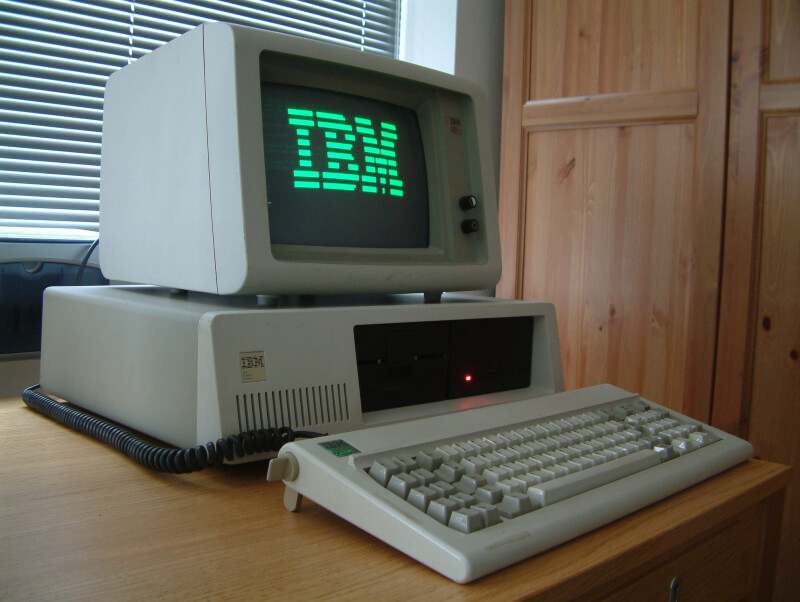
IBM wasn't built for speed. It was a blue-suited, mainframe-making monolith that moved deliberately, by design. But in 1980, with Apple and Commodore carving out territory in the burgeoning personal computing space, IBM found itself facing a choice: adapt or get left behind.
After IBM executive Bill Lowe demoed a system based on the Atari 800 to top leadership, including CEO Frank Cary and President John Opel, the company's Corporate Management Committee considered acquiring Atari as a shortcut to entering the personal computer market.
The idea was to expedite the development of IBM's first PC, thinking it would take them "four years and three hundred people" to complete the work from scratch otherwise.
Instead of pursuing the acquisition, IBM approved an internal skunkworks initiative known as "Project Chess," granting Lowe permission to assemble a small, autonomous team to build a prototype in just 30 days and deliver a market-ready product within a year.
This team of twelve engineers became informally known as "the Dirty Dozen," a nod to the 1967 war film about a band of outsiders on a high-risk mission. The nickname reflected both the unorthodox nature of their task and their separation from IBM's traditionally conservative development culture.
A crude prototype was ready by August 1980, meeting the initial 30-day challenge. Remarkably, the team also met the one-year goal: in August 1981, IBM launched the IBM 5150 Personal Computer, internally codenamed "Acorn."
Also see: The IBM PC: The Most Influential Non-Invention
The original IBM PC featured a 4.77 MHz Intel 8088 processor, 16 kilobytes of RAM (expandable to 256 KB), one or two 160 KB 5.25" floppy disk drives, and an optional color monitor. Its base price was $1,565, equivalent to approximately $5,200 in 2025 dollars.
According to the book IBM's 360 and Early 370 Systems, the members of the Dirty Dozen were:
- John Harmon
- Jim Woo
- Martin Halfhill
- Russell Brunner
- John McNulty
- Robert Crouch
- Frank Sordello
- Rick Wilford
- Steven MacArthur
- Carlo Westenskow
- Stanley Brown
- Harold Yang
This list was derived from interviews with team members Martin Halfhill and Harold Stephens.
The Dirty Dozen played a crucial role not only in the development of the IBM PC but also in shifting IBM's corporate culture toward a more agile, competitive approach to innovation.
Their success helped legitimize the personal computer in business environments and cemented IBM's place in the PC industry, laying the foundation for the open hardware architecture that would later become the industry standard.