First look: The latest handheld from Asus focuses less on raw power and more on rethinking how people use the device. The newly announced ROG Xbox Ally X20 retains much of the original hardware but pairs it with a higher-end display and, more notably, a set of AR gaming glasses that push it beyond the typical handheld gaming formula.
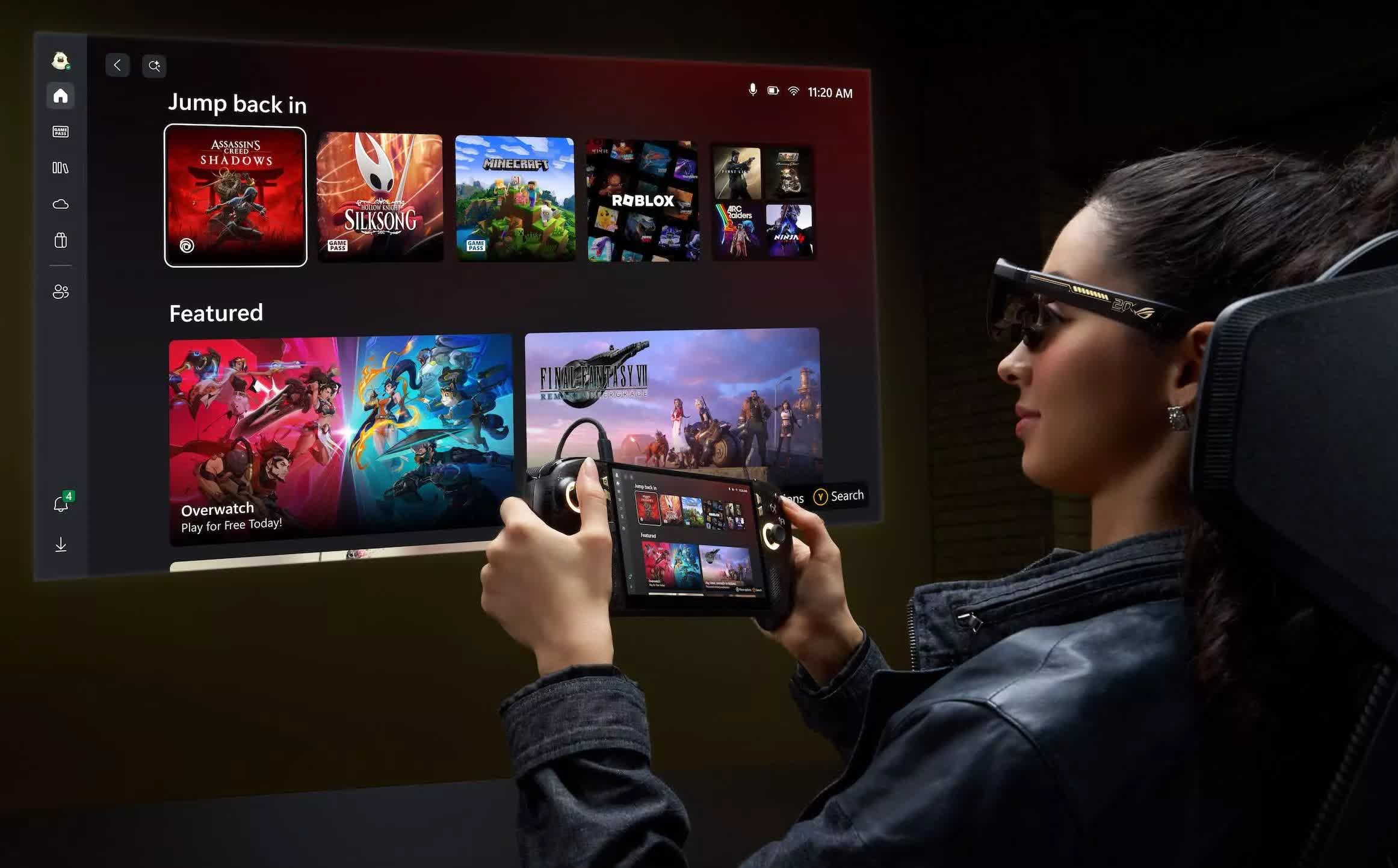
The most immediate change is the screen. The ROG Xbox Ally X20 replaces the 7-inch LCD found in the current model with a 7.4-inch OLED panel. On paper, this is a modest increase in size, but the technical upgrade is more meaningful. Asus says the display reaches 1,400 nits of brightness and meets VESA DisplayHDR 1000 standards, with support for Dolby Vision. Response time is rated at 0.2 milliseconds, and the company claims an anti-reflective coating reduces glare by 65%.
Beyond the display, the system remains largely unchanged. It continues to run on an AMD Ryzen AI Z2 Extreme processor, with 24GB of RAM and 1TB of NVMe storage. There are no major architectural changes, positioning this release more as a refinement than a step forward in performance. Asus is still relying on software-driven enhancements such as Auto Super Resolution, which uses AI to upscale games to higher resolutions and smoother frame rates by leaning on upscaling rather than brute-force rendering.
Some of the more visible updates appear in the design and controls. The Ally X20 introduces a translucent chassis and a revised input layout. Asus is also adding a so-called transforming D-pad that, according to the company, "can easily be converted" between four-way and eight-way input, giving players more flexibility depending on the game.
The device also uses Gulikit TMR joysticks, which are expected to reduce or eliminate stick drift over time. The face buttons have been redesigned to sit flush with the chassis, allowing thumb movements to feel smoother and more continuous.
The biggest shift, however, comes in how the device is sold. Asus is not offering the ROG Xbox Ally X20 as a standalone handheld. Instead, it will only be available as part of a bundle that includes the ROG XReal R1 Edition 20 Gaming AR Glasses. That choice changes the value proposition entirely, reframing it as part of a larger, more immersive setup rather than a standalone handheld.
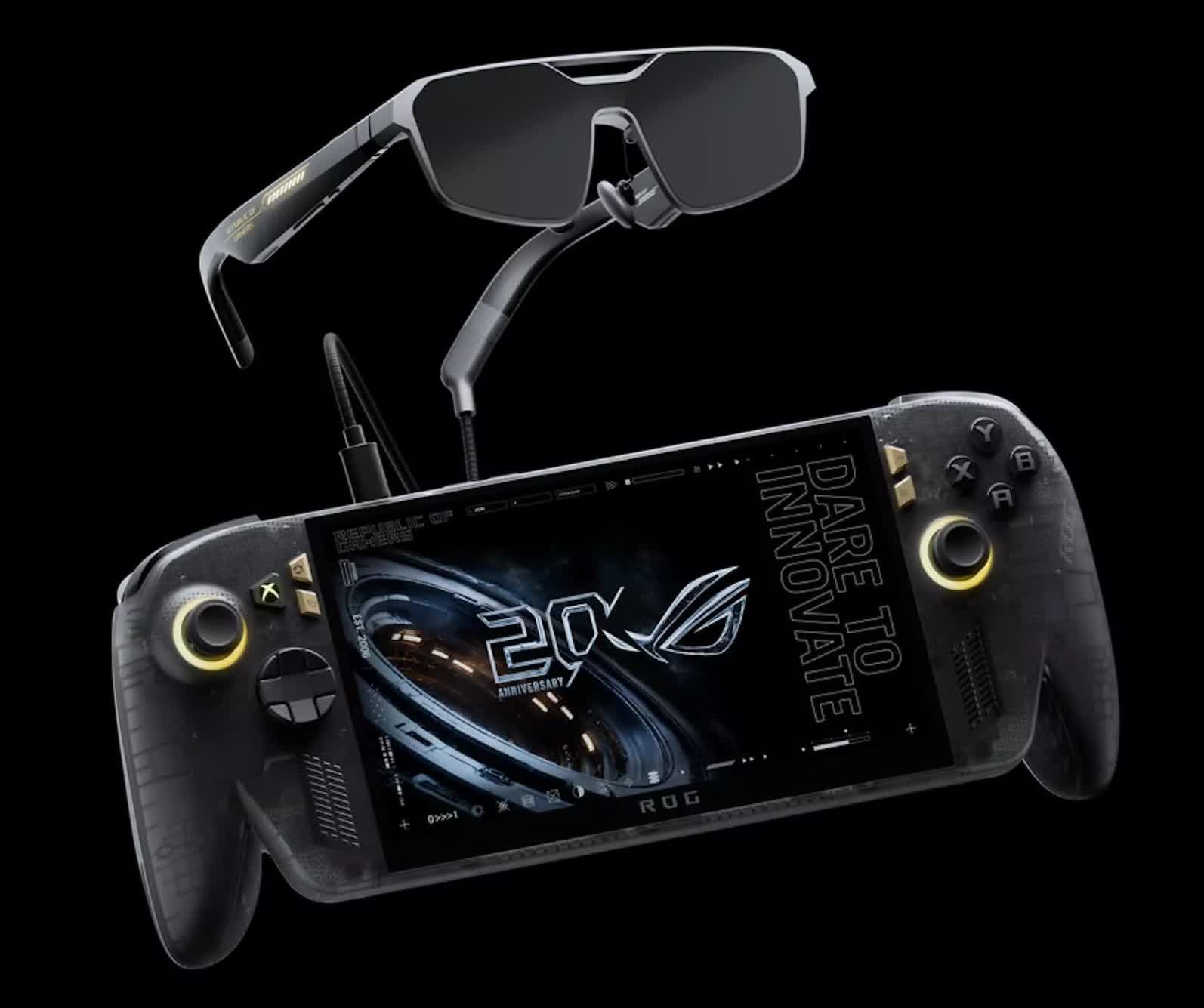
The ROG XReal R1 Edition 20 Gaming AR Glasses are designed to function as a virtual display system. Asus says the glasses simulate a virtual screen equivalent to roughly 171 inches at a distance of four meters, running at 240Hz and covering nearly the entire field of view, with response times measured at 0.01 milliseconds.
The glasses also support 3DoF head tracking, allowing the virtual screen to either move with the user's head or remain fixed in space. They connect directly to the handheld via USB-C, effectively turning the ROG Xbox Ally X20 into a portable driver for a much larger virtual display.
That bundling strategy introduces some uncertainty, particularly around pricing. Asus has not announced an official price, but the individual components provide a rough benchmark. The current ROG Xbox Ally X is priced at around $1,000, while the XReal R1 glasses retail for about $850. Combined, the package is likely to land at a premium price point, especially as competitors in the handheld market are already pushing prices higher.
The lack of a standalone option could limit the device's appeal to buyers primarily interested in a traditional handheld experience. At the same time, it signals that Asus is betting on AR as a meaningful extension of portable gaming rather than a niche add-on.
As of now, the company has not provided a release date for the bundle.
Asus ROG Ally X20 goes OLED, but the mandatory AR glasses kill the bundle


