also @ TechSpot: Google, NASA join forces to build quantum computing laboratory

Orange UK's Intel-powered San Diego smartphone reviews are in

By

On June 15, 2012, 5:00 PM

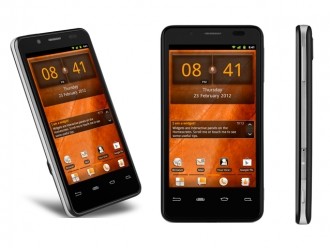
The first Intel-powered smartphone has finally launched, albeit only in the UK for now. Orange UK’s San Diego handset admittedly won’t be rivaling today’s top smartphones but with a competitive price of £200 or just over $300 USD, could it be a viable option for the budget-minded consumer?

At the heart of the handset is an Intel Atom Z2460 CPU clocked at 1.6GHz and 1GB of RAM. Other key specifications include a 4-inch LCD display that operates at 1,024 x 600, an 8MP camera with LED flash that’s capable of 1080P video recording, a micro-USB port and a micro-HDMI port. But the real question is, how does it perform?

Engadget recently spent some time with the smartphone and while they were impressed with the display and the battery, it did fall short in a few categories. Aesthetically, they feel that the phone looks extremely cheap. The fact that it runs a dated Android 2.3 Gingerbread operating system doesn’t bode particularly well either and the 8MP camera is supposedly disappointing.

CNET UK reports that Intel’s chip does deliver smooth web browsing and was able to best some other popular choices in a number of benchmarks. For example, the handset scored 3,721 in the Quadrant benchmark, higher than Samsung’s Galaxy Nexus and the LG Optimus 2X. But despite the processor’s achievements, they feel that San Diego is hampered by a clunky interface and too much Orange bloatware.

Odds are that this phone will never make it to the US but if nothing else, it gives us a glimpse of what Intel is capable of in the smartphone market.

, , , , , , ,

Related Products from Product Finder

HTC One X

The HTC One X runs Android 4 OS with the new Sense 4 user interface and the phone's powerful NVIDIA Tegra 3 processor, which has 4 processing cores that can run at speeds of up to 1.5GHz. On the front face of the phone is the secondary 1.3 megapixel camera for video chatting, which supports the primary 8 megapixel camera, with LED flash. It measures 134.5mm x 70.8mm (5.3in x 2.8in) and weight only 134g (4.7oz).

79 Reviews

Sprint 4S

Read expert reviews, pros & cons, and product information about Sprint 4S. There are 174 reviews available so far.

89 Reviews

Verizon Wireless Galaxy Nexus

Read expert reviews, pros & cons, and product information about Verizon Wireless Galaxy Nexus. There are 136 reviews available so far.

78 Reviews

Samsung AT&T Galaxy S 2

Read expert reviews, pros & cons, and product information about Samsung AT&T Galaxy S 2. There are 166 reviews available so far.

101 Reviews

User Comments: 8

Got something to say? Post a comment
  1. I am not a betting man in anyway, but my calculated guess is in about 5 years time, things will look whole lot different in the SoCs market, and IF Intel is able to implement Tick/Tock development model in place for its mobile SoCs, ARM in all probability will be relegated to No 2.

  2. My only thing about this phone is, I heard some or many of the applications are being emulated since it's an x86 processor? Is this true and if so, how does it affect performance?

  3. @Jibberish

    AnandTech reviewed Xolo (the 1st smartphone based on this SoC) and it gives you pretty good idea about performance. Generally it is on par.

    [link]

  4. @Jibberish

    AnandTech reviewed Xolo (the 1st smartphone based on this SoC) and it gives you pretty good idea about performance. Generally it is on par.

    [link]

    I read their review and the phone does AWESOME. I can imagine how it will do once optimized for Ice Cream Sandwich. I was just wondering if applications would be faster were they not emulated?

  5. I think its fairly safe to assume that any software emulated takes at least some form of performance hit. That said, it also gets to a point where "faster" performance is pretty much unnoticeable in the hands of the average user.

    Going completely off-subject here, (but it provides the perfect example of what I mean), the difference between a mechanical disk and an SSD is like night and day when using it to load and run an OS. However, in my experience its hard to tell the difference between a slower SSD and a faster SSD. They're both blazing quick compared with a 7,200 RPM mechanical disk, but outside of synthetic tests you can only "feel" so much of a difference.

  6. I think its fairly safe to assume that any software emulated takes at least some form of performance hit. That said, it also gets to a point where "faster" performance is pretty much unnoticeable in the hands of the average user.

    Going completely off-subject here, (but it provides the perfect example of what I mean), the difference between a mechanical disk and an SSD is like night and day when using it to load and run an OS. However, in my experience its hard to tell the difference between a slower SSD and a faster SSD. They're both blazing quick compared with a 7,200 RPM mechanical disk, but outside of synthetic tests you can only "feel" so much of a difference.

    Well if you'll excuse me for saying comparing two SSD's is a bit different because SSD's, whether slow or very fast throughput, have one thing in common. Very very fast latency. And that's what people notice. When you click on an application, it boots up right away! But on smart phones its different. You can almost always tell the different between two identical phones because at the moment they're just not that fast and Android especially has tell tale areas that stutter for example. Just my opinion though.

  7. Aye, I never said it was foolproof, was just giving an example that makes sense, and explaining that a user can only recognise a certain improvement in performance. Beyond that limit, its simply unnoticeable.

    Another example. I really don't notice the performance difference in day to day usage between my previous single core 1.4GHz Nokia Lumia 710, and my new Samsung Galaxy S3. Windows Phone is considerably better optimised for the hardware than Android is, and a quad-core is proper overkill for all but the most intensive of apps anyway.

    At the end of the day, an emulated app that takes 200ms longer to load is going to make absolutely no difference to the user. It's not even noticeable, and that's the point I was trying to get at really.

  8. Not being funny - but if they're serious about getting into this market - they need to be 'giving' these away at £50 a pop - to grab market share

Recently commented stories

Post a new comment

Social Login & Guest Posting TechSpot Members
Login here or sign up for free,
it takes about a minute.
Get complete access to the TechSpot community. Join thousands of technology enthusiasts that contribute and share knowledge in our forum. Get a private inbox, upload your own photo gallery and more.
TechSpot on:

Subscribe to TechSpot

Get free exclusive content, learn about new features and breaking tech news.