A brief explanation why
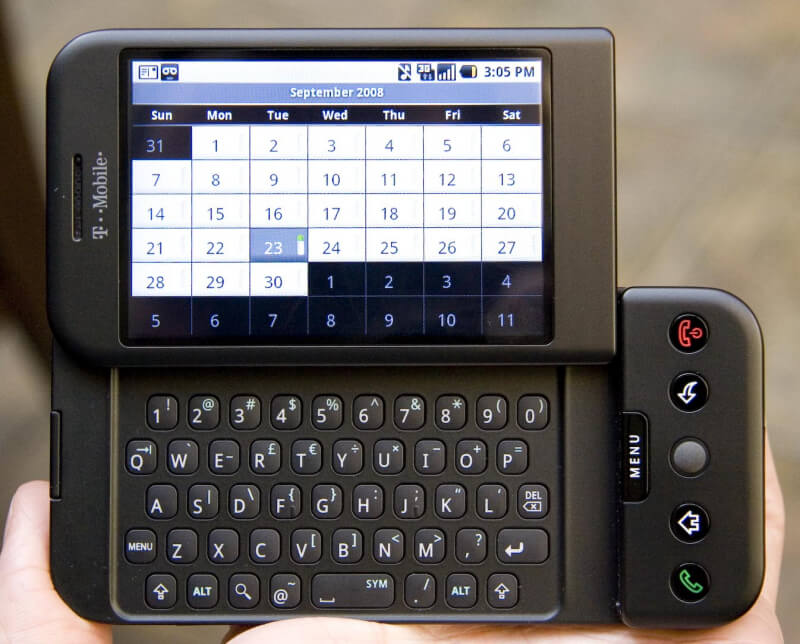
Before Samsung Galaxy phones were a thing, and before "Android vs. iPhone" became a cultural divide, there was a chunky little slider called the HTC Dream – or, as it was branded in the United States, the T-Mobile G1. Released in October 2008, it was the first commercially available Android smartphone, a proof-of-concept for Google's open-source mobile platform.
At launch, the Dream looked a bit odd next to the sleeker iPhone 3G. It featured a 3.2-inch capacitive touchscreen, a slide-out QWERTY keyboard, and a distinctive curved chin that gave it personality – and plenty of criticism. Beneath its plastic shell ran a 528 MHz Qualcomm MSM7201A processor, 192 MB of RAM, and 256 MB of internal storage (expandable via microSD up to 16 GB). The 3.15-megapixel autofocus camera wasn't remarkable, but in 2008, it did the job. Power came from a 1150 mAh lithium-ion battery, which sounds minuscule now but was sufficient for a day of email, web browsing, and Google Maps navigation.
The Dream shipped with Android 1.0, long before anyone had heard of "Cupcake" or "Donut." There was no multitouch, no on-screen keyboard, and the Android Market (the early version of Google Play) offered only a handful of apps. But the operating system was unmistakably different. It introduced features that would define Android for years: a notification shade, home screen widgets, and tight integration with Google services like Gmail, YouTube, and Maps – elements iPhone users wouldn't see until later. It was messy, a little geeky, and wildly ambitious.
At the time, the smartphone world revolved around BlackBerry, Palm, and Windows Mobile devices – all of them catering to business users and messaging addicts. Consumers looking for style turned to the Motorola Razr, while power users swore by Nokia's N95 and its cutting-edge (for the day) camera.
Apple's iPhone had already redefined what a smartphone could be, but it remained a closed ecosystem. Android promised something radical: an open platform that anyone – any manufacturer, any carrier – could build on.
HTC, a then-little-known Taiwanese manufacturer best known for its Windows Mobile handsets, took that promise and ran with it. As was customary at the time, the HTC Dream had a full QWERTY keyboard and trackball (albeit physically hidden beneath the display), in addition to volume controls on the side of the device. The Dream's design might look clunky now, but in 2008 it was an audacious bet on a new idea: that phones could be more like PCs... but they wouldn't run Windows, but someone else's open software.
Early reviews were mixed. Tech journalists praised Android's flexibility but criticized the G1's clumsy aesthetics and lack of polish. The trackball navigation felt old-school even then, and the absence of multitouch (Apple held the patents tightly) was a glaring omission. Yet the potential was obvious. The G1 was a phone for tinkerers – and that community would soon define Android's early years.
Within a year, newer devices like the HTC Magic (T-Mobile MyTouch 3G), Samsung Moment, and Motorola Cliq refined the experience. But the Dream had already done its job. It proved Android could work – not just as a piece of software, but as the foundation for a diverse hardware ecosystem.
Looking back, the HTC Dream feels almost primitive – thick, plasticky, and slow by modern standards. Yet from that awkward slider came the software that would go on to power billions of devices and dominate the global smartphone market.