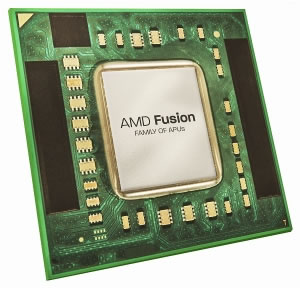
With AMD's successor to Trinity already shipping to computer makers we've been hearing more and more details about the upcoming parts. Last week, Chinese website Expreview revealed the initial lineup for Richland on the desktop, and now VR-Zone is complementing that with the actual clock speeds for each model.
As previously reported, Richland APUs are essentially a tweaked version of Trinity, built using the same 32nm process and "Piledriver" CPU micro-architecture, but featuring higher clock speeds and tweaked graphics – branded as 8000-series but they're actually based on the same Radeon HD 6000-series foundation as Trinity's.
If the published specifications are accurate, we'll be seeing a 300MHz boost in base clock speed across the entire range, as well as 200-400MHz higher Turbo speeds over equivalent Trinity APUs and only a modest 37-84MHz bump in GPU frequencies. Despite this AMD has managed to maintain the same 65W and 100W TDPs present on Trinity. The initial lineup will consist of four quad core models and a couple of dual core chips.
Leading the pack is the A10-6800K featuring four cores clocked at 4.1GHz (4.4GHz Turbo), built in Radeon HD 8670D mobile graphics clocked at 844MHz and a 100W TDP. Next up the quad core A8-6600K maintains the 100W power rating and unlocked design but offers lower clock speeds at 3.9GHz (4.2GHz Turbo) while stepping down to Radeon HD 8570D integrated graphics. A couple of 65W quad-core variants will be available as the A10-6700 and A8-6500, equipped with HD 8670D and HD 8570D IGPs respectively, but featuring slightly lower clock speeds to keep power consumption down and locked 'non-K' designs.
Lastly, a couple of dual core APUs with 65W TDPs will be available in the form of the unlocked A6-6400K with HD 8470D integrated graphics and the A4-6300 featuring HD 8430D integrated graphics.
The new chips should hit the market in Q2 2013 and will be replaced later this year with the 28nm Kaveri APU.
| Model | Cores | Threads | Base frequency | Turbo | L2 cache | GPU | GPU frequency | TDP |
|---|---|---|---|---|---|---|---|---|
| A10-6800K | 4 | 4 | 4.1GHz | 4.4GHz | 4MB | HD 8670D | 844MHz | 100W |
| A10-6700 | 4 | 4 | 3.7GHz | 4.3GHz | 4MB | HD 8670D | 844MHz | 65W |
| A8-6600K | 4 | 4 | 3.9GHz | 4.2GHz | 4MB | HD 8570D | 844MHz | 100W |
| A8-6500 | 4 | 4 | 3.5GHz | 4.1GHz | 4MB | HD 8570D | 800MHz | 65W |
| A6-6400K | 2 | 2 | 3.9GHz | 4.1GHz | 1MB | HD 8470D | 800MHz | 65W |
| A4-6300 | 2 | 2 | 3.7GHz | 3.9GHz | 1MB | HD 8370D | 760MHz | 65W |