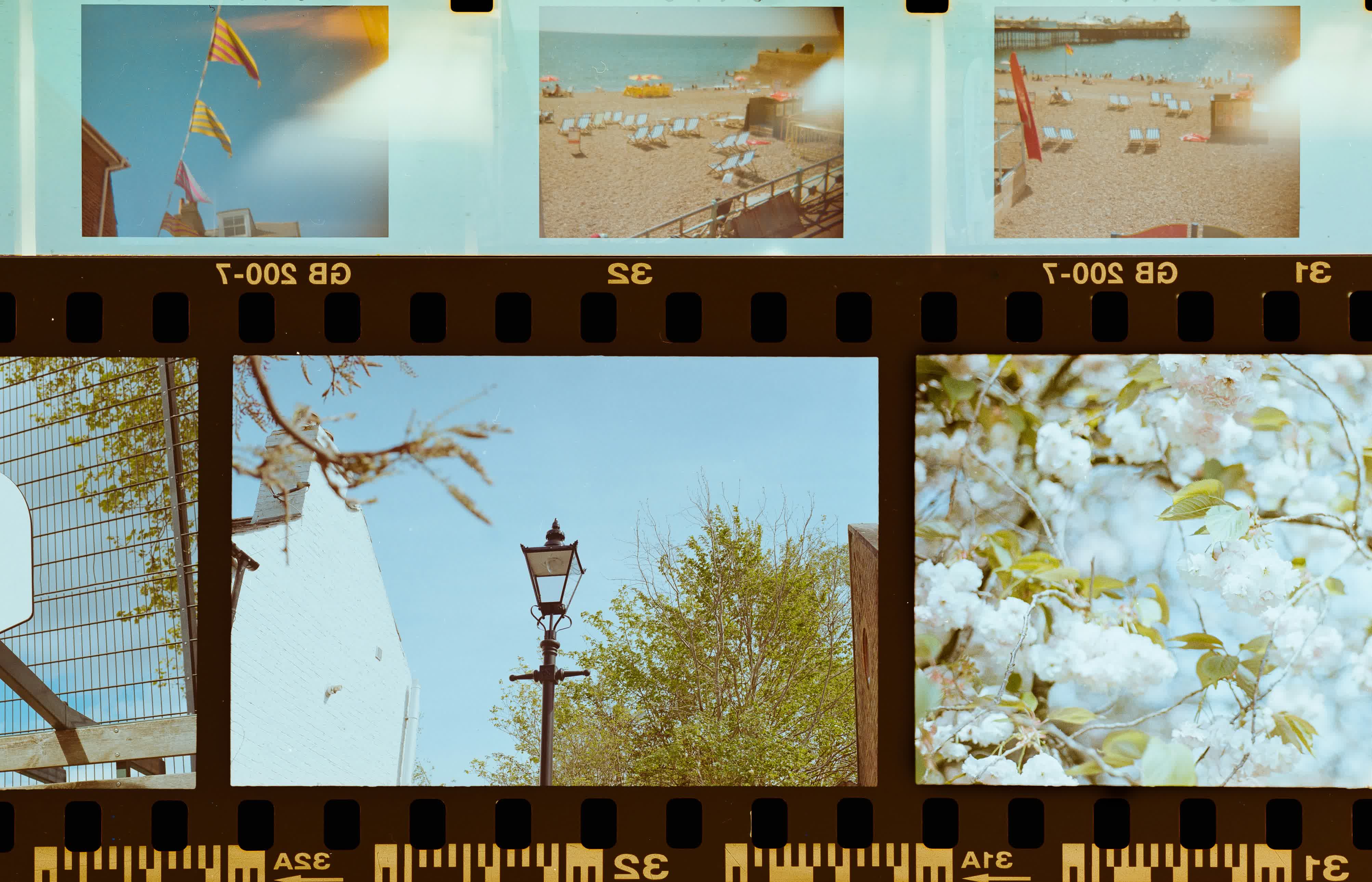
Why Gen Z is falling in love with film photography – and rejecting the algorithm along with it

Julio Franco

Posts: 9,318   +2,252
Staff member

It wasn't too long ago that analog photography – which uses photographic film and chemical processing – was declared all but dead, relegated to the province of niche hobbyists and professional artists.

Digital cameras had taken over nearly all areas of photographic production. Film industry titans like Polaroid and Kodak had shrunk dramatically from their heyday, becoming shells of their former selves. Darkrooms, where students learned how to manually develop and print film, shuttered at high schools and college campuses across the country, replaced by digital labs. For most people, the spirit of analog photography was mainly channeled through Instagram filters.

But within the past five years, younger people have been increasingly drawn to the old way of doing photography.

Editor's Note:
Guest author Rotem Rozental is Executive Director and Chief Curator of the Los Angeles Center of Photography, and a lecturer at the USC Roski School of Art and Design. She is a photo historian, curator, and writer specializing in photography, visual culture, and digital media. This article is republished from The Conversation under a Creative Commons license.

In 2025, 35% of the 42 million active film camera users worldwide were reported to be between the ages of 18 and 30. The year prior, online searches for analog photography saw a 41% rise.

Disposable camera sales have been steadily increasing since 2023. The photography journal PetaPixel went a step further and announced 2024 as "film's best year in decades," as major brands have introduced new cameras in response to renewed demand and revived classic models. More than 30% of respondents to a 2024 Ilford Photo survey on film photography were in the 25-34 age group.

As I've witnessed more and more of my undergraduate art and design students embrace analog photography, I'm not seeing this as a trend rooted in a nostalgic yearning for the past. Instead, I'm seeing it as young people rejecting algorithms, breaking free from the alienation of social media and reacting to childhoods spent on Zoom and TikTok – a deliberate move to redefine the future of art, social connection and engagement with the world.

Pining for a "third place"

In my work as a historian of photography and lecturer at the University of Southern California, I'll often ask my students about how they take photos – whether they're using digital cameras their smartphones or analog devices.

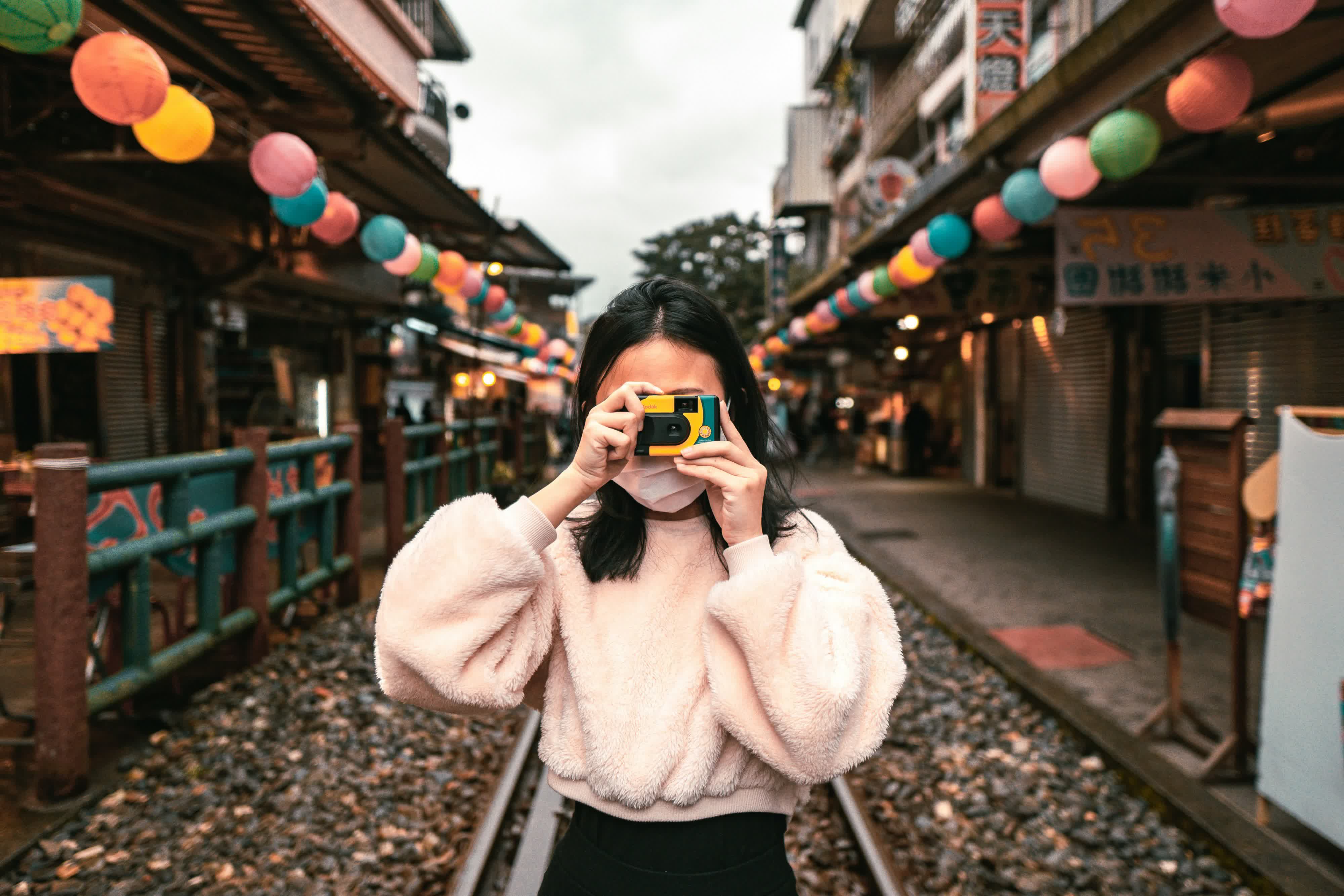
This year, for the first time, some of my students discussed images they'd printed and the physical photography albums they'd put together of their friends and family. They talked about how they'd also been sending postcards, writing letters and tacking photographs to their bedroom walls.
I couldn't help but think about how so much of the language tied to early social media seemed to refashion physical gestures for a virtual world – "posting" on a "wall," "poking," "tagging" and "bookmarking," not to mention "friending."

This was a rhetorical move by social media companies, likely designed to help people feel as though they were in a familiar terrain of social connection. Yet the underlying business model of these platforms depended more on maximizing engagement and advertising revenue than on nurturing authentic relationships.

Everyone knows what happened next: The more connected young people became online, the more isolated and detached they started to feel. The Covid lockdown pushed social life online even further, and researchers are only now starting to see how the combination of increased screen time and isolation negatively affected adolescents' mental health. By 2023, 51% of American teenagers reported they spend at least four hours a day on social media.

I see the attraction of analog photography as a response to life lived through screens, a pathway toward community engagement and the desire for what sociologists call "a third place."

Coined by sociologist Ray Oldenburg in his 1989 book "The Great Good Place," third places are meant as a space separate from home and work. They offer a reprieve for the in-between, generating the conditions needed for creative cross-pollination. They might include a local cafe, a neighborhood writing group, a weekly Magic: The Gathering game or a college fraternity – any space that allows for social interaction and personal growth.

These spaces also combat loneliness. They get people out of their heads and into a community. Oldenburg also referred to them as "havens of sociability," places or gatherings where people can arrive alone to join others, and the atmosphere is "democratic and festive."

Analog communities IRL

In April 2026, the inaugural AnalogCon took place in Los Angeles. Organized by the Los Angeles Center of Photography, where I serve as executive director and chief curator, it was a festival for all things analog photography. It didn't just serve as a third place for photography enthusiasts; it also showed how analog photography – as a practice, ritual and community – is flourishing.

Vendors, industry leaders, artists and teachers participated in the two-day event, which included exhibitions, panels, demonstrations and guided photography tours around Little Tokyo. The excitement and thirst for similar events was palpable.
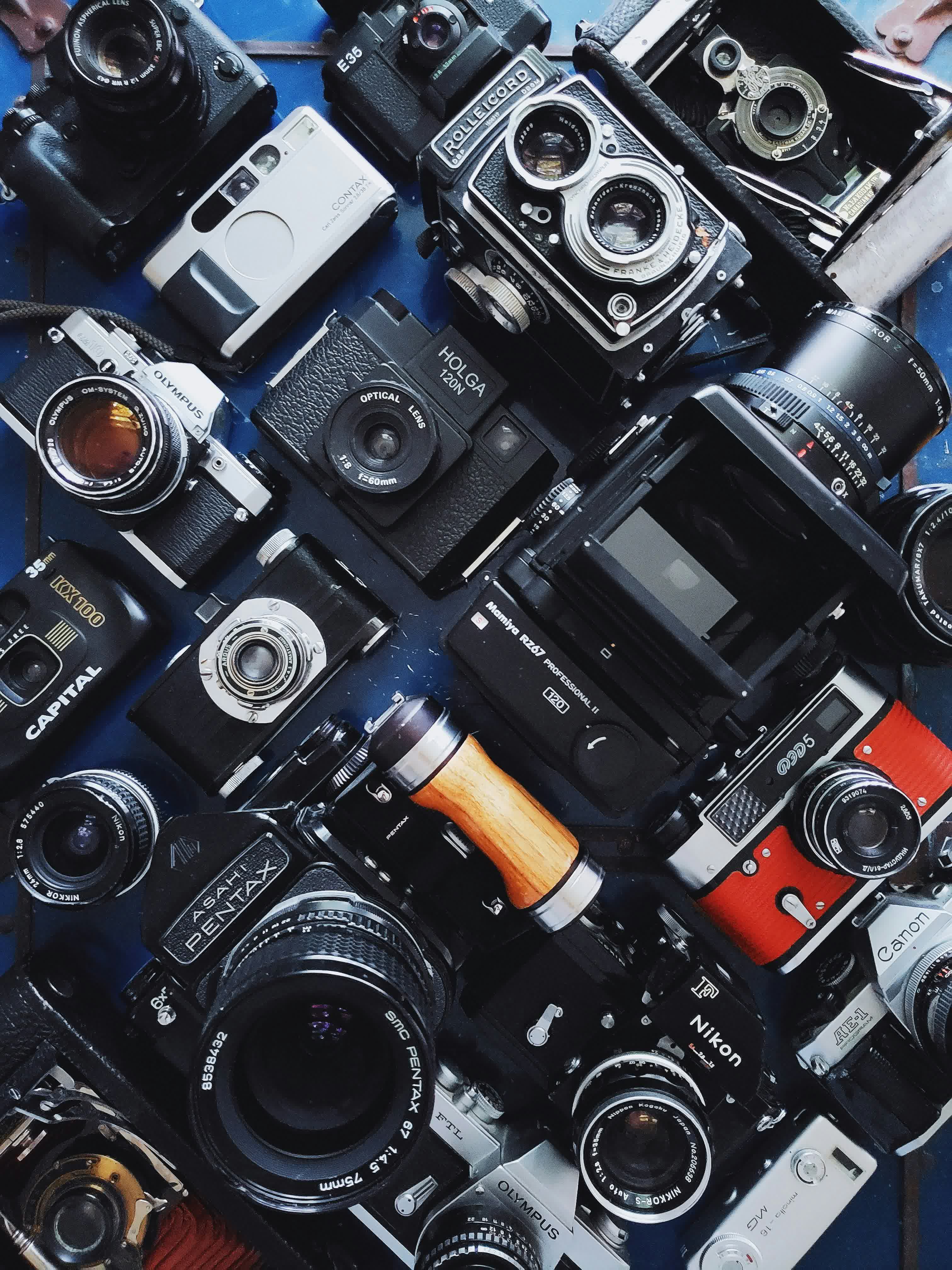
Photography now joins a broader trend of a generational preoccupation with physical cultural objects and media. Although music streaming represents 82% of revenues generated in the music industry, vinyl records sales have been rising for over a decade, crossing the $1 billion threshold in the US in 2025.

Nearly 60% of Gen Z are now purchasing records. VHS tapes and VCR players are also making a strange comeback, with stores like Be Kind Video and Videotheque in California offering VHS, DVDs and Blu-ray rentals.

But beyond that, record stores and video rental shops have become third places in their own right. There's a big difference between selecting a film to stream from your bed and getting out of the house, going to a store and talking about movies with a clerk and fellow film enthusiasts.

Think about the sound a tape cassette makes when you open and close it, or the vibrant graphics on the covers of DVDs or VHS tapes. Think about rewinding or making a mixtape for your recent crush. These are objects of belonging that signal specific cultural moments, rituals and aesthetics, and many young people today are starting to experience them for the first time.

Now, think about gently inserting a roll of film into a camera. Think about choosing an angle carefully when snapping a photo, because the number of frames is limited and you want to make them count. Think about the thrill of discovery when the pictures finally emerge as objects on paper.

To me, these are more than fleeting trends. They signal a push against a digital culture that is designed to cultivate envy and reward outrage, insults and humiliation.

Instead, armed with rolls of film, more and more Gen Zers appear to be opting out of their algorithmic feeds in favor of experiencing life in ways that feel more deliberate, personal and tangible.

Permalink to story:

 
It’s a phase like 2000’s point and shoots where a few years ago.

If people actually wanted good images without processing they’d just use DSLR and mirrorless systems
 
I went through a film phase when I was and the limitations (and costs) put in place by film made me a better photographer. Having to setup and think about your shots ends up with more good shots than me just walking around with my Sony A7, taking 2000 photos and searching through them for 10 or so good ones. I would get more good pictures out of 3 rolls of film than I would out of taking countless pictures on my mirrorless.
 
And then they scan them in or photograph them again with their phones to upload them to instagram, where they become a compressed jpeg. Otherwise, how would there be analytics indicating to write this article?
 
Idk if the article mentioned this because I didn't read all of it, but one thing that seems clear is that analog is the only way to be sure something isn't AI generated or run through a digital filter or anything like that, so I'd imagine that is a big factor.
 
Doesn't surprise me: Gen Z seem to be more appreciative of "old" or "vintage" things. It was the Millennials who had a fixation on all things "modern."
 
Film photography brings authenticity. It's hard to fake a real photograph. It's also why a person's physical signature on paper is still a legal instrument.


Idk if the article mentioned this because I didn't read all of it, but one thing that seems clear is that analog is the only way to be sure something isn't AI generated or run through a digital filter or anything like that ...
Only as long at it stays on film and/or photo paper.
When it gets scanned into digital world .. nothing can be guaranteed anymore.
 
Doesn't surprise me: Gen Z seem to be more appreciative of "old" or "vintage" things. It was the Millennials who had a fixation on all things "modern."
No, not quite.
It's a phase of discovery that each generation goes through. Millennials went through that with film/analogue photography and records in the 2010s. Elder Millennials were just babies when records were still popular and were kids when film was the dominant medium in photography before digital arrived by the turn of the millennium. It all came around again in their 20s as they rediscovered things from their childhood. Anything retro and vintage from their parents' time was explored.

Now it's the Zoomers in their 20s who are going through this period themselves. They're discovering some of the stuff previous generations did (see above) along with the "newer" things from Millennial youth like point and shoot digicams, camcorders, CD players, tapes, dumb phones, and so on from the 90s and 00s, which was their childhood.
 
Growing up in the 60's, my dad, before he became a car salesman for over 33 years, was a photographer for a small town newspaper. I fondly remember going with him to the newspaper office to develop the photos he would take. In the darkroom, my job was to rock the negatives in the developer bath, then the stop bath, rinse and hang them up. That was my beginning into photography. My first camera was probably at the age of 12, old brownie camera. My first "real" camera was a Canon AE-1 (NOT the program version). Got it in 1982. I was lucky to live in a city that had a great camera shop that had real camera guys in it. Worked right next door to my job. They were PICKY when developing film too. Calibrated all the time, chemicals fresh.
When I learned, since it was all film, I carried a notepad in my camera bag and would write down the iso/f stop, shutter speed etc so when I had the film developed, I would know what worked and what didn't.
LOL, today, the exif data tells you that.
I love my d-slr that I still use today (Nikon D-7200), but I miss the "warmth" of the analog shots.
 
I don't think it has anything to do with an appreciation of film. More of an urge to be seen to be 'different' and 'edgy' on social media. It's not like they are just taking pictures, developing them and shoving them in a photo album. They are shoving them down everyone's throat on social media.
 
Only as long at it stays on film and/or photo paper.
When it gets scanned into digital world .. nothing can be guaranteed anymore.
Not even this is true any longer. Modern photo labs digitally scan the developed negatives, then print them from the digital files. So there's no way to guarantee that even a film print wasn't altered or edited along the way.
 
It’s a phase like 2000’s point and shoots where a few years ago.

If people actually wanted good images without processing they’d just use DSLR and mirrorless systems

I think some of it is the loss of quality. Digital images feel soulless compared to old fashioned photos, even ones taken from a cheap Kodak camera. You can add filters to digital pictures to emulate the feel but its never the same.

I think the younger generation is rediscovering things we lost.
 
I think some of it is the loss of quality. Digital images feel soulless compared to old fashioned photos, even ones taken from a cheap Kodak camera. You can add filters to digital pictures to emulate the feel but its never the same.

I think the younger generation is rediscovering things we lost.
Just use film sims then? Fuji cameras do it quite well and it’s the same.

All film is is annoying and time consuming. If you want to do that just shoot raw and load up photoshop
 
Last edited:
Not even this is true any longer. Modern photo labs digitally scan the developed negatives, then print them from the digital files. So there's no way to guarantee that even a film print wasn't altered or edited along the way.
Not so modern.
A let the lab do developing of color films and do film scanning somewhere around year 2000 in my backwater town of 15.000 citizens.

PS: I used to develop B&W films on my own.
 
I must say - the title of this piece is pushing it, close to being click-bait.

Here what I think it should have said:

"Why some Gen Z is falling in love with film photography – and rejecting the algorithm along with it"

As it is by far not all of GenZ getting into film, in fact it is more a tiny minority. The 42 million mentioned in the article may sound like a lot, but there is about 2 billion Gen Z's so there is that.
 
Last edited:
It’s a phase like 2000’s point and shoots where a few years ago.

If people actually wanted good images without processing they’d just use DSLR and mirrorless systems
That phase hasn't ended yet. I regularly see teens and undergrads using compact cameras over their smartphones. Some companies are even releasing new compact point-and-shoots.

The point isn't quality of the resulting image. The point is ungluing the phone from your hand. A point-and-shoot will take just as good (probably better) pic than most smart phones, do so without involving any kind of app pestering you to share it (even passively, by offering it as a place to share it when all you wanted to do was save it to your hard drive), and fit into a pocket or small bag.

IMO, tech companies have killed the golden goose when it comes to smartphones. I won't be surprised if you see feature phones make a comeback; something relatively dumb, physical keyboard, low-end camera, no app store; just "phone", GPS, SMS/MMS/RCS texting, and maybe a way to sideload new apps if you really want something else on it.
 
That phase hasn't ended yet. I regularly see teens and undergrads using compact cameras over their smartphones. Some companies are even releasing new compact point-and-shoots.

The point isn't quality of the resulting image. The point is ungluing the phone from your hand. A point-and-shoot will take just as good (probably better) pic than most smart phones, do so without involving any kind of app pestering you to share it (even passively, by offering it as a place to share it when all you wanted to do was save it to your hard drive), and fit into a pocket or small bag.

IMO, tech companies have killed the golden goose when it comes to smartphones. I won't be surprised if you see feature phones make a comeback; something relatively dumb, physical keyboard, low-end camera, no app store; just "phone", GPS, SMS/MMS/RCS texting, and maybe a way to sideload new apps if you really want something else on it.
No the point is it’s a fad and no they really don’t until you get into the £1000 or more bracket. Next it’ll be black and white being trendy again

They’re literally taking photos with point and shoots and then posting them on apps. Also what phone are you using where the camera app pestered you to share it?

They really haven’t and no they won’t
 
Film is great. Now we need quality affordable developing
Spot on.
When I was living in Japan back in the 1990s, when dialup was "cool," to have, there were photo dev. shops all over the place.
The cost 1 yen per colour photo. (1 yen is less than 1 US penny). They made money from selling film.
Remember, one role 36 pics only (max size) roles were also 24 and even 12.
No snap snap delete delete. A botched shot? Too bad you wasted one of your 36.

Folks used to actually take time to compose pics back then. (Most of them were still awful though.)

My late father was a pro photographer all his working life. Digital cameras appeared after his retirement.
He was pretty impressed with them. But he thought a lot of pro - photographers would go out of business. They did, at first. But years later they came back. Takes talent to compose the "perfect," picture regardless, digital or ye olde film.

Edit: Remember company, Kodak?
EDit of edit: @ShadowDeath, post #18 does.
 
Last edited:
Back