Hello, and welcome to TechSpot.
Please
see here for the board rules and other FAQ.
Please feel free to
introduce yourself, after you follow the steps below to get started.
Information
- From this point on, please do not make any more changes to your computer; such as install/uninstall programs, use special fix tools, delete files, edit the registry, etc. - unless advised by a malware removal helper.
- Please do not ask for help elsewhere (in this site or other sites). Doing so can result in system changes, which may not show up in the logs you post.
- If you have already asked for help somewhere, please post the link to the topic you were helped.
- We try our best to reply quickly, but for any reason we do not reply in two days, please reply to this topic with the word BUMP!
- Lastly, keep in mind that we are volunteers, so you do not have to pay for malware removal. Persist in this topic until its close, and your computer is declared clean.
1. Download the Kaspersky Rescue Disk iso image
Please note that this is a large downloaded, so please be patient while it downloads.
2. Record the Kaspersky Rescue Disk iso image to a CD/DVD. You can use any CD/DVD record software you like. If you don't have any, please download and installImgBurn
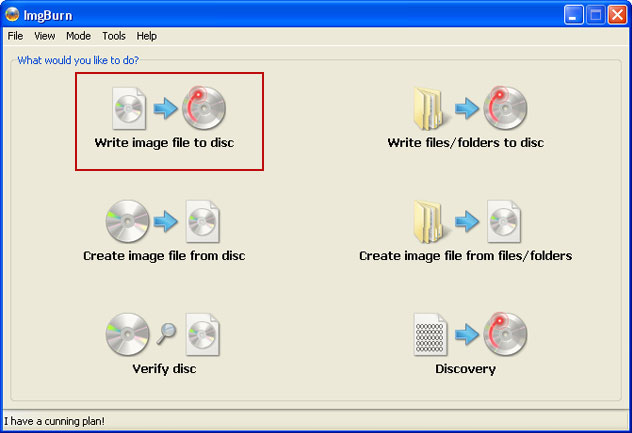
So, open up ImgBurn and choose Write image file to disc
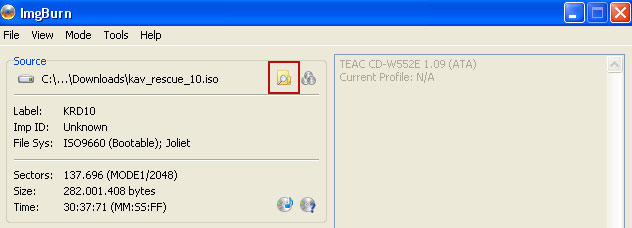
Click on the small Browse for file icon as shown in the image. Browse into your download folder and select kav_rescue_10.iso as your source file.
OK, so know we are ready to burn the .iso file. Simply click the Write image file to disc button below and after a few minutes you will have a bootable Kaspersky Rescue Disk 10.
3. Configure your computer to boot from CD/DVD. Use the Delete, F2, or F11 keys, to load the BIOS menu. Normally, the information how to enter the BIOS menu is displayed on the screen at the start of the OS boot.
The keys F1, F8, F10, F12 might be used for some motherboards, as well as the following key combinations:
- Ctrl+Esc
- Ctrl+Ins
- Ctrl+Alt
- Ctrl+Alt+Esc
- Ctrl+Alt+Enter
- Ctrl+Alt+Del
- Ctrl+Alt+Ins
- Ctrl+Alt+S
If you can enter Boot Menu directly then simply select your CD/DVD-ROM as your 1st boot device
If you can't enter Boot Menu directly then simply use Delete key to enter BIOS menu. Select
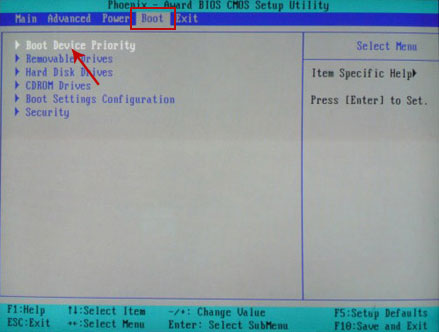
Boot from the main BIOS menu and then select Boot Device Priority
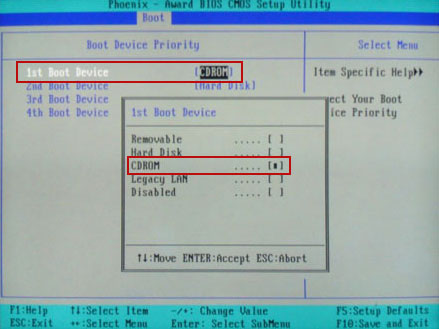
Set CD/DVD-ROM as your 1st Boot Device. Save changes and exist BIOS menu.
4. Let's boot your computer from Kaspersky Rescue Disk.
Restart your computer. After restart, a message will appear on the screen:
Press any key to enter the menu. So, press Enter or any other key to load the Kaspersky Rescue Disk.
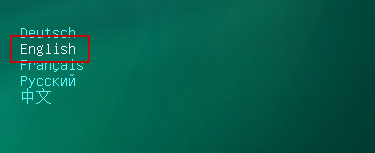
5. Select your language and press Enter to continue.
6. Press 1 to accept the End User License Agreement.
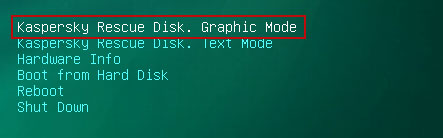
7. Select Kaspersky Rescue Disk. Graphic Mode as your startup method. Press Enter. Once the actions described above have been performed, the operating system starts.
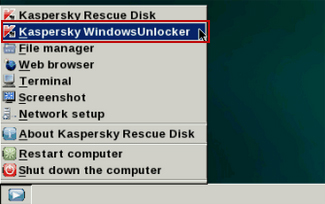
8. Click on the Start button located in the left bottom corner of the screen. Run Kaspersky WindowsUnlocker to remove Windows system and registry changes made by Sirefef. It won't take very long.
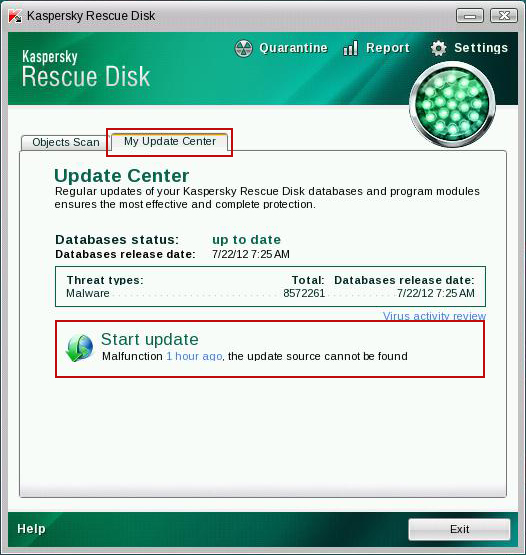
9. Click on the Start button once again and fire up the Kaspersky Rescue Disk utility. First, select My Update Center tab and press Start update to get the latest malware definitions. Don't worry if you can't download the updates. Just proceed to the next step.
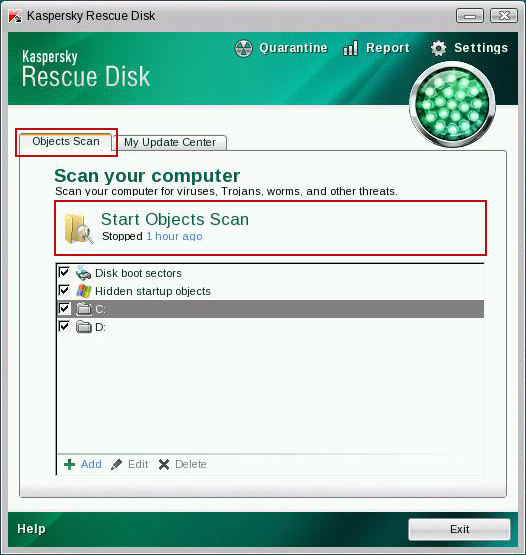
10. Select Object Scan tab. Place a check mark next to your local drive C:\. If you have two or more local drives make sure to check those as well. Then click Start Objects Scan to scan your computer for malicious software.
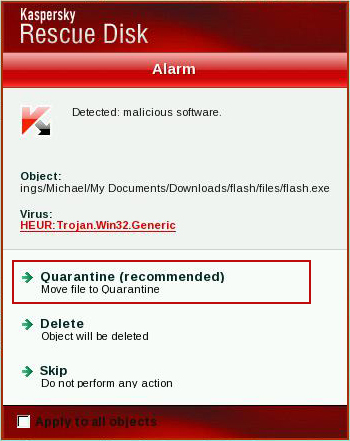
11. Quarantine (recommended) or delete every piece of malicious code detected during the system scan.
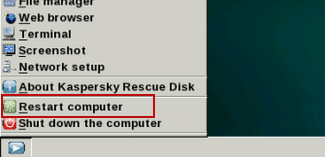
12. You can now close the Kaspersky Rescue Disk utility. Click on the Start button and select Restart computer
13. Please restart your computer into the Normal Mode and tell me how it went.