also @ TechSpot: 'Supercapacitor' could fully charge your phone in less than 30 seconds

Seagate: 60TB HDDs possible with next-generation storage tech

By

On March 19, 2012, 6:30 PM Breaking News

It's increasingly rare for mechanical drives to make headlines, but Seagate is beating the PR drum over an advancement that promises to drastically increase the capacity of hard drives. The company has achieved a storage density of 1 terabit per square inch, about 55% more than today's 620 gigabits per square inch. More abstractly, Seagate says that's more bits per square inch than our Milky Way galaxy has stars, which astronomers estimate between 200 and 400 billion.

At 620Gb per square inch, current 3.5-inch HDDs peak at 3TB, while Seagate's 2.5-inch consumer drives max out at 750GB. The new tech will roughly double that to 6TB and 2TB when it arrives "later this decade" and it will lead to astronomical capacities of up to 60TB over the following 10 years. Seagate hit the milestone with heat-assisted magnetic recording (HAMR), which the company hails as a next-gen successor to 2006's perpendicular magnetic recording (PMR).

PMR is expected to peak at approximately 1Tb per square inch in the next few years, which is essentially the starting density of HAMR drives. "The technology offers a scale of capacity growth never before possible, with a theoretical areal density limit ranging from 5 to 10 terabits per square inch -- 30TB to 60TB for 3.5-inch drives and 10TB to 20TB for 2.5-inch drives," Seagate explained in its press release.

Along with avoiding concrete launch windows, the company omitted details about how HAMR works. We assume that's mostly because your eyes would glaze over, and not for competitive reasons as Fujitsu (acquired by Toshiba in 2009), Hitachi and presumably others have been tinkering with HAMR and other technologies for many years. A 2006 article by CNET does a good job of breaking things down.

The gist of it: Data is stored in bits that contain hundreds of cobalt-platinum grains representing either a 1 or 0. To increase capacities, engineers shrink the size of bits and grains. However, with current tech, we're approaching a point where further shrinkage could cause grains to flip between 1 and 0 at room temperature, resulting in data corruption. Reducing the number of grains per bit presents other issues.

CNET reported at the time that Seagate and others planned to solve the problem by replacing cobalt-platinum grains with iron-platinum ones that wouldn't flip at room temperature. Thus enters the "heat-assisted" part of HAMR: drives have an integrated laser to heat the bits and record data. It's safe to assume other hard drive makers won't take Seagate's announcement lying down, so it'll be interesting to see whether their next-gen drives use similar HAMR-based solutions or something entirely different.

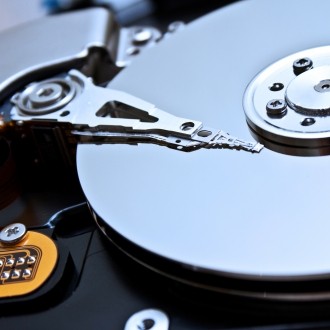
**HDD image via Vitaly Korovin/Shutterstock

, , , , , , ,

Related Products from Product Finder

Seagate Barracuda XT 3TB SATA600

Seagate Barracuda XT spins at 7200RPM and sports 64MB of cache as well as the SATA 6Gb/s interface - though transfers peak at 149MB/s.

9 Reviews

Seagate Barracuda XT 2TB SATA600

Read expert reviews, pros & cons, and product information about Seagate Barracuda XT 2TB SATA600. There are 52 reviews available so far.

25 Reviews

Seagate Barracuda XT 3TB SATA600

Read expert reviews, pros & cons, and product information about Seagate Barracuda XT 3TB SATA600. There are 16 reviews available so far.

6 Reviews

Seagate Barracuda Green 2TB SATA300

Read expert reviews, pros & cons, and product information about Seagate Barracuda Green 2TB SATA300. There are 18 reviews available so far.

8 Reviews

User Comments: 33

Got something to say? Post a comment
  1. to anyone worried about failure: RAID

  2. Actually experimentation with Crystal Storage is most likely the future they have so far been able to store 25 mb on a non dense grain of sand think of what a highly compressed peice of quartz will be able to hold!

  3. Sadly you must have forgotten the maxim 'Data expands to exceed capacity'. i remember 2 GB drives as immensely beyond what I would need in 1998 and found in 2000 that 3.2 GB as way too small.

  4. Both the standard HDD and SDD have their place right now. For those who need a lot of storage space (10tb) or more would need to be independently wealthy do use all SDD to get to that point. Myself I have a little over 15tb of storage, mostly 2tb drives and a few 3tb. I switched to a 180gb SDD for the OS drive. As time goes on I?m sure HDD and SDD manufactures will continue to make significant advancements in their respective areas. When I build my first PC I remember thinking I will never fill this 320mb drive. I also think both HDD and SDD will be around for a long time. At least until cloud computing has gone completely main stream and almost all software manufactures are using it as a means of distribution.

  5. Boring.

    So people can store more porn and stolen digital media ?

  6. Yeah, well... it might seem like you would never need more space than that, but "if you build it, they will come". Remember the days when a 40 megabyte drive seemed like endless space, and 1MB of RAM was more than anyone would ever need?

  7. Can't wait to install Windows XP on Laser Hard drive, this call like (HAMR). It will become ultimate killer than regular hard drive and SSD. Wow!!! :-D

  8. Now let's hope any different formatting standards that are potentially developed between here and now get applied to previous OS versions instead of releasing a new OS entirely claiming it has support.

    Windows 7, I'm looking at you. (SSDs)

Recently commented stories

Post a new comment

Social Login & Guest Posting TechSpot Members
Login here or sign up for free,
it takes about a minute.
Get complete access to the TechSpot community. Join thousands of technology enthusiasts that contribute and share knowledge in our forum. Get a private inbox, upload your own photo gallery and more.
TechSpot on:

Subscribe to TechSpot

Get free exclusive content, learn about new features and breaking tech news.