The Supreme Court just ruled that police need a warrant to use phone location data

Skye Jacobs

Posts: 2,010   +58
Staff
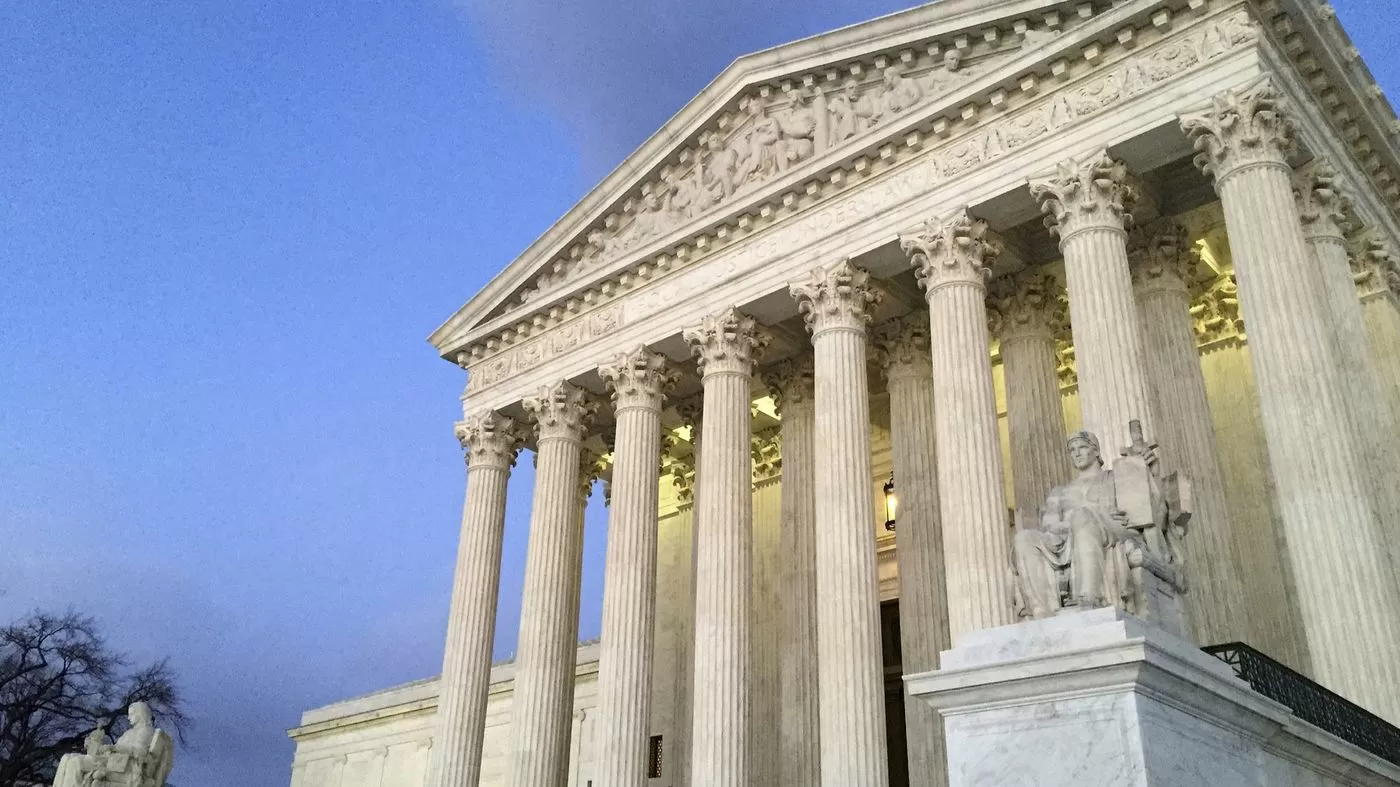
What just happened? A recent Supreme Court decision puts new limits on how police can use smartphone location data, a tool that has become increasingly common as digital tracking grows more precise. In Chatrie v. United States, the Court ruled 6-3 that using a geofence warrant qualifies as a search under the Fourth Amendment. As a result, police use of these warrants is now subject to constitutional limits and judicial oversight.
Geofence warrants work differently from traditional investigations. Instead of starting with a suspect, police define a specific place and time, then ask a company to provide data on all devices in that area. From there, investigators narrow the list and may request identifying details for certain users.

The case centers on a 2019 robbery at a credit union in Virginia. Police asked Google for data on devices within a roughly 500-foot radius of the building during a one-hour window. Google initially provided anonymized data for 19 users. Investigators later asked for more details, and the company identified three people, including Okello Chatrie. His location history became part of the case against him.

The decision draws on the Court's 2018 Carpenter v. United States case, which found that people retain a privacy interest in cellphone location records even when a company stores them. This latest ruling extends that idea to geofence warrants, recognizing how much can be learned from tracking where a device has been.
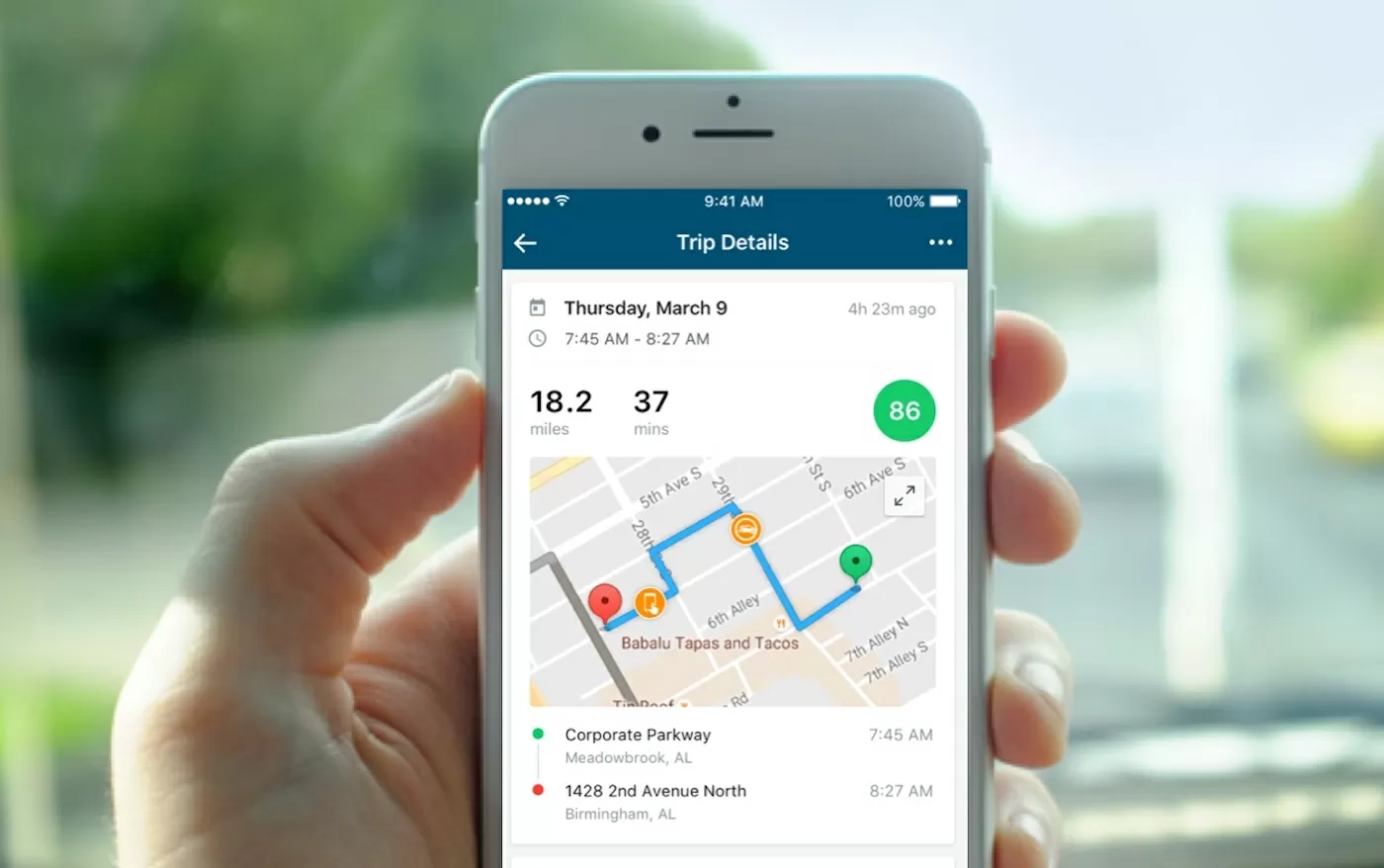
Today's phones combine GPS, Wi-Fi, Bluetooth, and cellular signals to generate detailed location data. That data can sometimes locate a device within meters and can be collected continuously and stored for long periods.

"It's not just collecting location when you're trying to call an Uber," Serge Egelman, a privacy researcher at the University of California, Berkeley, told Scientific American. "It's sharing location data throughout the day, whether you intend to or not."

Use of geofence warrants has expanded quickly. Google reported receiving its first such request in 2016. By 2020, that number had grown to more than 11,000. And Google is only one source. Many apps, including social media and mobile games, collect location data that can be shared with third parties or accessed by law enforcement.

What has changed is not just the amount of data, but how easily it can be used. Instead of following a suspect in real time, investigators can now look back and reconstruct movements after the fact. They can identify which devices were near a location, then trace where those devices went before and after.

"When the costs dramatically drop by orders of magnitude, law enforcement might be more prone to use it all the time," says Jason Hong, a computer scientist at Carnegie Mellon University.

The Court's ruling does not ban geofence warrants. Police can still use them if they obtain a warrant supported by probable cause. The justices also did not decide whether the warrant in this specific case was valid, leaving that question to a lower court.

The decision could have broader implications. Other surveillance systems, such as networks of cameras that monitor public spaces, raise similar concerns about how much information can be gathered and analyzed at scale.

"Systems of mass surveillance, like real-time crime centers that have cameras on every street corner, create the exact same problem," says Andrew Guthrie Ferguson, a law professor at George Washington University. He added that "Chatrie plants the seeds for arguments that other forms of mass surveillance might also require a warrant."

At the same time, the technology behind location tracking is shifting. Google has started storing more location data directly on users' devices rather than on centralized servers, which could make broad data requests harder to fulfill. But the wider ecosystem remains complex, with many companies still collecting and sharing location information.

The ruling sets a constitutional checkpoint, but it does not ban the technology or clearly slow its use. Judges approve most warrant requests, which raises questions about how much practical change this decision will bring. As Ferguson puts it, warrants can act "less as a shield than a key."

Permalink to story:

 
"The ruling sets a constitutional checkpoint, but it does not ban the technology or clearly slow its use. Judges approve most warrant requests, which raises questions about how much practical change this decision will bring."

Actually, this raises other questions. Given the propensity of judges to routinely approve warrant requests, and given the repeated exposure of judges who allow politics and financial considerations to impact their impartiality, shouldn't we be continuously tracking the whereabouts and activities of judges?
 
"The ruling sets a constitutional checkpoint, but it does not ban the technology or clearly slow its use. Judges approve most warrant requests, which raises questions about how much practical change this decision will bring."

Actually, this raises other questions. Given the propensity of judges to routinely approve warrant requests, and given the repeated exposure of judges who allow politics and financial considerations to impact their impartiality, shouldn't we be continuously tracking the whereabouts and activities of judges?
No - because you need to draw the line of accountability somewhere. If you can’t trust a particular judge to do his job, remove that person from that position.

The never ending “who’s guarding the guards” doesn’t work in reality. The buck stops with someone who’s allegedly responsible, and that’s the only way it can work effectively.
 
I use a burner flip phone. Not because I'm committing crimes, but because of data mining, Google, Microsoft, FaceBook, etc... getting my information, and or location. It's none of their damn business...
 
Extremely simple solution to keep tracking... use CIVILIAN STINGERS just as device IMEI sinks and transmit the data anywhere you want. CIA does it all the time and sidestep the court order. JUST LIKE how store onwers can provide WIFI data at will for any user who connected to it as it.

 
Shoot, humans gave up their privacy a LONG time ago.
1. When you clicked on the first TOS for anything
2. Once you connected to the internet.

I've always been pro-police (worked 911 for around 20 years), but I 100% agree if you want my phone
data, prove to a judge you have evidence of a crime & get a warrant.

On the flip side, if you are STUPID enough to take your phone with you if you are going to rob a bank,
steal property, murder someone, well, stupid is as stupid does.
There was one of those crime shows once where a guy who lived in Louisiana murdered his ex-wife
who lived in Houston.
He claimed he didn't do it, but the tracking on his phone showed he traveled from Louisiana to Houston
with the time stamp to within feet of where he body was found (Phase B tracking) and at the time of death.
 
They just voted to strengthen the need for a warrant for your data and you're crying about it.
This should have been a 9-0 decision. The three who dissented seem to pretty consistently be on the wrong side of what should be slam dunk constitutional decisions.

So, yes, I will agree with Kirby: there is a problem with the highest court right now. Several of them.
 
Though I doubt this will happen with the current congress, IMO, this should be justification for a law that requires user's consent to collect their location data.

I'm on Android and there are certain times, like when I was traveling by Air and using the Airline's app, that I don't mind my location being tracked, or when I'm traveling by car and I want my wife to know where I am, however, at all other times, I keep "Location" off. It's none of anyone's business where I am except mine. I'm not doing anything illegal.

And when I have location on, I only allow a few apps, like my airline app, to have permission to access my location. However good denying location permission to apps really is.

Maybe I should research exactly what sharing location means - does it mean GPS data, cell tower data, etc., all of the above?
 
This should have been a 9-0 decision. The three who dissented seem to pretty consistently be on the wrong side of what should be slam dunk constitutional decisions.

So, yes, I will agree with Kirby: there is a problem with the highest court right now. Several of them.
Agreed. In fact, I'll go so far as to say that there is one justice on SCOTUS ATM that NEVER should have been confirmed and NEVER should have gotten on the court due to a complete lack of any constitutional law experience. And I'm not the only one who has that opinion about that particular justice. There are actual legal "experts" that hold that opinion about that justice. And this is not a case of my having any sort of "Derangement Syndrome". It is based on factual information about that justice.
 
Though I doubt this will happen with the current congress, IMO, this should be justification for a law that requires user's consent to collect their location data.

I'm on Android and there are certain times, like when I was traveling by Air and using the Airline's app, that I don't mind my location being tracked, or when I'm traveling by car and I want my wife to know where I am, however, at all other times, I keep "Location" off. It's none of anyone's business where I am except mine. I'm not doing anything illegal.

And when I have location on, I only allow a few apps, like my airline app, to have permission to access my location. However good denying location permission to apps really is.

Maybe I should research exactly what sharing location means - does it mean GPS data, cell tower data, etc., all of the above?
In theory, its everything.

And while you can turn off GPS on your phone to block local apps from tracking you, you can't exactly block the transceivers your phone is connecting to. They can get a pretty accurate (if imprecise) measure of where you are located relative to the cell towers within range. There is functionally nothing you can do about those, while still using your phone like a phone.

This is why the constitutional decision is so important, as you already know.
 
Back