What just happened? Humanoid robots have long been making their way into different areas of the US workplace. It's also happening in South Korea, which has approved an exception to industrial safety rules so 20 machines can be tested alongside workers. For employees already worried about being replaced, removing these barriers – both literally and figuratively – isn't going to offer much reassurance.
South Korea's industry ministry announced the approval on October 13 through its regulatory sandbox program, which allows companies to test new technologies under exemptions from existing requirements.
The problem is that the country's industrial robot safety rules were written around machines that don't move around freely like a human would. They require fences and other barriers separating robot work areas from people, which would make it pretty difficult for humanoids to walk around factories and share tasks with employees.
As the Seoul Economic Daily reports, robotics and AI company Robros received permission to test its bipedal machines across semiconductor, automotive, shipbuilding, and logistics sites. The exemption lets the robots operate in spaces shared with human workers or adjacent to their work areas.
This doesn't give manufacturers permission to remove every single safety fence and let robots roam around without a care. The Kyunghyang Shinmun reports that the trials will operate under additional safety standards. The approval covers a specific trial, while the government plans to use the resulting data to revise industrial robot safety requirements more broadly.
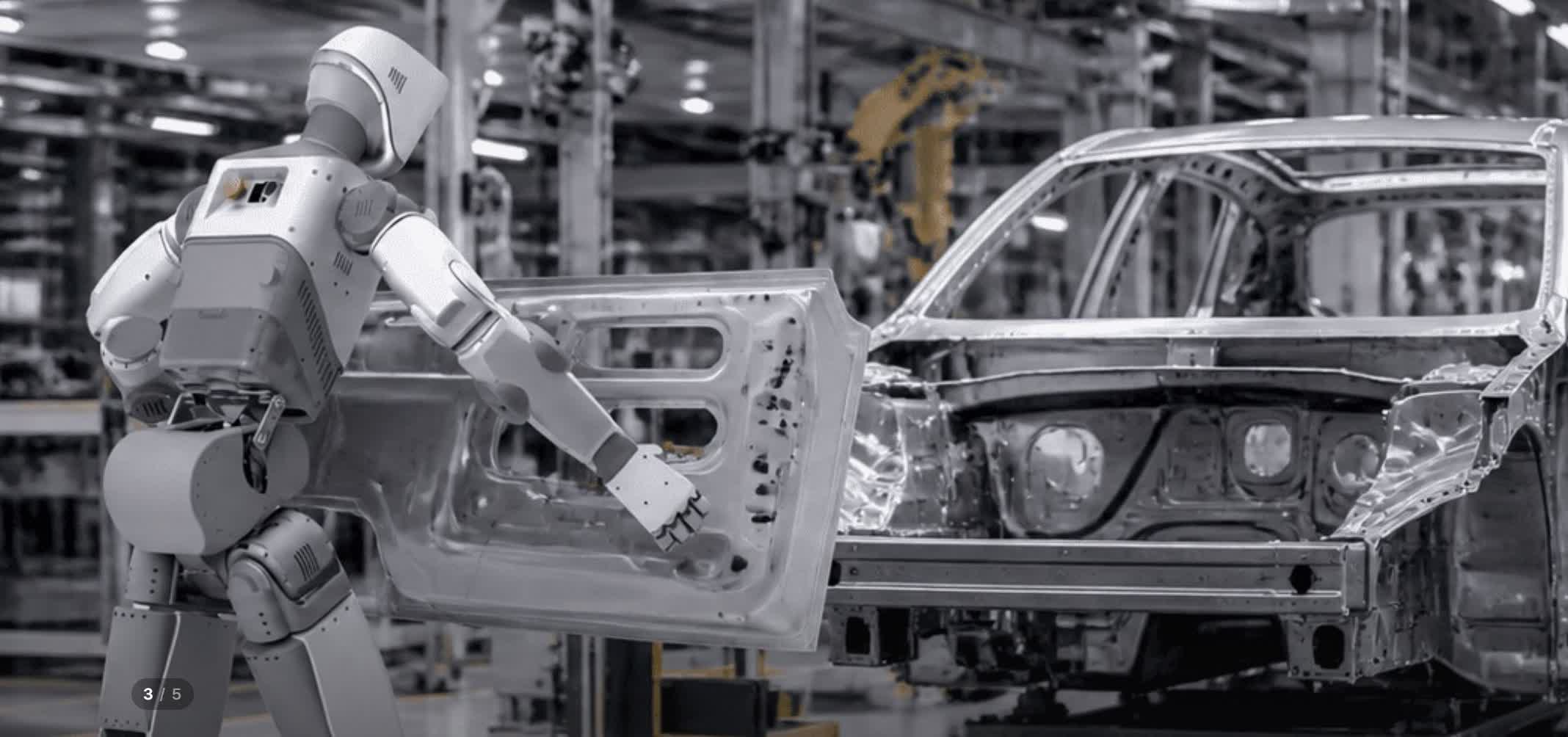
The 20 robots will be split across Nepes (semiconductors), Sungwoo Hitech (automotive), HD Hyundai Samho (shipbuilding), and Delivery Lab (logistics). Their tasks will include cleaning semiconductor packaging components, positioning car body parts, stacking scaffolding brackets, and moving refrigerated logistics packaging.
Officials see humanoids as a way to address labor shortages, improve productivity, and carry out jobs considered too repetitive or dangerous for humans. Whether workers feel the same way is another matter.
Hyundai's union warned earlier this year that deploying humanoids could cause major job losses and insisted that management secure its agreement before introducing robots. Hyundai, meanwhile, responded by saying that the robots would reduce physically demanding and dangerous work.
A lot has been said about the effectiveness of these robots, but just how capable they really are remains uncertain. At the start of 2026, UBTech admitted that its Walker S2 humanoids managed only 30% to 50% of human productivity, despite growing interest from manufacturers.
Much like AI, there are fears that fully capable humanoid robots could put huge numbers of people out of work, causing a devastating impact on the economy. Bill Gates believes the solution could be to make the robots pay FICA taxes when they replace humans.