Now let's learn something
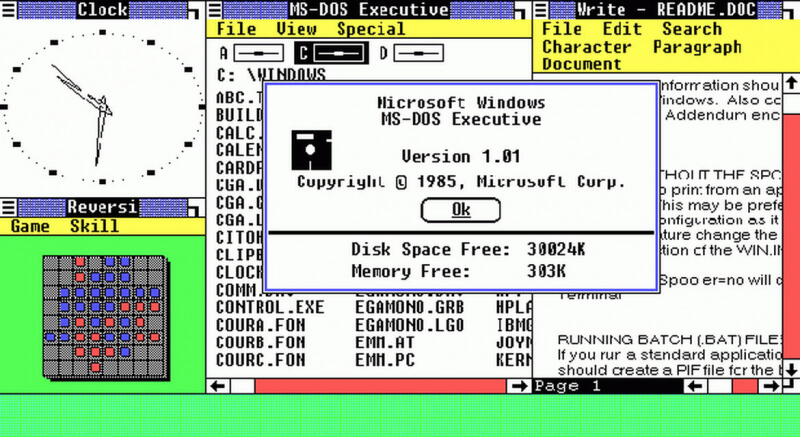
First developed in 1981 by computer scientist Chase Bishop, the software project that would eventually become Windows actually started life under a far wonkier name: "Interface Manager." The title was literal, this early build was meant to sit on top of MS-DOS and give users a graphical layer that made the text-driven system more approachable.
But inside Microsoft, marketers quickly realized that the name "Windows" would resonate more with consumers, as it succinctly described the software's defining feature: the ability to manage multiple graphical windows on a single screen. The project was officially renamed, and in 1983 Microsoft introduced the public to this new interface concept designed as a GUI overlay for MS-DOS, which at the time powered IBM PCs and their growing legion of compatibles.
At the time, GUIs were a groundbreaking innovation and a radical departure from the blinking command lines most users were accustomed to. Instead of typing memorized commands, Windows let people click through icons, menus, and movable on-screen panels.
Still, the earliest versions were far from the self-contained operating systems we know today – until Windows 95 arrived nearly a decade later, Windows essentially ran as a single .exe that took over the DOS environment.
Windows 1.0 finally launched in November 1985, marking the start of what would evolve into one of computing's most influential software ecosystems. The debut version shipped with a handful of built-in apps meant to show off the graphical interface: Calculator, Calendar, Clipboard Viewer, Clock, Notepad, Paint, Reversi, Cardfile, Terminal, and Write, a rudimentary word processor.
But the experience came with some notable constraints. Windows couldn't overlap – instead, every window snapped into a tidy grid, which made multitasking feel more like managing puzzle pieces. Windows 2.0 eventually solved this, introducing overlapping and resizable windows and setting the stage for the desktop metaphor that would define personal computing.
The launch of Windows 1.0 was met with mixed reviews. While it was praised for its forward-thinking design, it struggled to gain widespread adoption at first, partly due to its performance limitations and the need for more powerful hardware. Despite these early challenges, Windows 1.0 laid the foundation for Microsoft's future dominance in the PC market and influenced the trajectory of personal computing for decades to come.