A brief explanation why
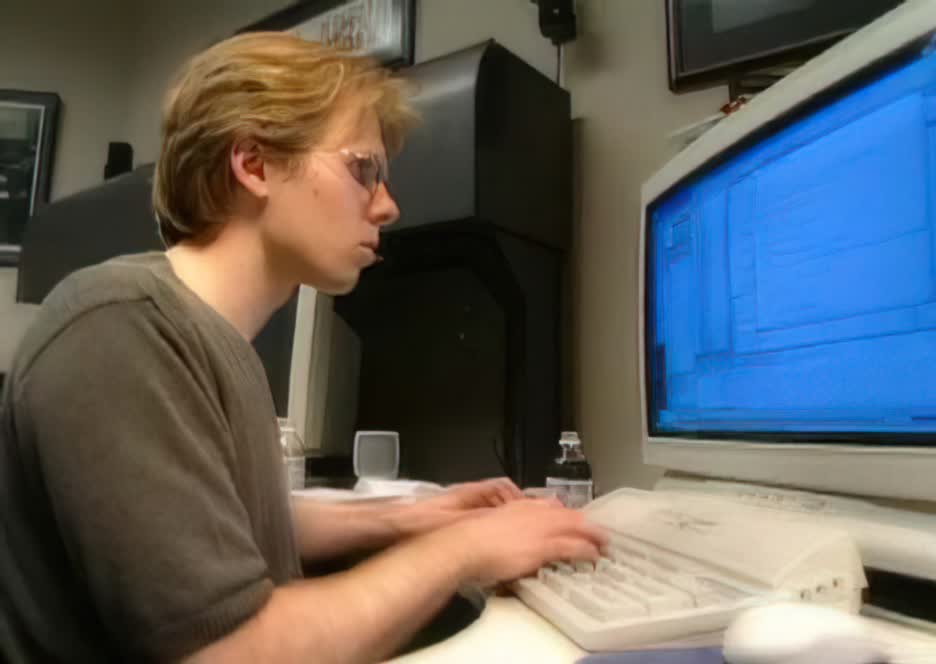
When developing Quake at id Software in the mid-1990s, John Carmack used an Intergraph InterView 28HD96 CRT monitor. This cutting-edge display measured 28 inches (25.9 inches viewable) and offered an impressive resolution of 1920x1080, a level of clarity that wouldn't become mainstream for another 15+ years. The monitor itself was substantial, measuring 19.5 x 27.5 x 24.4 inches (49.5 x 69.9 x 62.0 cm) and weighing about 100 pounds (45 kg), with a typical power draw of 180 watts.
In 2014, Carmack reflected about the monitor and his setup in a tweet, noting that even his state-of-the-art Intergraph workstation couldn't run Quake at 1080p. The monitor's list price at the time was about $10,000, or roughly $20,000+ in today's money.
For further perspective, he noted that an SGI Infinite Reality graphics system – a highly advanced and extremely expensive machine designed for 3D rendering and simulation – was typically limited to around 1280x1024, far below what the Intergraph display could handle and less than what today's smartphones routinely exceed.
To put things in context, we browsed through computer magazine archives from 1995 (PC Magazine and Byte), which revealed the stark contrast between typical consumer hardware and Carmack's setup.
At the time, PC manufacturers like Compaq, IBM, and Micron advertised their latest consumer offerings with full spec sheets, boasting Pentium 133 MHz processors, 4x EIDE CD-ROM drives, Sound Blaster 16 audio cards, PCI 64-bit graphics accelerators (often with just 2MB of VRAM), and 64 to 128MB of EDO RAM. High-performance SCSI hard drives were another premium option – very much a luxury at the time.
These ads commonly listed monitor options such as a 17-inch 1280x960 .28mm monitor or a 21-inch 1600x1200 model. A fully loaded PC bundle would set you back $11,499, so you can imagine the kind of luxury Carmack was having with the Intergraph.