Sign up for a new account or log in here:
Anyone that’s worked with computer hardware knows there are some risks involved. Sharp edges inside a case can leave your hands and fingers looking like you lost a thumb-wrestling match with Edward Scissorhands not to mention the potential to short out or otherwise damage fragile hardware. But for one teenager in Shawnee, Kansas, the stakes were much greater as he lost his life while reportedly stripping a computer down for parts to build another.
Local news station KCTV-5 says the teen unplugged the computer before diving in. It’s unclear how long the system might have been powered off before he started working, however.
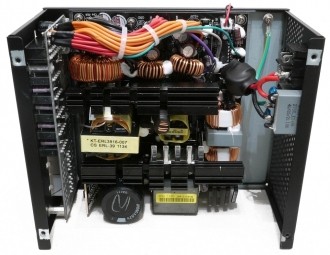
The incident happened on August 16 although an autopsy recently revealed electrical burns on his body. The official cause of death was deemed to be electrocution; likely the result of touching a loaded capacitor inside the power supply.
Captain Dan Tennis of the Shawnee Police Department said the unnamed victim was “one of those kids,” the type that’s always tinkering with computers and gadgets. Disassembling a computer is something he’d done multiple times before.
Full details haven’t been released nor do we know why he opened the power supply to begin with. The boy’s father arrived home to find his son dead. As the captain pointed out, power supplies typically have all sorts of warning stickers reminding users about the dangers that lie within.
About the only parts to salvage inside a PSU would be a cooling fan or two – cheap components that certainly aren’t worth risking your life to retrieve and reuse.
Shocking...
Boys and girls, is this really can happen? I mean zapped from capacitor could lead to death? from my experience I once accidentally bumped with the capacitor with the size of a gluestick (but shorter in height) when checking/stripping one of my lab device (of course it's unplugged), I bumped it when I want to reach the cover, then what I got is a small electrical burn on left side of my boobs
Lol its not bad luck the kid was messing around in a power supply unit, which clearly warns people do not f with it, all over it. They really just needs one big sticker saying EVEN WITH POWER CORD UNPLUGGED FATAL CHARGES REMAIN. I wonder if he knew the risk.
My first computer repair college related class in chapter one was like do not ever take apart a psu or monitor unless your a trained professional, your risking deathly electrocution.
Probably a high-powered VIDEA GAME chip. Yall happy now?! Gamin' KILLS!
This is going to put the creeps into the next time I open up my PSU for cleaning. Even though I've done it probably more than a 100 times without a single shock I'll still have this on my mind for next time.
There was more to this story I feel.
First of all the primary capacitor or capacitors in a computer's switch mode powersupply (PSU) sit after the input rectifier, which converts the incoming AC voltage to DC voltage. In the case of 120VAC input power there is also a voltage doubler stage active which does what the name implies.
Secondly if the PSU is a modern design it will instead have a APFC stage (Active Power Factor Correction) which sets the voltage at the primary capacitors to ca 400v
Have you actually ever opened a cheap Chinese built PSU? (A $20 PSU as the linked news movie talks about)
Most ones lack any and all input filtering, there are no X or Y capacitors, no MOV's and no coils to be seen, just jumper wires on the PCB where the missing components should be.
What makes you think they would hesitate to not install the primaries bleeder resistor?
I have a charger for a camera right here lacking exactly that, made in China of course.
Actually the majority of PSU's power switches do not switch of both Line & Neutral, which is required by law in Europe.
Because many European countries use the Schuko plug which is not polarized, meaning it can be inserted either way (AC power does not care, so we can flip the live and neutral in any equipment).
This has the interesting side effect that when the PSU switch is off there might actually be power present through the entire PSU all the way back to the switch!
All you have to do is provide a path for the Neutral and there will be a circuit formed.
Like if you hold the PSU's chassis while touching the primary sides heatsinks!
Doublers have not been needed on well-designed, modern power supplies for years. I'm sure you can check this out by reading the specs on any well-designed modern supply - which will not have an input voltage selection switch. Many modern switchers have an input voltage range of 100V-240V, and you don't need to select the input voltage with a switch. Just get the right line cord and plug it in to the local outlet. For example - [link] For a buck converter, it really does not matter what the input voltage is as long as it is sufficiently high enough over the output voltage to overcome conversion inefficiencies.
So, what you are saying is that the kid had not unplugged the supply?
This is rather scary.
I open my PSU every now and then to clean or to maintain it's fan.
Best thing to do is to turn off power and leave the PSU unplugged for 24 hours before maintenance, especially anything with big capacitors.
Wiyosaya: Uh yea if you had continued to read my post you might have come to the part where I talk about APFC
I guess I could have made it clearer but with APFC there is no voltage doubler stage, only the APFC stage.
But as for the charge in the capacitor this is actually even worse because it is an even higher voltage, which was my whole point to begin with
Remember the 35mm camera's with flash? Them little bad boys put out a jolt as well.
It never occurred to me how much voltage was needed to operate a camera flash, until I discharged the capacitors in one with my fingers. Talk about a wake up call, that was worse than being shocked by a wall outlet. I instantly formed a question of how a 3V DC device could shock worse than 120V AC wall outlet.
200V :eek: 1000 - 4000 :eek::eek::eek:
From a 3V camera??? WOW
This REEKS of Urban Myth to me.
PSUs should be replaced not repaired. They are so cheap these days, even excellent quality high wattage units are reasonably priced for the job they do. The closest I ever get to the inside of a PSU is with compressed air to blow dust particles out.
Over recent years of fixing computers I have also had instances of a computer running normally at a client's house only to have the PSU "blow" back at the workshop due to excess dust arcing and blowing the PSU as soon as the power cord was attached. Since then I have dusted PSUs out with compressed air before attaching a power cord. Respect electricity.
Well, maybe it is just sensationalism or maybe just bad luck?, I work as IT fixing computers and printers and in my 7+ years in the business I've been shocked by flybacks (CRT Monitors), I have shortcircuited capacitors of around 200V (the big ones), and maybe the worst was the flyback, it left me with headaches for 3 days, but didn't kill me, if this is true, the guy was either bare feet and/or wet and/or suffered of heart affections, only accurate info would tell us.
Or just short the cap out with an insulated screwdriver, been doing it for years in my industry. never damages anything.
My heart goes out to the father. I couldn't imagine the pain and loss of a child. The young man who lost his life working on a hobby that I've done thousands of times myself for business and personal use and never considered to be this dangerous. I hope that this is one of those very unusual set of circumstances and peculiar accidents which aren't common. But to lose a son, a young man starting his life, it is such a heart breaker.
IT always makes me wonder of how ignorant people are! Most users comment that they press the power after having disconnected the power cord. So let me guess you think the capacitor just going to discharge? Let me see. A computer using maybe 5 volts and is run by a 120 volt power source. So you think that small electronics going to just discharge it real quick. A laptop runs 3 to 8 hours on battery. So your system being a little bigger like lets say a desk top computer uses much more power then that. Think again. Even if you press that button for 3 hours there is still a chance that you will have a kick in there. Your best bet is to use gloves. Also when working on power supplies don't ground yourself for that is a deadly mistake. Also think of this a capacitor is an independent circuit. It stores over flow not usage. If there is a circuit it steps down the current by taking the access off. So how do you think you going to discharge it by simply pressing the power button while it is not plug in genius.
Firstly - A normal desktop does not have a battery to keep it running for hours (thats what a power cord is for).
Secondly - They were referring to pressing the Power Button and the motherboard sending a power good signal to the PSU, therefore switching the power rails on and quickly discharging any stored power inside the PSU.
In short, capacitors are used to level off peak AC voltages to regulate a flat DC output for usage. These capacitors are not a sideline component, they just as important as any other component in the system. One faulty power capacitor and you could have massive amounts of voltage ripple through out the entire electronic system. Notice I said power capacitors because capacitors do have other functions of filtering frequencies.
Your comment disgust me after reading your first sentence. You should never speak of others ignorance, unless you know exactly what you are saying.
I wondering what he was doing. You never try to save or take parts from a PSU. Don't even open them.
Properly dispose of them when they go bad.
A computer using maybe 5 volts and is run by a 120 volt power source. So you think that small electronics going to just discharge it real quick. A laptop runs 3 to 8 hours on battery. So your system being a little bigger like lets say a desk top computer uses much more power then that. Think again. Even if you press that button for 3 hours there is still a chance that you will have a kick in there.
Firstly - A normal desktop does not have a battery to keep it running for hours (thats what a power cord is for).
Secondly - They were referring to pressing the Power Button and the motherboard sending a power good signal to the PSU, therefore switching the power rails on and quickly discharging any stored power inside the PSU.
What???
In short, capacitors are used to level off peak AC voltages to regulate a flat DC output for usage. These capacitors are not a sideline component, they just as important as any other component in the system. One faulty power capacitor and you could have massive amounts of voltage ripple through out the entire electronic system. Notice I said power capacitors because capacitors do have other functions of filtering frequencies.
Your comment disgust me after reading your first sentence. You should never speak of others ignorance, unless you know exactly what you are saying.
I sugest that you don't comment if you have no clue of what you are talking about. Here is a quote for you.
Capacitors are widely used in electronic circuits for blocking direct current while allowing alternating current to pass, in filter networks, for smoothing the output of power supplies, in the resonant circuitsthat tune radios to particular frequencies, in electric power transmission systems for stabilizing voltage and power flow, and for many other purposes.[
So as you see it is exactly as I commented. You can see a capacitor as an independent of AC or alternating current. It stores direct current while letting AC pass through. So if there is no ac to pass through do you think a stupid thing like a capacitor going to grow brains and convert dc to ac just so in can discharge for you genius.
Just to let you know you are implementing the definition of a filter capacitor as a power capacitor. The difference is one is in series with the circuit while the other is in parallel with the circuit. A power capacitor is placed in parallel with the circuit. A capacitor used as a filter placed in series with the circuit will allow AC frequencies to pass and effectively blocking DC voltages. DO NOT GET THE TWO MIXED UP!!!
Do us all a favor and be quiet so we can get back on topic. Paying our respects to the teen that died from a discharge that you obviously don't understand.
Ohh and thanks for the links but I don't need a refresher course in basic electronics.
I've derailed this thread long enough, good luck spreading your misconceptions and misguided truths around the Internet. I have had my fill of this conversation and have nothing further to say to you. Its sad really that you would pick this thread of all threads to play your games in.
Not that I'd ever tear one apart, I'd have no reason to. But good thing to know and sorry to hear about the kid.
PSU are nothing to mess with. The capacitors do carry enough current to kill if you grab a live terminal and ground with both hands. I have had a cap shock me out of a disposable camera before, it hurt pretty bad and luckily I was holding it in one hand. 60mA is enough to kill that isn't really a whole lot either.
http://hypertextbook.com/facts/2000/JackHsu.shtml
it doesn't take much current to kill you
That doesn't work. Where does the electricity go if it's not connected to a ground? It stays inside the power supply.
Pressing the power button after it's turned off would only drain any electricity in the motherboard or peripherals back into the PSU. Which is good, unless you plan on opening it...
It's very simple. Never open a power supply.
Pressing the power button after it's turned off would only drain any electricity in the motherboard or peripherals back into the PSU. Which is good, unless you plan on opening it...
No it does not work like that.
When you press the power button on a PSU not connected with a power cord the power stored in the capacitors is discharged and put to use, for example spinning the fans which you can see if you discharge a PSU this way.
However I must stress that this is not a safe way to discharge a PSU, because it assumes the PSU is working properly, which as I said before it most likely is not if you feel the need to open it up and fix it!
| Trending | Featured |
Get free exclusive content, learn about new features and breaking tech news.