also @ TechSpot: Asus' new lineup of Z87 Haswell motherboards revealed

Teen electrocuted while salvaging parts from a computer

By

On October 12, 2012, 8:30 AM

Anyone that’s worked with computer hardware knows there are some risks involved. Sharp edges inside a case can leave your hands and fingers looking like you lost a thumb-wrestling match with Edward Scissorhands not to mention the potential to short out or otherwise damage fragile hardware. But for one teenager in Shawnee, Kansas, the stakes were much greater as he lost his life while reportedly stripping a computer down for parts to build another.

Local news station KCTV-5 says the teen unplugged the computer before diving in. It’s unclear how long the system might have been powered off before he started working, however.

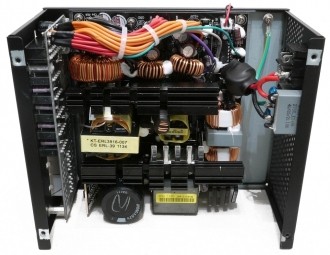
The incident happened on August 16 although an autopsy recently revealed electrical burns on his body. The official cause of death was deemed to be electrocution; likely the result of touching a loaded capacitor inside the power supply.

Captain Dan Tennis of the Shawnee Police Department said the unnamed victim was “one of those kids,” the type that’s always tinkering with computers and gadgets. Disassembling a computer is something he’d done multiple times before.

Full details haven’t been released nor do we know why he opened the power supply to begin with. The boy’s father arrived home to find his son dead. As the captain pointed out, power supplies typically have all sorts of warning stickers reminding users about the dangers that lie within.

About the only parts to salvage inside a PSU would be a cooling fan or two – cheap components that certainly aren’t worth risking your life to retrieve and reuse.

, , ,

User Comments: 91

Got something to say? Post a comment
  1. Most of these comments are about as full of stuff as the original story. Someone posted about the human heart beating at 60 Hz? Really? Are you the FLASH?

    Is it strange for a person's heart to beat at a very healthy 60BPM?

  2. Is it strange for a person's heart to beat at a very healthy 60BPM?

    You do realize 60Hz would be 60 beats per second.

  3. You do realize 60Hz would be 60 beats per second.

    See, this is what happens when you abandon the old nomenclature. When you meant " 60 CPS", you said, "

    60 cycles per second". There was none of this "60 Hertz" bull s***!

    And kilocycles meant CPS counted by thousands. Same deal with megacycles.

  4. @captaincranky, I'm not following. What is it I am abandoning? Hertz was already mentioned, the comparison did not originate from my comment.

    The hertz is equivalent to cycles per second. The heart beat represents a complete cycle, though I'm not sure if it actually has to beat twice to complete a cycle.

  5. You do realize 60Hz would be 60 beats per second.

    Yeah, that was my (poorly worded) point.

  6. @captaincranky, I'm not following. What is it I am abandoning? Hertz was already mentioned, the comparison did not originate from my comment.
    You didn't abandon anything, I was trying , (apparently unsuccessfully), to reinforce your comment.

    The hertz is equivalent to cycles per second. The heart beat represents a complete cycle, though I'm not sure if it actually has to beat twice to complete a cycle.
    I believe the pulse is taken on the "BUH", not the "bump". I should know this, what with having a toy heart valve and all that.

  7. Sad to hear of this. But to address the lawsuit comment, there are ALWAYS warning stickers, they were obviously ignored here.

    Working with electronics in my life I have learned a few times that I dont like to be shocked. I always push the power button after unplugging the device. Additionally before I go near any high voltage caps I short the leads with a screw driver (even after the button push I still sometimes get sparks)

    Its a shame that this kid didn't get the chance to learn a lesson here like I did so many times. Rest in piece dude.

  8. You know it is, danger attracts stupidity

  9. Be careful when opening power supplies I have nearly killed my self with one

  10. Well, I think he was extremely unlucky.

    I'm a teenager which likes to reassemble/repair computers and I got shocked by mains voltage (in my country (the Czech Republic) the mains voltage is 230V) a few times (like 2 or 3) and I'm still alive).... I also got shocked by a charged capacitor from a computer power supply once. It gave me a really nasty shock and since then I'm extremely careful when I do anything with voltages higher than 50 volts.....

    It's extremely unlikely that a shock from a capacitor charged to mains voltage will kill you. I know several people who got shocked by mains voltage or even by higher voltages and they're still alive. However, if you do something with voltages higher than let's say 50 volts, you should be extremely careful. Most likely it will only shock you, but still please be careful. When I take apart computer power supplies, I always short the capacitors using an insulated wire before I touch anything.

  11. To those people who say they drain the ramaining power by pushing the power button. This will only drain the low voltage secondary side after the main chopper. It WILL NOT drain the power from the dangerous high voltage caps in the primary mains side of the psu. Please be careful.

  12. There exists no other solution than to ban all computer power supplies. Since it was the power supply that killed this person, computers should not be allowed to be sold with such instruments of death.

  13. There exists no other solution than to ban all computer power supplies. Since it was the power supply that killed this person, computers should not be allowed to be sold with such instruments of death.
    Nonsense. Power supplies don't kill people, electricity does. Face it, if you took away their power supplies, they'd just find another way to kill themselves. For example, putting one end of an extension cord into the wall, and the other end......

  14. This article kinda scares me, because I remember I was only 11 when I gutted my first PC and had NO IDEA to avoid the power supply like that even after unplugging it.

    13 years later, I know better, but thankfully I never learned the hard way like this poor fella

  15. Yup , also capacitors release their charge in seconds so unless he touched a 2000V capacitor im not sure if he could get electrical burns which means that whatever he touched it had a long powerful flow of 70+ V and some high amps not a simple burst ( though even a burst can kill )

  16. Yup , also capacitors release their charge in seconds so unless he touched a 2000V capacitor im not sure if he could get electrical burns which means that whatever he touched it had a long powerful flow of 70+ V and some high amps not a simple burst ( though even a burst can kill )

    Personally I don't believe the story being told to us. Something about the burns don't make since. I've been zapped by wall current many times. I've been zapped by small devices that stored several hundred volts. The hardest I have ever been jolted was by an automobile coil. The only time I have ever been burned by electricity was from a high powered CB antenna, pushing well over 1000 Watts of signal. I don't see a power supply reproducing these conditions un-plugged or otherwise, so I am inclined to agree with the guest comment.

Recently commented stories

Post a new comment

Social Login & Guest Posting TechSpot Members
Login here or sign up for free,
it takes about a minute.
Get complete access to the TechSpot community. Join thousands of technology enthusiasts that contribute and share knowledge in our forum. Get a private inbox, upload your own photo gallery and more.
TechSpot on:

Subscribe to TechSpot

Get free exclusive content, learn about new features and breaking tech news.