Forward-looking: Traditional computer chips perform tasks by sending digital signals at regular clock speeds, but new experimental hardware uses microwaves for specialized workloads. The resulting chip can handle multiple functions, including AI, while consuming only a fraction of the power of a conventional processor.
Researchers at Cornell University have developed a chip that combines traditional digital processing with a microwave neural network, performing tasks similar to conventional neural networks while consuming less than 200 milliwatts. Considered the first of its kind, its design challenges traditional circuit architecture.
Dubbed the "microwave brain," the chip processes data streams via analogue wireless communication. By manipulating microwaves in the tens of gigahertz, it can complete complex tasks far faster than traditional digital hardware, which executes instructions linearly.
Real-time frequency-domain computation could make the microwave brain ideal for decoding radio signals, tracking radar targets, processing digital data, and similar tasks. Because the chip responds directly to inputs, it could also detect wireless communication anomalies across multiple microwave frequency bands.
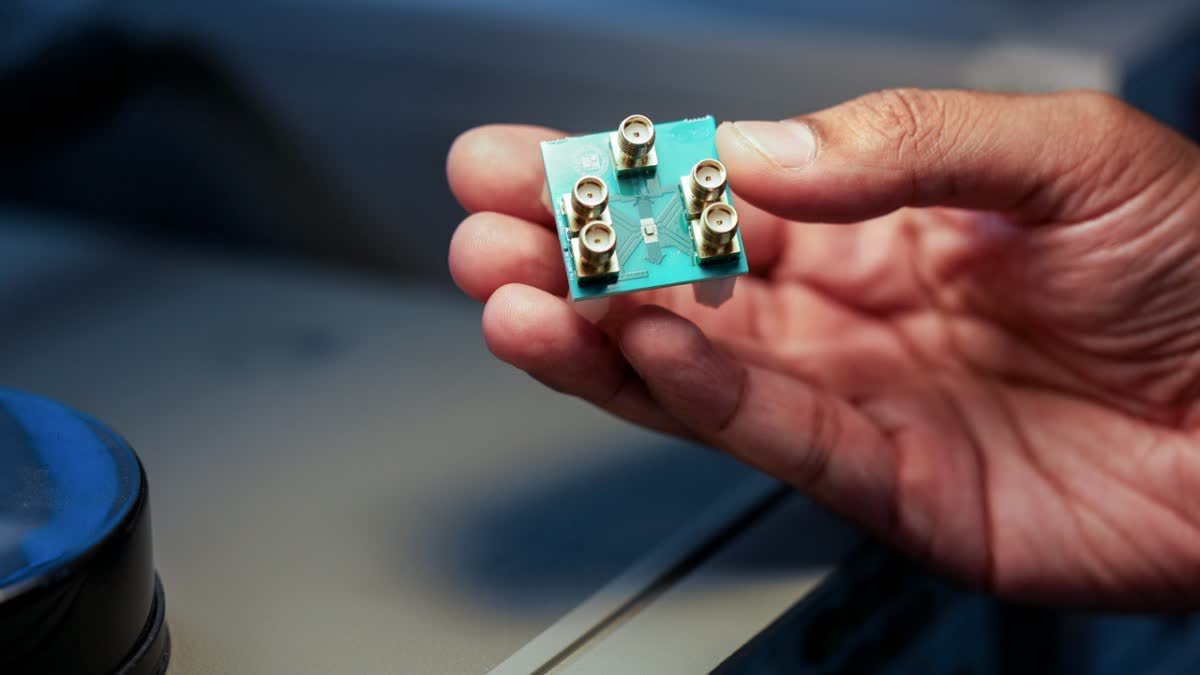
By integrating waveguides into the neural network using a probabilistic design strategy, the researchers created a chip that handles AI workloads without the steep increases in power consumption and error correction typically seen as complexity rises. As a result, the microwave brain can classify wireless signal types with at least 88 percent accuracy – comparable to digital neural networks but using far less power on a much smaller chip.
The researchers believe they can further reduce power consumption, making the chip suitable for edge computing. Its compact size could enable local neural networks on smartphones and wearables, reducing dependence on cloud networks. While Apple, Meta, and other tech giants are promoting AI-enabled devices such as smartwatches and glasses, the potential for neural networks on wearables remains largely unexplored.
The microwave brain, published in the August 14 issue of Nature Electronics, emerged from experiments conducted as part of a larger, unspecified project funded by DARPA, Cornell, and the National Science Foundation. The chip remains experimental but could scale widely, and researchers aim to improve its accuracy for use across diverse platforms.