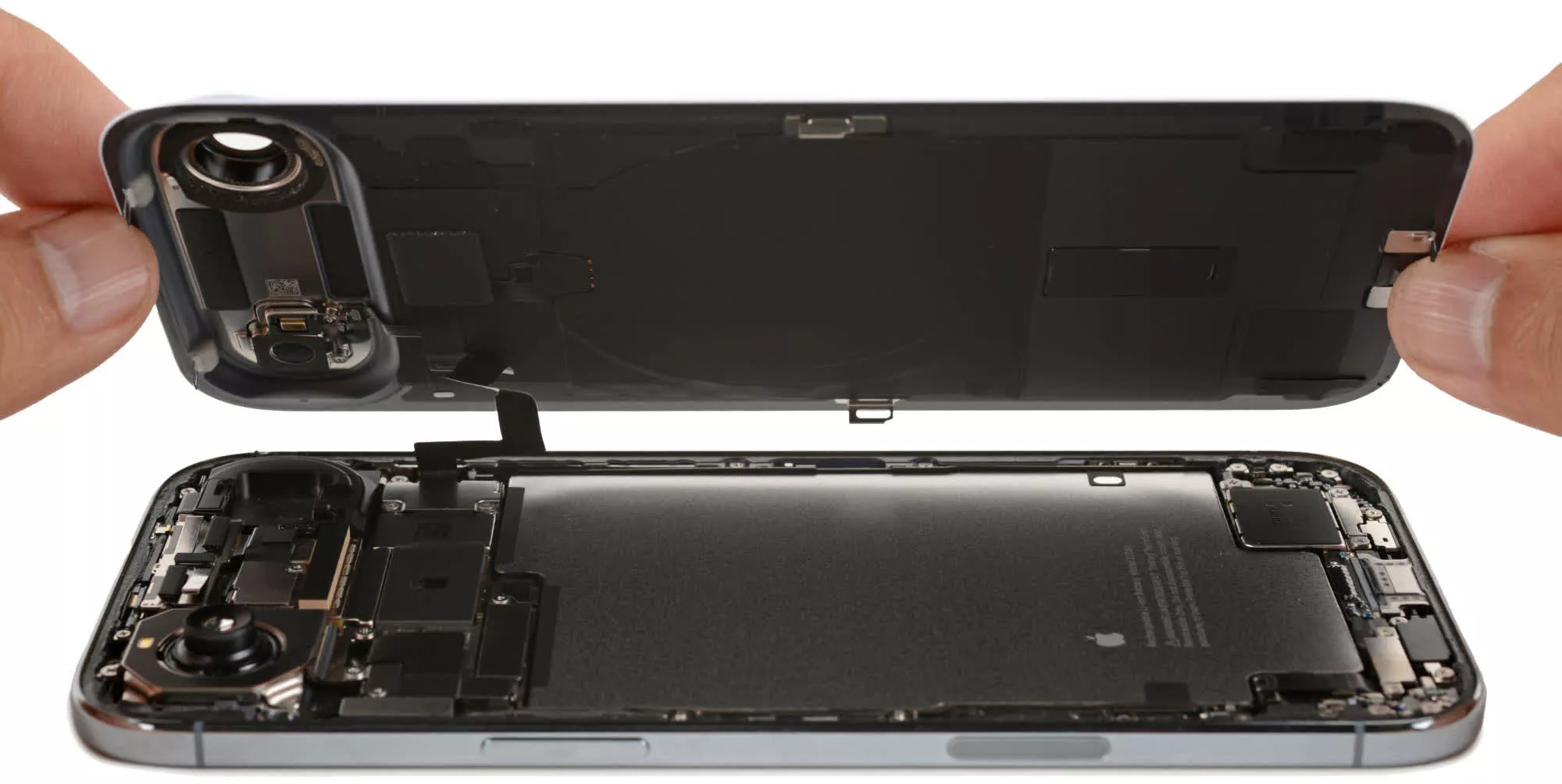
In a nutshell: When Apple announced its thinnest smartphone ever earlier this month – the iPhone Air – many wondered how the company had managed the feat from a design perspective. Some compromises, such as including only a single rear camera, were immediately apparent. Apple also acknowledged that battery life would not match that of its full-size models. Still, plenty of questions remained. Thanks to iFixit, we now have some answers.
When the team cracked open the iPhone Air, it quickly became clear how Apple had achieved its slim design. In short, the company packed the logic board and related components into the thicker camera plateau at the top of the phone, leaving the rest of the device free to house the battery.
We also learned through reviews (and confirmed via iFixit's teardown) that Apple deleted the lower speaker, leaving the iPhone with only a single (non-stereo) speaker. While it does have fewer bells and whistles compared to its bigger (and more expensive) siblings, iFixit described the internal design as lean and efficient.
As it turns out, a more consolidated design does not necessarily equate to a device that is more difficult to repair. Following its thorough teardown, iFixit awarded the iPhone Air a seven out of 10 repairability score.
The use of modular components really helps with repairs, and the dual entry design facilitates easier battery swaps (as does the electrically debonding adhesive used to hold the battery pack in place).
Another benefit of cramming all of the hardware bits into the top of the phone and constructing its frame out of titanium is durability. Zack from Jerry Rig Everything put the iPhone Air to the test yet despite his best efforts, he could not bend the phone with his hands alone.
With some mechanical assistance, Zack determined that it took 216 pounds of pressure to bend the phone enough to shatter the display. Remarkably, the back glass remained intact through it all.
The iPhone Air "has no business being this indestructible," he said.
Image credit: iFixit