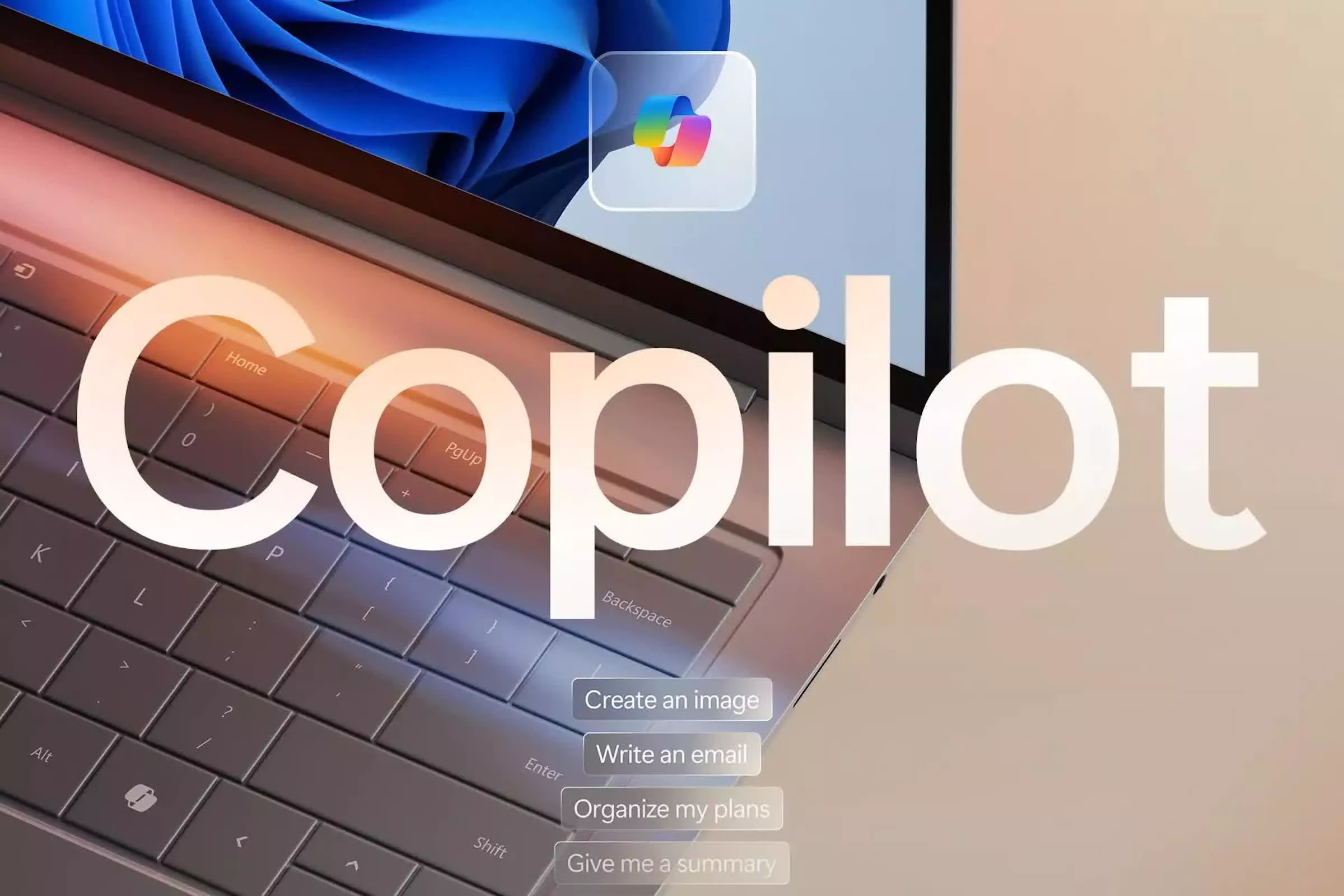
Sounding off: Microsoft's confidence in its own AI appears tempered by caution, at least in the legal fine print surrounding its Copilot software. Despite positioning Copilot as a cornerstone of its push to embed AI across Windows and enterprise tools, the company's own documentation makes clear users shouldn't rely on it for anything serious.
The Copilot terms of use, updated last October, draw clear limits around what the software is meant to do. The document states Copilot is for entertainment purposes only, adding that "it can make mistakes, and it may not work as intended." More notably, Microsoft explicitly advises against relying on it for important decisions, warning: "Use Copilot at your own risk."
This language stands out against the company's broader messaging. Microsoft has heavily promoted Copilot through Copilot+ PCs and deep integration into Windows 11 and its productivity apps. While liability disclaimers are standard practice, the wording highlights a broader tension across the industry: AI is marketed as essential and next generation, yet formally described as unreliable.
But that contradiction isn't unique to Microsoft.
Other competitors in the AI sphere include similar caveats. Elon Musk's xAI notes that its systems are probabilistic and may produce outputs that include hallucinations: "Artificial intelligence is rapidly evolving and is probabilistic in nature; therefore, it may sometimes: a) result in Output that contains 'hallucinations,' b) be offensive, c) not accurately reflect real people, places or facts, or d) be objectionable, inappropriate, or otherwise not suitable for your intended purpose."
Such warnings may appear redundant to those who understand how generative models function – probabilistic systems that synthesize text based on patterns, not truth. But they remain necessary, given how frequently people misplace their trust in machine output.
That misplaced trust can have tangible consequences. At Amazon, for instance, there were at least two AWS outages in which engineers allowed an AI coding bot to make changes without sufficient oversight, though the company later characterized the incidents as user error rather than AI failure.
Such events highlight the persistent gap between promise and operational risk. Generative AI can accelerate workflows and unlock new efficiencies, but its outputs are not guaranteed to be correct, and responsibility for errors ultimately falls on the humans and organizations that deploy it.
Human operators remain vulnerable to automation bias, a cognitive tendency to favor machine results over contradictory evidence. In the age of synthetic text and code, that bias could prove more consequential as AI systems produce persuasive but flawed work.
Legal disclaimers are one of the few guardrails separating hype from harm, including for the companies themselves, as these terms are written not by marketing teams or tech founders but by lawyers. Yet as companies race to monetize AI, there is a growing risk that the potential for error is downplayed in favor of adoption.
For an industry investing billions in infrastructure and LLM development, the fine print offers a more grounded view than the marketing: AI might be powerful, but it is not yet fully trustworthy.