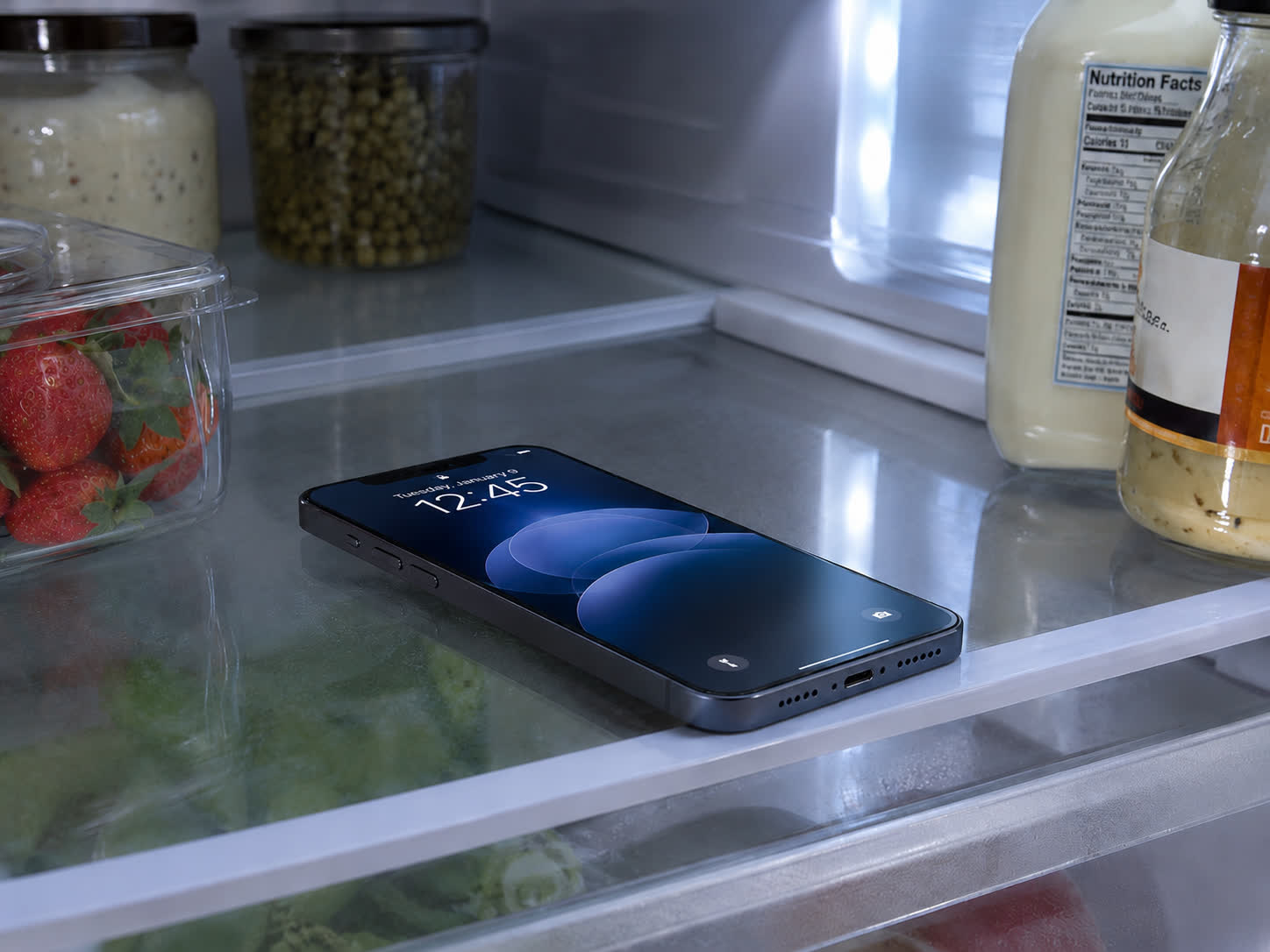
Facepalm: The UK and Europe are going through an unprecedented heatwave right now. It's causing a lot of problems, including devices that keep overheating as temperatures soar. To try to cool them down, some Brits have been placing them in their fridges and freezers, but the only thing this results in is more work for repair shops.
Jamie Farnell, a repair shop owner in the UK town of Wem told the BBC that he has been flooded with devices suffering from internal moisture damage recently.
Farnell believes the damage was caused by phones and tablets being put in fridges and freezers as the mercury soared.
During last month's extreme heatwave, an iPad exploded in the shop after a customer brought it in with a swollen lithium battery.
For a lot of people, placing a device in a fridge or freezer when it shows an overheating warning, or obvious signs it is getting too hot, seems like a good idea. The practice has become more popular since social media videos started pushing it as a smart and easy solution.
@itsprincemarko Putting your phone in the Fridge helps actually 📲 #android #androidtips #princetechtips ♬ original sound - Prince Marko
In reality, of course, it's very risky. One of the biggest problems is condensation. When a warm device enters a fridge or freezer, warm, humid air trapped around or inside the phone cools rapidly. As that air drops below its dew point, water vapor can condense on the phone's surfaces, ports, speaker openings, or potentially inside the casing.
When the chilled phone is removed, the risk can become greater because warm room air hits the cold device and condenses on it – similar to moisture forming on a cold drink.
Moisture inside a device can lead to lots of issues, from corrosion to short circuits.
There are also risks from thermal shock, in which a sudden temperature change can stress the screen, glass, seals, adhesives, and internal components; and battery damage from the extreme cold.
So, while these measures will technically cool a device, there are plenty of other methods that won't likely break them.
Farnell says this practice is reminiscent of another popular myth: drying out a wet phone with rice. This was especially popular at a time when phones had removable batteries and weren't water-resistant. But it's ineffective as rice cannot draw liquid out of sealed internal spaces very well. This method can also cause problems, such as the rice dust and starch entering ports and speakers.
Both Apple and Samsung recommend letting an overheating phone cool naturally in a cooler, shaded environment – not putting it in a fridge or freezer.