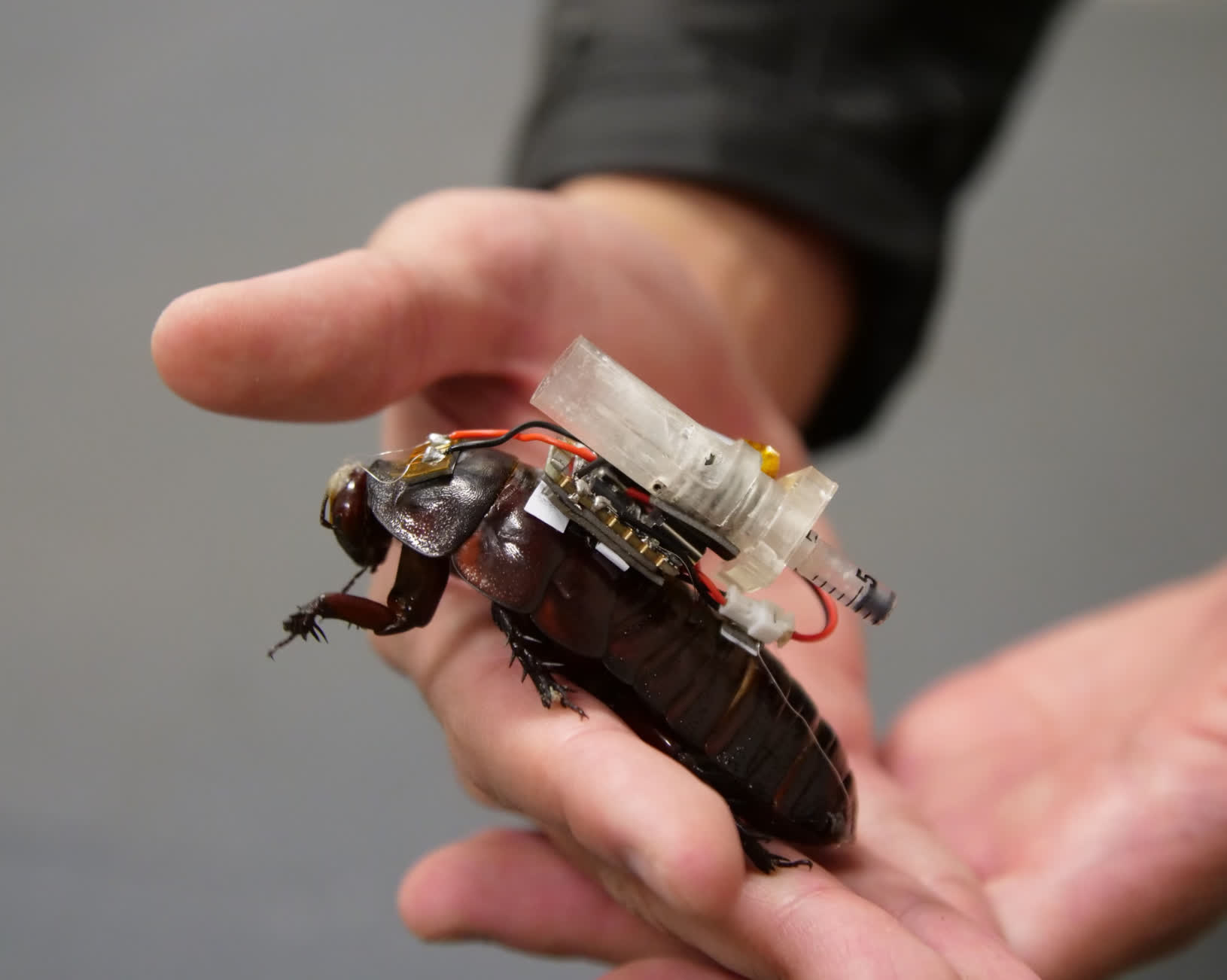
WTF?! If you were trapped under a pile of rubble following a disaster of some kind, the last thing you'd probably want to see is a swarm of cockroaches scuttling toward your face. But these aren't your everyday insects: they're syringe-carrying cyborgs, and they could save your life.
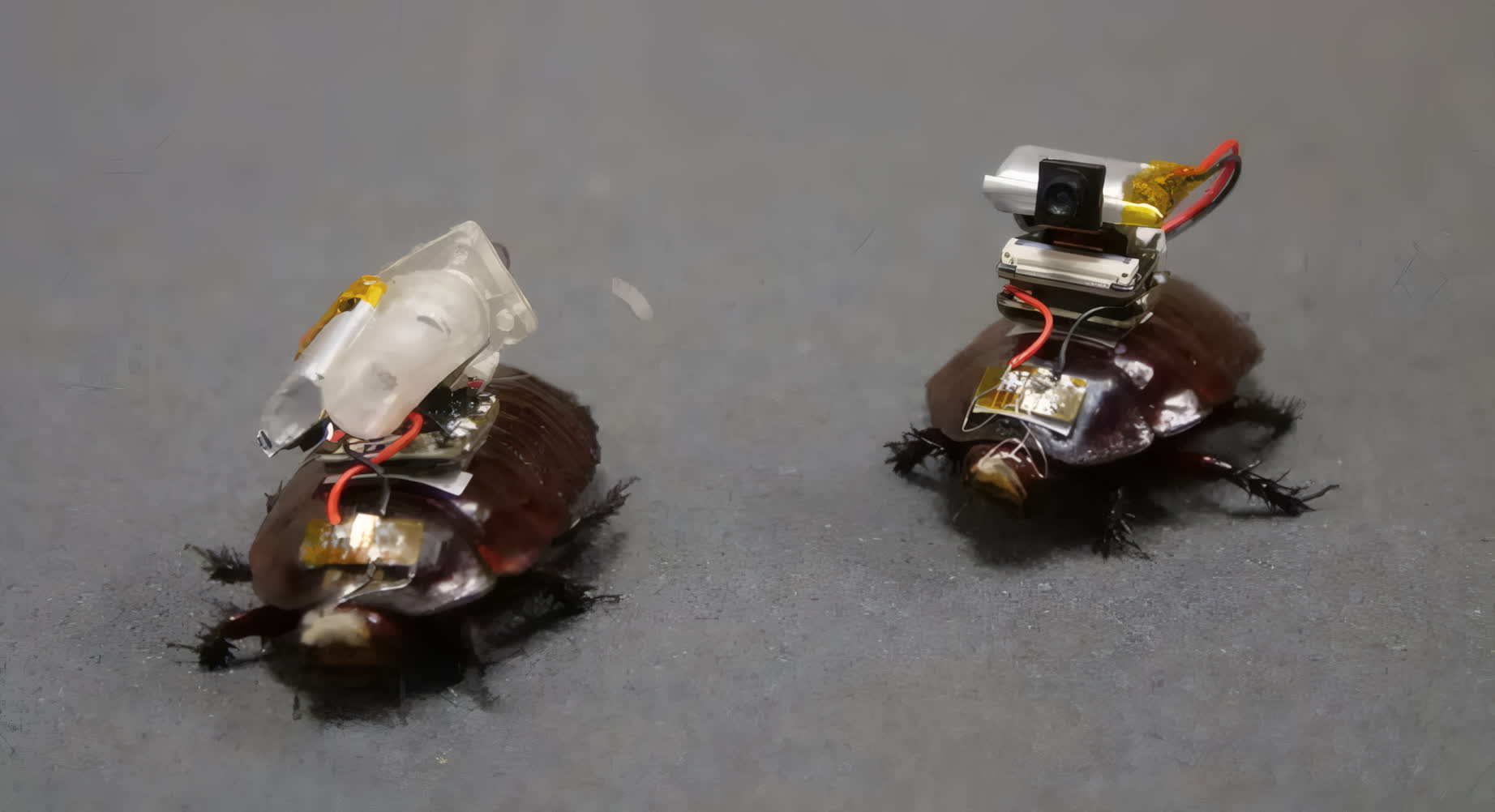
Developed by University of Queensland biorobotics researchers working with biomedical engineers at the University of New South Wales (UNSW), these "paraborgs" carry cameras and miniature medical injectors, reports The Guardian.
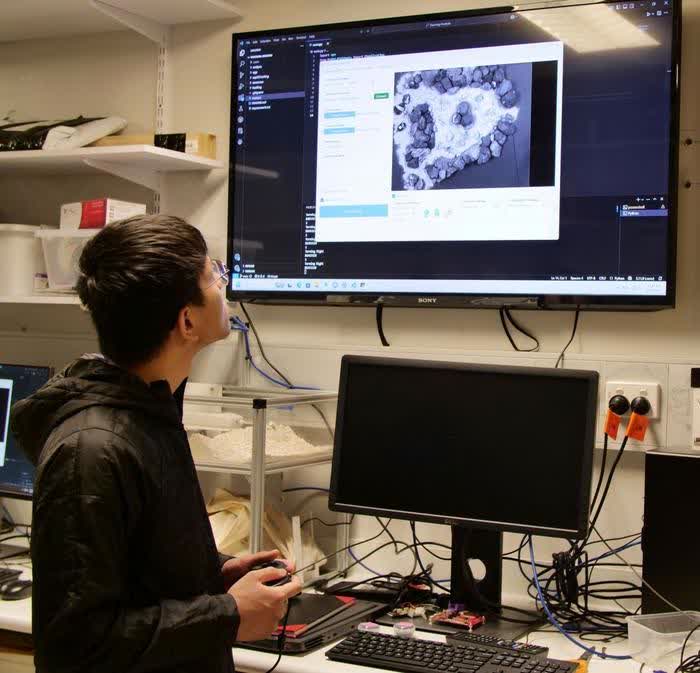
While these creatures might have applications as tiny acid-injecting assassins, bringing to mind the obscure 1984 Tom Selleck/Gene Simmons movie Runaway, they're also perfect for search and rescue missions in which people have become trapped in places too dangerous for rescuers to reach.
The idea of a cockroach sticking a needle into someone, even in an emergency, might concern some people, but UQ biorobotics engineer Thang Vo-Doan said critical medical decisions remain under human control.
The cameras carried by the insects could also help rescuers plan missions before they enter a collapsed building or cave.
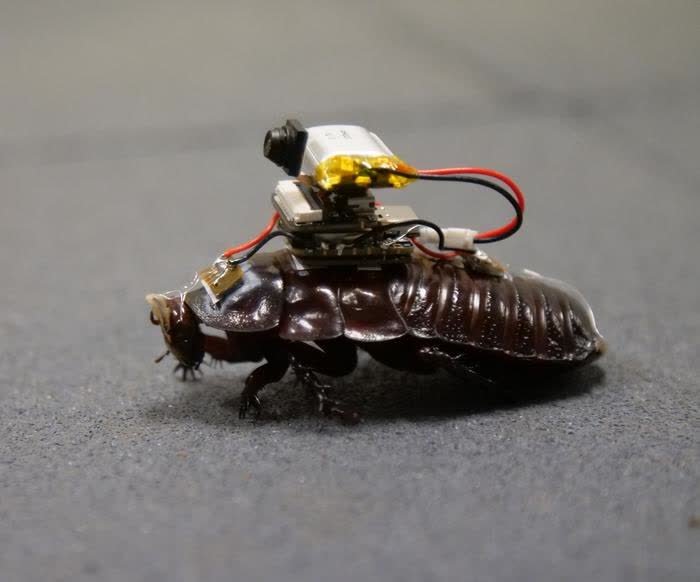
"Augmenting their natural biomechanics could allow these cyborg insects to deliver timely emergency assistance when direct access to people trapped in narrow, debris-filled spaces isn't possible," Vo-Doan said.
"Cyborg insects have been designed for search and explore missions for the past couple of decades," he added. "We wanted to take the next step. Once they find someone, can they actually help?"
The insects being used in the research are giant burrowing cockroaches from North Queensland fitted with remotely activated auto-injection systems custom-made for the species.
In proof-of-concept tests, the paraborgs successfully injected targets 95% of the time when positioned within 15cm. The full navigation-and-injection process was completed successfully in 72% of trials.
Cockroaches don't exactly have a border collie-like willingness to follow human instructions, so getting the paraborgs into the right position has been a key engineering challenge.
"The cyborg insect has to navigate to the target, position itself accurately and remain stable enough to perform the injection," said PhD candidate Hai Nhan Le.
The cockroaches are anesthetized while the electrodes and microchips are fitted, and once the harnesses are removed, their lifespans are comparable to those of other cockroaches.
Researchers have been using cockroaches in unexpected ways for years now. Previous projects have transformed them into mass-produced cyborg search teams, pipeline inspectors pulling camera-equipped carts, underwater explorers with miniature life-support systems, and even reconnaissance platforms for military use.
The ultimate goal is to deploy swarms of specialised cyborg insects, each performing a complementary role. Vo-Doan hopes they will move from the research phase into real-world rescues within the next five to ten years.