Forward-looking: A team of researchers in Singapore has built a way for cyborg cockroaches to keep working when there isn't enough oxygen. The setup lets the cockroach keep moving in shallow, waterlogged, and low-oxygen spaces, instead of being limited to dry ground. The project, led by Nanyang Technological University, focuses on a small, wearable device that effectively acts as the roach's life-support system. It builds on more than a decade of work on cyborg insects – real animals wired so a human can steer them with electronic signals.
These systems have already been tested in search-and-rescue scenarios and for inspecting infrastructure, but only in dry conditions. That's because insects like cockroaches rely on oxygen from the air, which limits where they can go. In real disaster sites, especially after flooding, that's a major drawback.
The NTU team's answer is a 3D-printed diving suit that straps onto the roach's back. It's small – about 10 by 10 millimeters – and designed to be as lightweight as possible so it doesn't interfere with the insect's movement. Inside the device is a chemical oxygen generator. It uses hydrogen peroxide and a manganese dioxide catalyst to generate oxygen. That oxygen flows through four silicone tubes connected to the roach's spiracles, the openings it uses to breathe. That allows the insect to function even when submerged.
Like earlier versions of cyborg insects, the system relies on a hybrid control model. Electrodes are attached to the cockroach's brain and sensory organs, and a human operator sends signals to steer it. The insect still moves on its own, which is part of its advantage – it can navigate tight or uneven spaces more naturally than a small robot can. That design choice keeps the whole system simple. There's no need for motors or large batteries, which would add weight and limit mobility. But their need for breathable air has kept them out of the flooded and contaminated spaces where they're most needed.
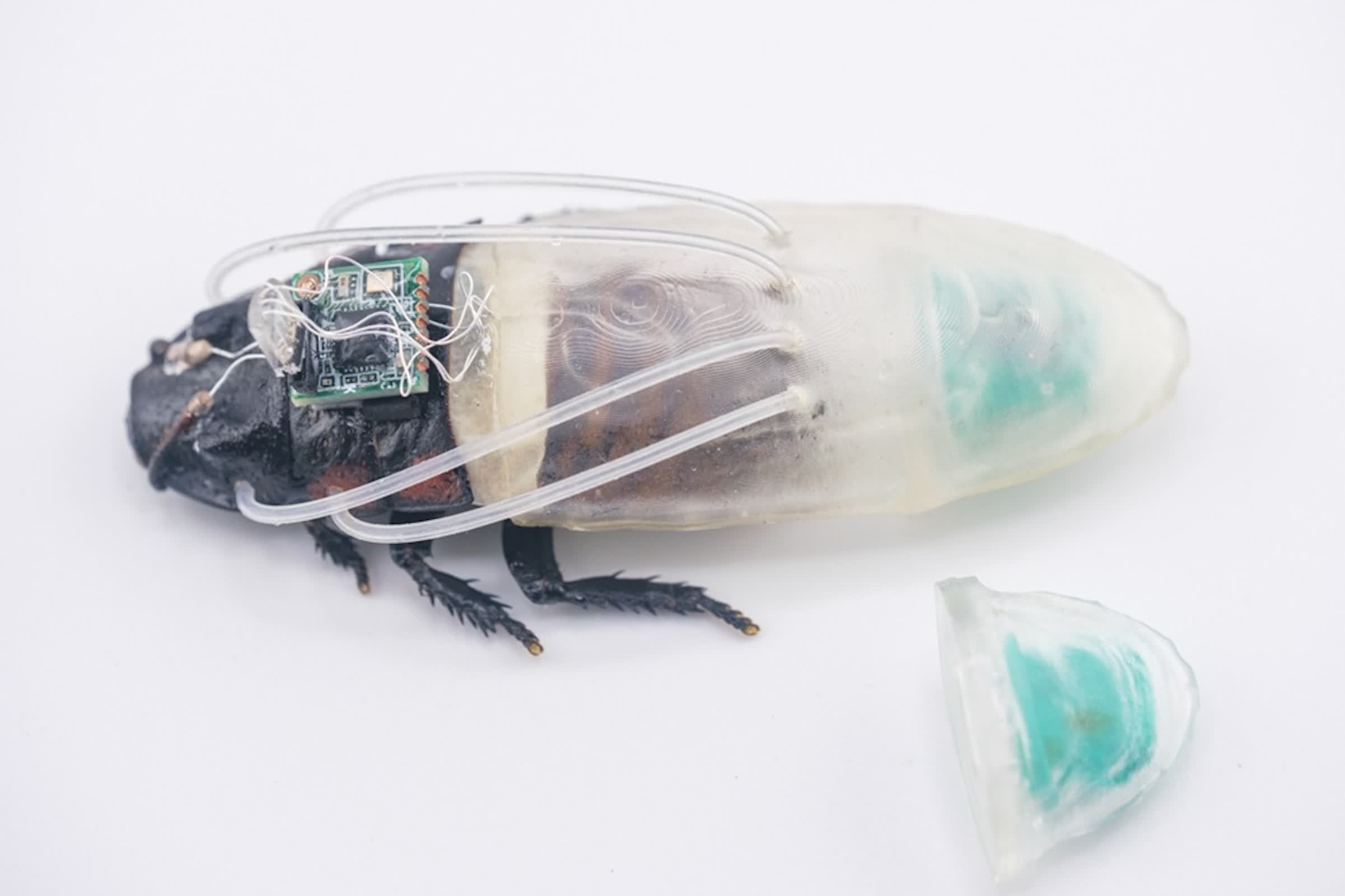
To test the suit, the team 3D-printed a set of narrow, tube-shaped obstacle courses. These were meant to mimic confined, flooded spaces such as pipes, drains, or gaps in collapsed structures. The cockroaches were able to move through the courses with little slowdown compared to their movement on land. The bigger improvement was how long they could survive underwater. Without the device, the insects lasted only a few minutes. With it, they remained active for up to three hours.
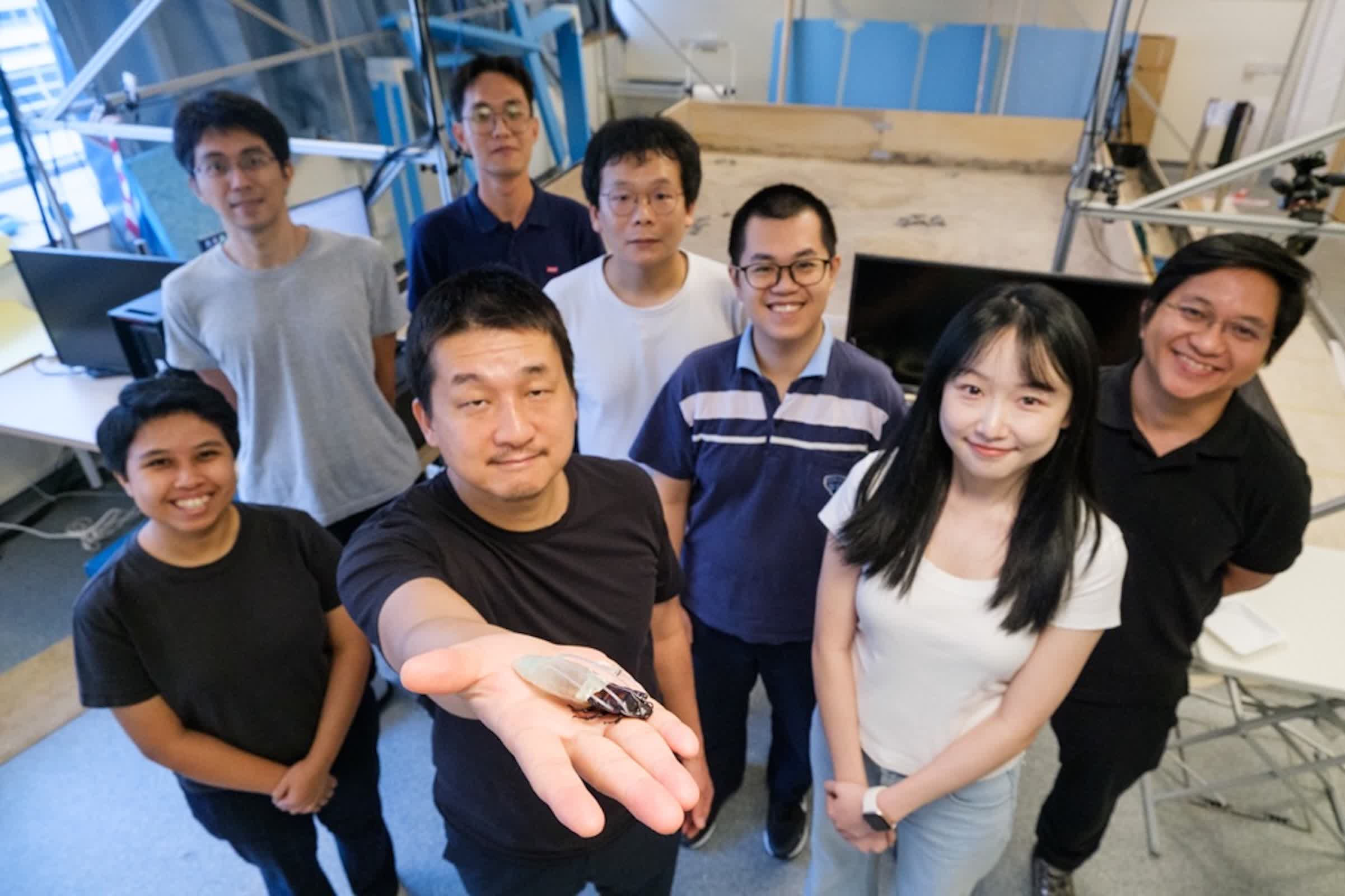
"This is important because real disaster sites can be challenging after heavy rain or flooding, blocking access routes in the rubble, drains and narrow gaps," NTU Singapore Aerospace Engineering Professor Hirotaka Sato said. "By expanding the operating parameters of our cyborg insects to include underwater travel, we believe they can enhance search-and-rescue efforts."
The tests were limited to shallow water, so this isn't a system designed for deep diving. It's more about handling partially flooded or oxygen-poor environments where traditional robots might struggle to fit or operate efficiently. The work, published in Nature Communications, fits into a broader push to integrate living systems with electronics rather than build tiny robots from scratch. In this case, the goal is practical: create small, durable tools that can go where larger machines can't.