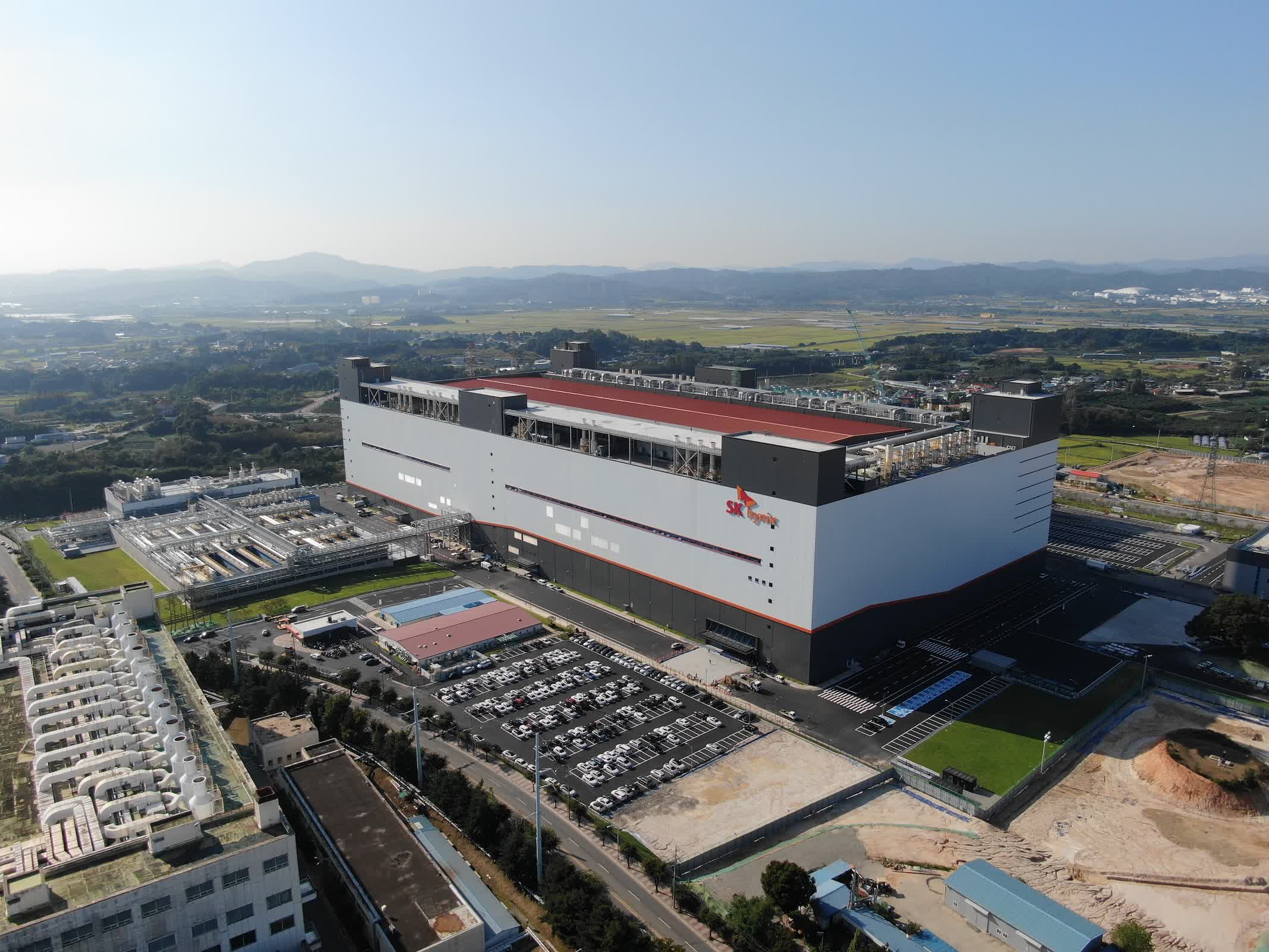
Rumor mill: Solidigm can make more NAND flash at its Dalian factory in China and has buyers for every SSD it produces. What it lacks is US approval to bring in more chipmaking equipment. Parent company SK hynix is reportedly offering to build a NAND fab in the United States in exchange for permission to ship additional tools to Dalian. The proposal could help Solidigm increase production of the flash memory used in its data center solid-state drives while giving Washington a commitment to new American semiconductor manufacturing.
The equipment would go into unused space in Dalian's Mod B building. Completed in 2023, the building was never fully equipped because of the memory market downturn. Some tools are installed, but much of the space remains available.
For Solidigm, leaving that space idle limits sales. The company sells every SSD it makes, and more NAND output would let it supply more drives.
The Dalian plant is the only factory in the world producing Solidigm's 192-layer floating-gate 3D NAND. That memory goes into SSDs for AI, enterprise and hyperscale data centers.
The factory relies on equipment made by US suppliers, including Applied Materials, KLA and Lam Research. Those companies need export licenses to ship their tools to China.
US policy has generally allowed some equipment deliveries to Chinese factories operated by multinational companies such as SK hynix and Samsung. But Washington wants those plants to keep operating without increasing output or adopting newer manufacturing technology.
That leaves an important question about the Dalian proposal. Installing tools in Mod B would complete the existing factory rather than expand it, because the building was finished in 2023. Even so, equipping the unused space would increase production. The building's completion date does not resolve how US officials will assess the equipment requests.

Solidigm has applied for the licenses, but the Commerce Department has not approved additional shipments. Last December, the Commerce Department granted SK hynix limited authorization to deliver equipment to Dalian in 2026. It has not issued a similar authorization for 2027.
The licensing talks come as Solidigm develops successors to its current 192-layer memory.
At Computex 2026, Avi Shetty, who leads the company's AI solutions and ecosystem business, said Solidigm planned to develop fifth- and sixth-generation floating-gate NAND. He also emphasized factory utilization and profitability. He did not announce plans for increased production at Dalian or a US fab.
Increasing output and introducing a new NAND generation are separate steps. Installing more equipment could let Solidigm produce more of its existing memory. Moving to a newer manufacturing process could require different permissions under US export rules.
The proposal does not specify which NAND generation an American factory would produce, nor does it establish whether additional licenses for Dalian would cover equipment needed for future generations. Solidigm has outlined its technology plans, but the manufacturing arrangements behind them remain unsettled.
Increased production at Dalian could help finance the proposed American factory. Profits from additional NAND sales could contribute to construction costs and support Solidigm until US production becomes available.
The company is also considering an initial public offering as early as 2027 to raise capital.
For the Trump administration, a US NAND fab would fill a gap in domestic chip production, as no company has manufactured NAND flash in America for years. SK hynix's proposal would tie that investment to continued access to American equipment for its Chinese operation.
None of those steps are final. The US factory remains a proposal, the equipment requests are awaiting approval, and the IPO is under consideration.
Solidigm's immediate priority is getting tools into the Dalian space it already has. Its next challenge is securing the manufacturing capacity – and regulatory approvals – to bring later generations of floating-gate NAND into production.