A four-year-old budget CPU is outselling AMD's best gaming chip in some markets

Daniel Sims

Posts: 2,515   +76
Staff
In context: Seeing AMD brag about its continued dominance of CPU sales charts is unsurprising. However, a recent social media post from the company also reveals the effects of the RAMpocalypse when observers pay close attention to which AMD CPUs are selling the most.
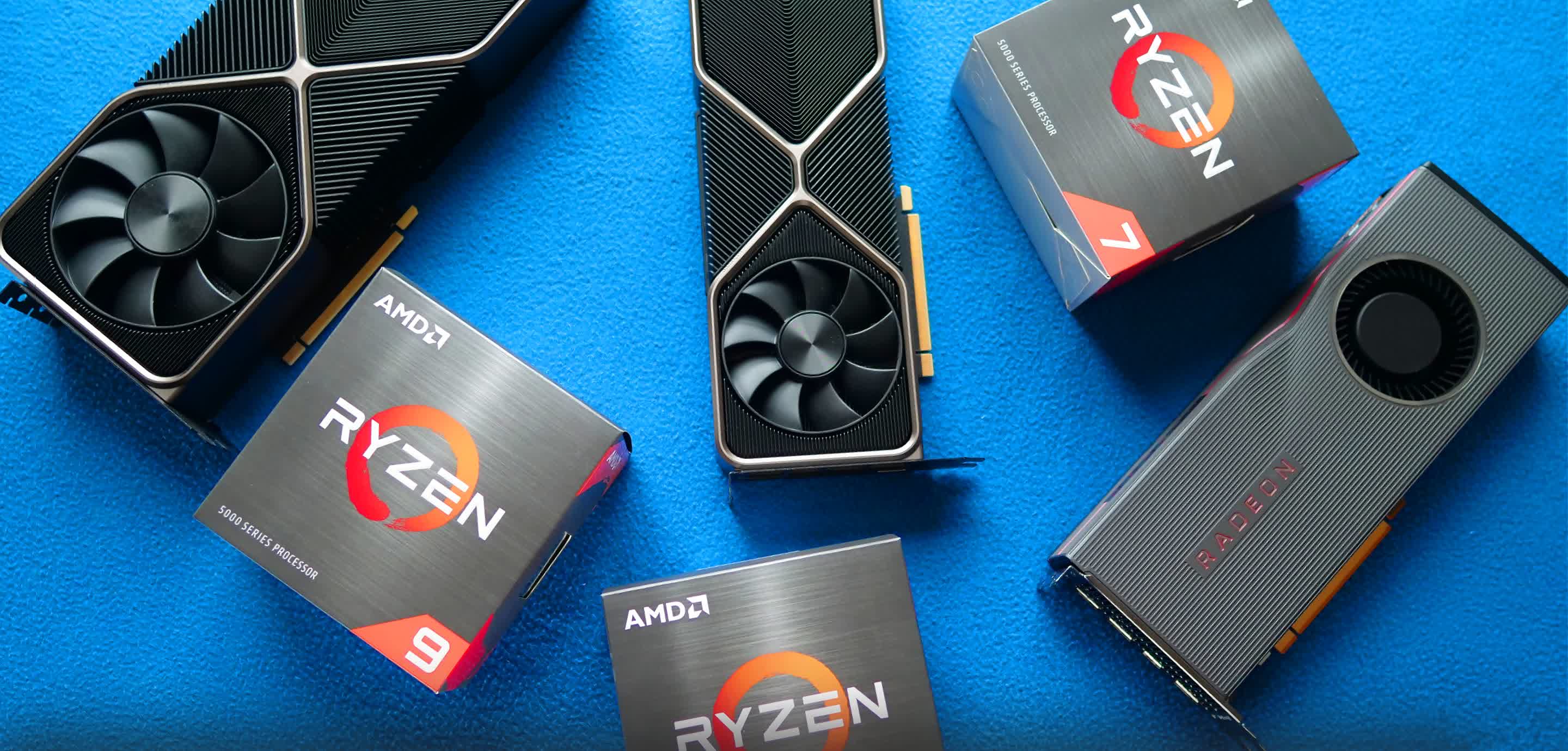
AMD's senior marketing director, Sasa Marinkovic, recently shared a snapshot of the 30 top-selling CPUs on Amazon. The company occupied all but four spots, including the entire top 10. It's a deserved flex, as Intel has yet to meaningfully respond to AMD's last three generations of desktop processors. However, Marinkovic also revealed how much ongoing RAM shortages have boosted sales of processors released four years ago.

Assuming the post shows Amazon's US sales charts, it captures a brief moment when the Ryzen 5 5500, a budget CPU originally released in 2022, stole the top spot from the Ryzen 7 9800X3D, widely considered the best gaming CPU on the market. The 5500 still holds the crown on Amazon's UK site.

It's a shocking turnaround from when TechSpot advised shoppers to avoid the 6-core Zen 3 processor when it launched at a $160 MSRP. However, the CPU now sits at approximately half that price – $81, while the 9800X3D and other chips from AMD's Ryzen 7000 and 9000 lineups are locked behind the continually rising price of DDR5 RAM.

TechSpot highlighted the distorted situation late last year with benchmarks showing that, while the Ryzen 5 5500 still isn't a great CPU, it's good enough for a budget DDR4-based build. Furthermore, it has since lost one of its top competitors.

Last year, the 7500F offered much better performance at the same price for users who could acquire DDR5 memory, but eight months later, that CPU has nearly disappeared from storefronts, with the remaining offers nearing $200. In fact, the only other processors in Amazon's top 30 anywhere close to the 5500's price are Ryzen 3 chips.

Also see: The Best CPUs - Mid 2026 Update

The AI boom's effect on the memory market was apparent then and has only worsened since. Manufacturers currently pay six times as much for memory as they did a year ago. The shift has raised the prices for various consumer products, and experts expect the situation to last at least into 2028.

AMD acknowledged the skewed market by re-releasing the Ryzen 7 5800X3D, which, like the 5500, initially launched in 2022. TechSpot's re-review highlights that, at $350, it's technically a ripoff compared to its successor, the 7800X3D. However, like the 5500, it's the best option in its price range for users stuck with DDR4 RAM.

Permalink to story:

 
Budget product outsells halo product, in other news, the Sky is blue.

I got one of these for my media PC. Drops into a cheap board, I had DDR4 lying around and comes with a stock cooler. You don’t really need the latest and greatest for gaming and even on AM5 the 9600X and 7600X get you 75% of the performance of a 9800X3D and even more when you’re not using a 5090.
 
Funny thing is, this article may say more about Intel’s pricing than AMD’s gaming crown.

Older Intel DDR4 chips are still perfectly capable. The 12400/13400/14400 class offers strong gaming, competitive 1% lows, and very good productivity...especially once E-cores enter the picture. A 14400F with a ~$100 B760 DDR4 board gives you a very capable platform for around $285 before RAM.

So why is AMD still cleaning up in the budget market?

Because Intel somehow forgot to make its old chips cheap.

A 12400F around $100, 13400F around $140, and 14400F around $170 with inexpensive B660/B760 DDR4 boards would make AM4 a much harder sell for a new build.

Yes, the 5700X3D/5800X3D are excellent gaming chips, particularly for existing AM4 owners, but their current pricing can get downright ridiculous for what you're actually buying...a gaming specialized CPU on a platform with no meaningful upgrade path beyond it. At inflated prices, the value proposition starts disappearing quickly.

Outside the X3D parts, I'm certainly not convinced Ryzen 5000 is automatically the better buy.

Anyway, I'll leave that there and wait for the AMD faithful to explain how paying premium money for the final boss of a four year old socket is somehow "value." :)
 
Funny thing is, this article may say more about Intel’s pricing than AMD’s gaming crown.

Older Intel DDR4 chips are still perfectly capable. The 12400/13400/14400 class offers strong gaming, competitive 1% lows, and very good productivity...especially once E-cores enter the picture. A 14400F with a ~$100 B760 DDR4 board gives you a very capable platform for around $285 before RAM.

So why is AMD still cleaning up in the budget market?

Because Intel somehow forgot to make its old chips cheap.

A 12400F around $100, 13400F around $140, and 14400F around $170 with inexpensive B660/B760 DDR4 boards would make AM4 a much harder sell for a new build.

Yes, the 5700X3D/5800X3D are excellent gaming chips, particularly for existing AM4 owners, but their current pricing can get downright ridiculous for what you're actually buying...a gaming specialized CPU on a platform with no meaningful upgrade path beyond it. At inflated prices, the value proposition starts disappearing quickly.

Outside the X3D parts, I'm certainly not convinced Ryzen 5000 is automatically the better buy.

Anyway, I'll leave that there and wait for the AMD faithful to explain how paying premium money for the final boss of a four year old socket is somehow "value." :)

Issue is you have upgradability to the 5800X3D on AM4 and it will work on a cheap board. The top end Intel chips won’t. Also why spend 100 for a media PC like mine fke example when the 5500 is significantly cheaper
 
And I was too. If you get a basic B series board with a 5500 you can in time upgrade to a 5800X3D, if you do that with say a 13400 you can’t upgrade to a 14700 or 14900K because the b boards can’t handle it.
That is fair regarding the absolute cheapest B series boards, but saying you can’t upgrade to a 14700 or 14900 isn’t really accurate. B760 supports those chips. The real question is whether a very cheap board has the VRM quality and cooling to make that a sensible pairing.

But that also isn’t really the comparison I was making.

If I am buying a new motherboard, CPU and RAM around a 13400 or 14400, I am not doing it because I expect to drop a 14900K into a $90 motherboard years later.

The same logic applies to AM4. Buying a 5500 today because you might later buy a 5800X3D means you have now bought two CPUs just to end up at the absolute top and end of that platform.

For someone already on AM4, the X3D upgrade path is excellent and makes perfect sense.

For someone buying the motherboard, CPU and RAM from scratch today, I think the value argument is a lot more debatable.
 
And I was too. If you get a basic B series board with a 5500 you can in time upgrade to a 5800X3D, if you do that with say a 13400 you can’t upgrade to a 14700 or 14900K because the b boards can’t handle it.

You can power limit the 14700/K to work within the limits of a less expensive B-series board and still get good performance, but that's something of an annoyance that not everyone will do. I do this all the time in power-compromised builds (currently using an 8700K in a SFF Optiplex).

But yes the 5500 offers some pretty great value at ~$85 where it usually lands, and I'm currently using one with a 9600 XT. It's a match for the 8700/K/10400/10500/10600/K unless you OC your 8700K or 10600K to its limit. That's good enough for many games all while taking wayyy less power than those Intel CPUs as the 5500's power and cooling requirements are very modest. But you get to some CPU-heavy locations in games (or ones that aren't coded so well) and those 1% lows take a beating vs. a 5800X3D or 14700K.
 
Back