The big picture: Nonprofit research institute Epoch AI is building one of the most detailed public records of America's data center boom. Using open-source intelligence ranging from high-resolution satellite imagery to local building permits, the group locates, classifies, and analyzes the massive server facilities spreading across the US. The effort has produced an interactive online map – a visual catalog of data centers that includes estimates of their costs, power capacity, and corporate ownership.
Each entry on Epoch AI's map links satellite imagery with construction data and public permits. Zooming in on New Albany, Ohio, for example, reveals the complex where Meta is building its Prometheus data center. According to Epoch's analysis, construction costs have reached $18 billion, and the facility draws roughly 691 megawatts of power.
The research team said it relied on land-use maps, natural gas turbine permitting records, and satellite and aerial imagery of cooling equipment to estimate compute capacity. Users can also step through satellite time-lapse imagery to watch sites expand year by year.
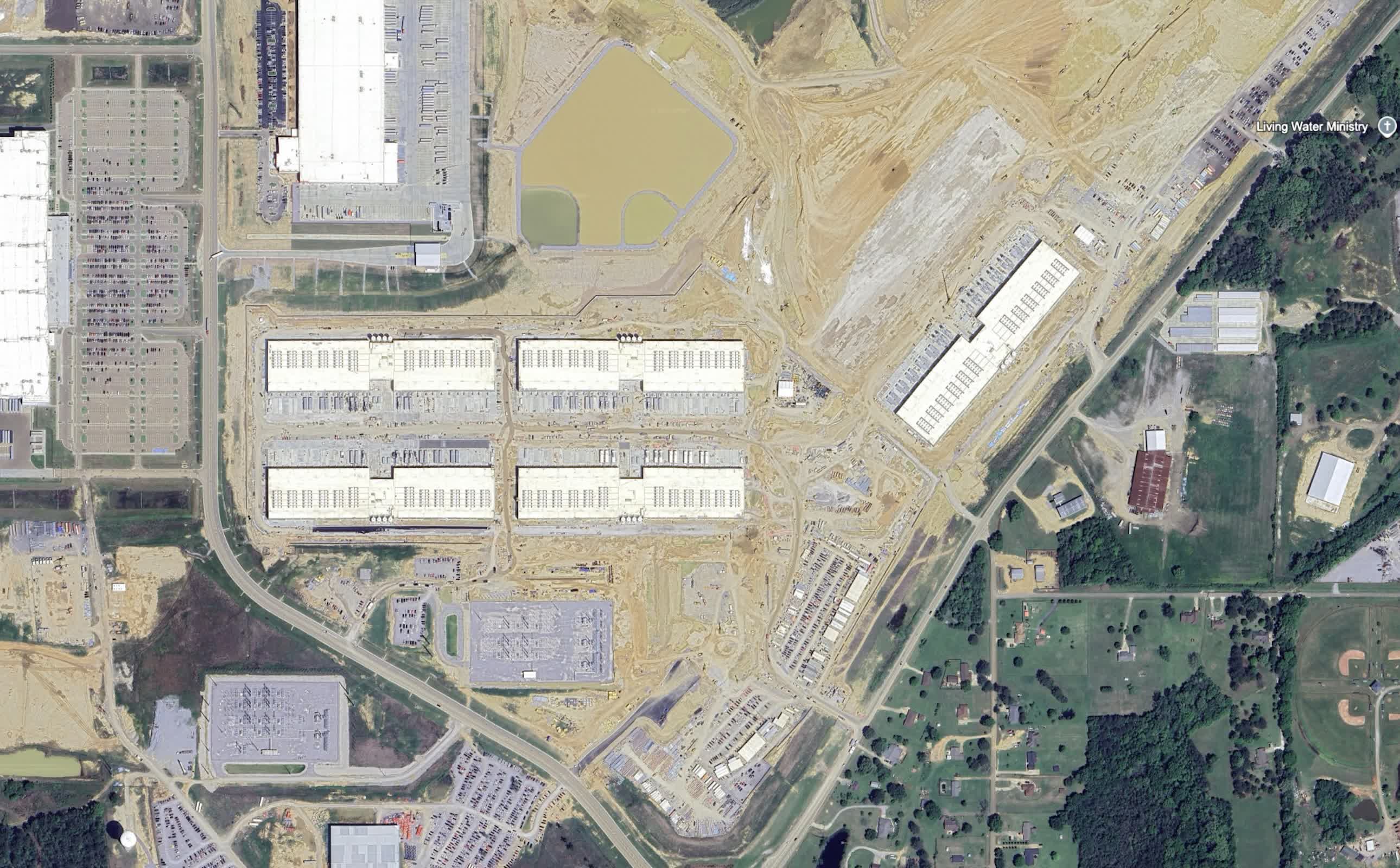
The scale of new data center construction has made it one of the most consequential – and contentious – industrial trends in the US economy. The rapid expansion of AI infrastructure has attracted major investment while also prompting local pushback, as communities confront noise, water consumption, and increased strain on regional power grids.
Jean-Stanislas Denain, a senior researcher at Epoch AI, told 404 Media that the mapping effort helps bring transparency to an industry that is often opaque. "There's a lot of public discourse and discourse with researchers about the future of AI," he said. "Insiders have access to a lot of proprietary data, but many people do not. So it just seems very good for there to be this online resource."
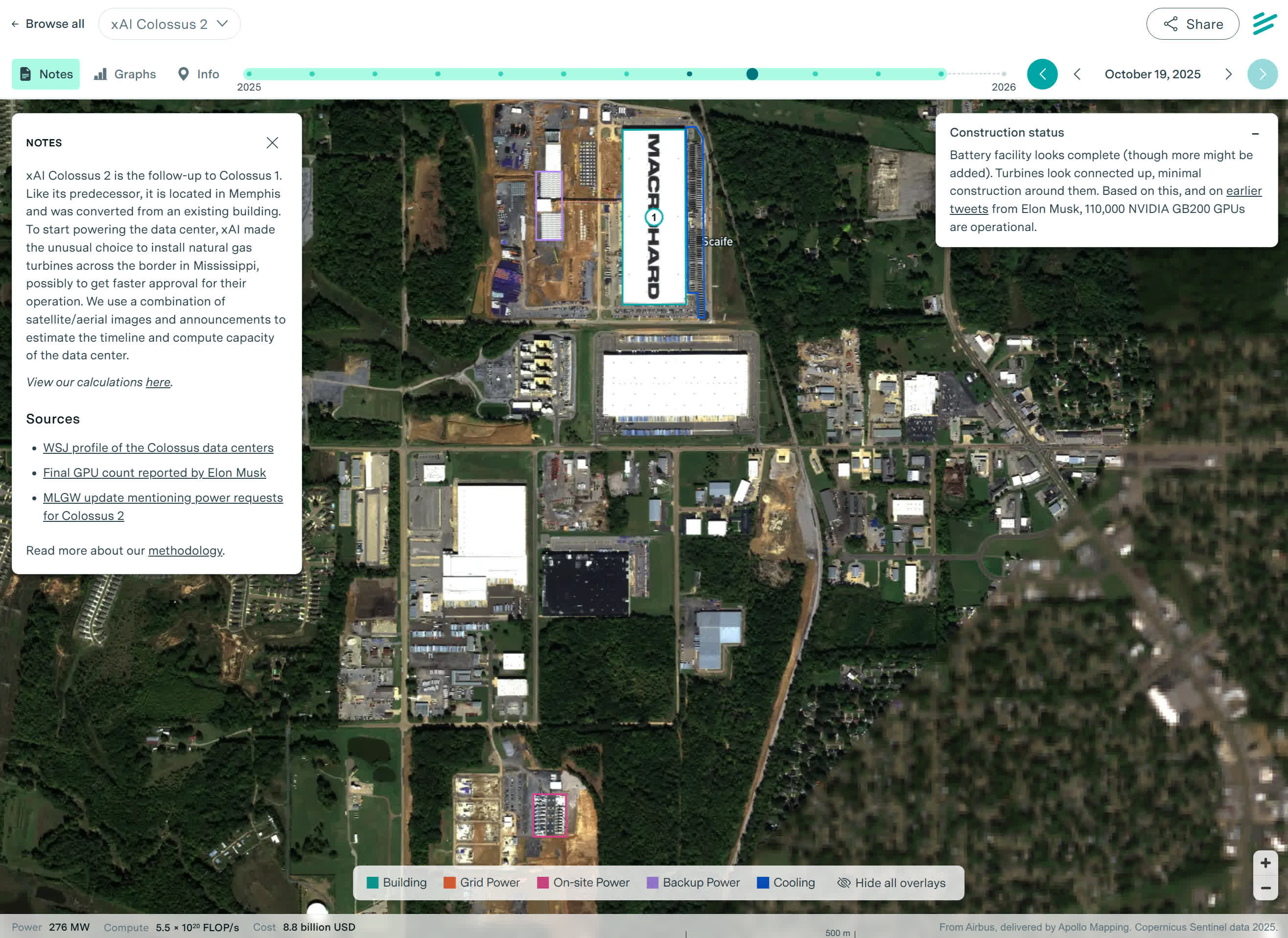
Epoch's map also identifies xAI's Colossus 2 facility near Memphis, Tennessee. The researchers noted that "to start powering the data center, xAI made the unusual choice to install natural gas turbines across the border in Mississippi, possibly to obtain faster regulatory approval." The team observed completed battery facilities and connected turbines, citing public satellite imagery and past statements by Elon Musk that "110,000 NVIDIA GB200 GPUs are operational."
The methodology behind Epoch's map is described in detail on the group's website, where time-lapse images show new steel shells taking shape against changing landscapes. One of the key indicators, the team explained, is cooling infrastructure visible from orbit. Modern AI data centers generate so much heat that cooling equipment extends outside the buildings, typically around their perimeter or on rooftops. Satellite imagery allows the team to identify the type of cooling used, the number of cooling units installed, and, where applicable, the number of fans on each unit.
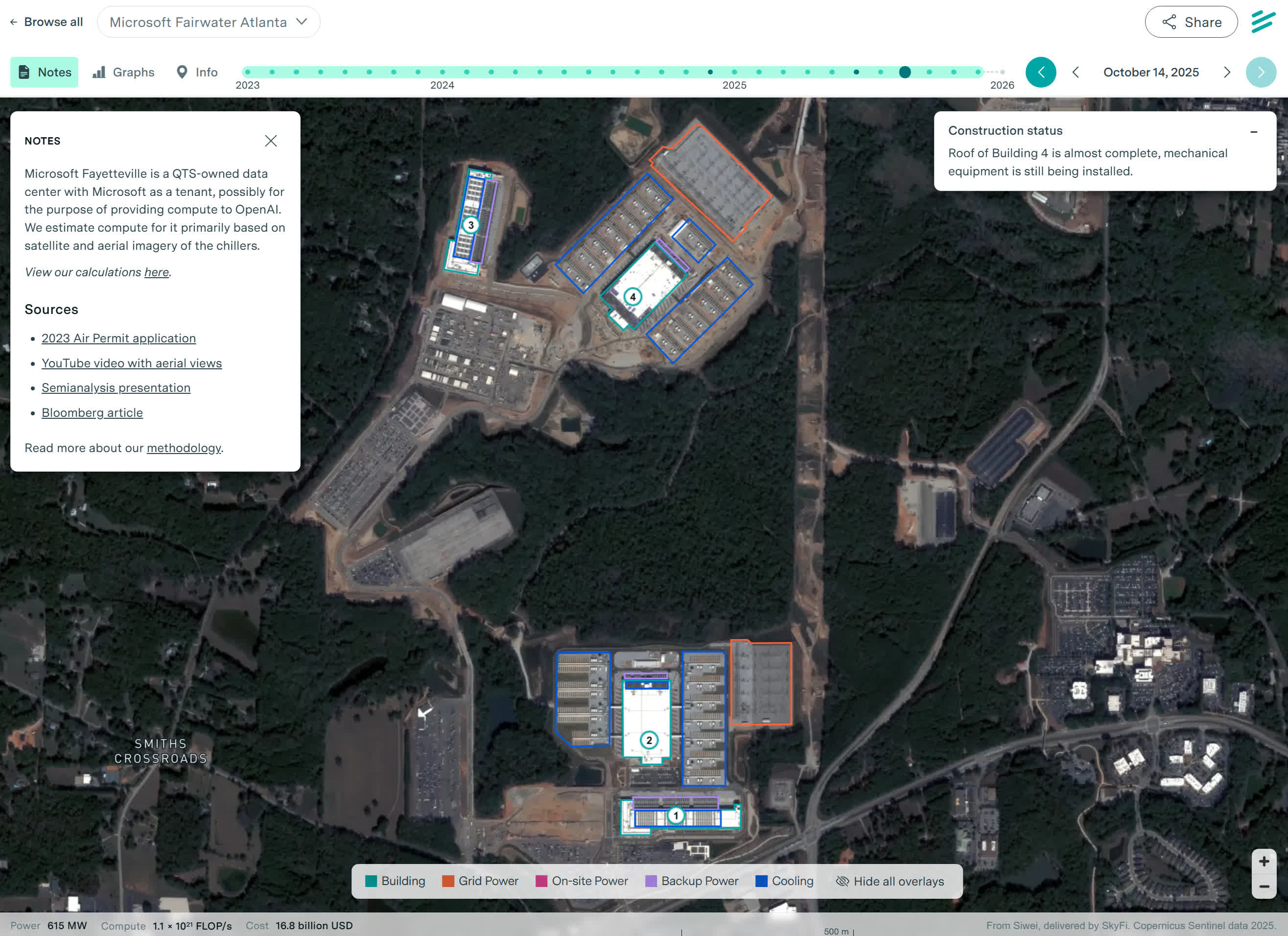
Denain said cooling infrastructure is a reliable proxy for estimating power demand. Epoch's internal model factors in the number and diameter of cooling fans, along with the total footprint of each unit, to estimate energy use. However, the researchers cautioned that the "cooling model still has significant uncertainty," noting that capacity estimates can vary by as much as a factor of two depending on fan speed.
Even with detailed imagery, constructing a complete picture of the AI data center landscape remains difficult. During the discovery phase, some facilities are so obscure that no news coverage, rumors, or existing databases reference them at all, Epoch explained. The group estimates that as of November 2025, this hidden subset accounts for roughly 15 percent of AI compute delivered globally by chip manufacturers.
"Even if we have a perfect analysis of a data center, we may still be in the dark about who uses it, and how much they use," Epoch wrote on its website, referencing deals between AI startups such as OpenAI and Anthropic and hyperscalers including Oracle and Amazon.
Image credit: 404 Media
A new map reveals the true scale of America's AI data center boom


