A new Wine update could finally bring Adobe Photoshop to Linux

Alfonso Maruccia

Posts: 2,511   +934
Staff
Forward-looking: Linux powers the vast majority of the world's computing infrastructure, yet it has long struggled to gain traction with everyday users – and with creative professionals, where macOS often holds an edge over Windows. That could change in the near future if one developer's work is accepted into Wine's codebase.
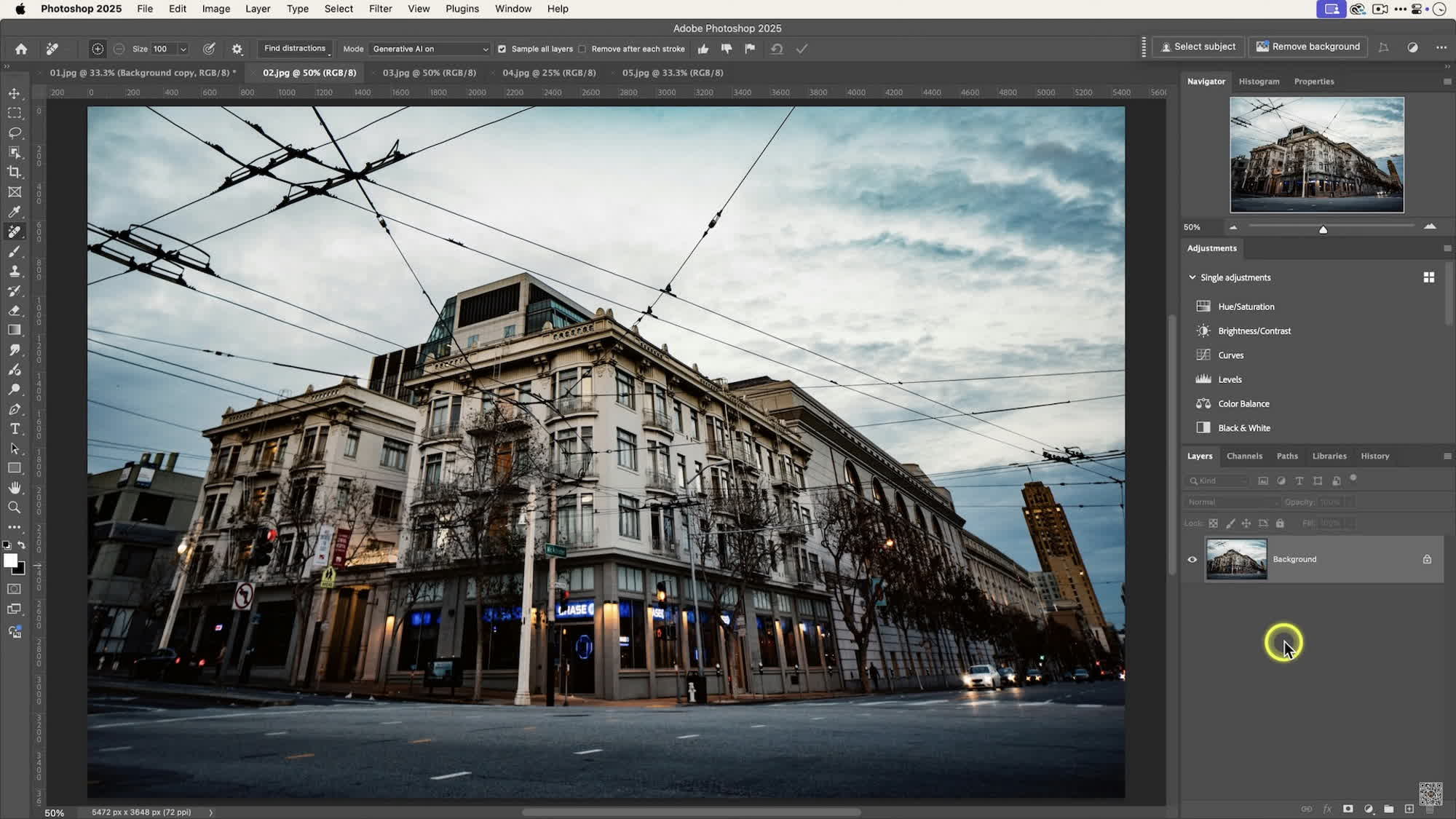
A developer known as "PhialsBasement" has recently merged several commits into Valve Software's custom Wine build, introducing a way to install and run Photoshop on Linux systems. This "patch" may eventually achieve a truly unprecedented goal, which is making the open-source platform compatible with some of the most widely used creative and image editing tools on the market.

The changes target long-standing problems encountered when installing Adobe Creative Cloud on Linux. According to the dev, Creative Cloud fails largely because of gaps in Wine's compatibility layer – gaps that prevent key Windows components from functioning correctly.

Wine is already a powerful tool for running Windows games and applications on Linux, but it still lacks support for several components Adobe relies on. PhialsBasement highlighted two major missing pieces: Microsoft's legacy browser engine used to run web-based Windows applications (MSHTML), and the XML "core" services required by script-based software on Windows XP SP3 and later (MSXML).

The new patch aims to bridge those gaps, making Wine compatible with Adobe's Creative Cloud installer framework. The dev tested the code with both Photoshop 2021 and Photoshop 2025, reporting that the installer completes successfully and that both versions can run on Linux, albeit with some minor issues.

Other users who tested the patch have confirmed improved compatibility, though Adobe's software remains far from seamless on Linux. Still, many in the community are offering constructive feedback and guidance, particularly around how PhialsBasement can navigate Wine's submission and review process.

The coder initially submitted the changes to Valve's GitHub repository but was later instructed to resubmit them to Wine's main repository on GitLab. That process can be slow, but contributors are encouraging PhialsBasement to persist.

Adobe Creative Cloud remains the company's subscription-based hub for managing photos, documents, and design workflows. Photoshop, one of the suite's main tools, is still widely regarded as the industry standard for image editing.

Despite WineHQ's reputation for moving at a "glacial" pace, many in the Linux community argue that enabling Photoshop and Creative Cloud support is simply too important to ignore. If successful, the dev's work could help remove one of the last major barriers keeping creative professionals off Linux altogether.

Permalink to story:

 
Sounds promising and I would like to see more here - Ai, INDD, Acrobat, AE and so on
take your time guys, its important to everyone
 
The takeaway should be that Adobe on Windows relies on ancient, never updated code. All wine will do, if it works, is transpose the same brittle code into pseudo-Linux. I fail to see how that is even worth doing and doesn't fix the massive lack of linux peripheral drivers needed to run Adobes optimally. Not to mention its still Linux.
 
The machine gods mourn those trapped beneath the heavy, costly yoke of an adobe workflow.

Something the majority of linux users completely fail to comprehend is that people use software that does what they want it to do without needing to spend 4 hours trying random solutions until something works.

Adobe will maintain its market dominant position until someone else makes a better overall solution that solves enterprise workflows across small to large team sizes. Very little revenue comes from individual users for Adobe.

By the time any linux compatibility layer is implemented, Adobe will probably have fully re-vibe coded the entire Creative Suite anyways.
 
Something the majority of linux users completely fail to comprehend is that people use software that does what they want it to do without needing to spend 4 hours trying random solutions until something works.

Adobe will maintain its market dominant position until someone else makes a better overall solution that solves enterprise workflows across small to large team sizes. Very little revenue comes from individual users for Adobe.

By the time any linux compatibility layer is implemented, Adobe will probably have fully re-vibe coded the entire Creative Suite anyways.
Adobe has made it the goto solution because it worked its way into schools and has brought up entire generations on their products. And a little side note, pirated copies of Adobe products run WINE so it really makes you wonder what the actual issue is.
 
Gaming is already on its way, and now Adobe on its first steps...
Microsoft must be really sweating
Yes, but not because of this.

Windows' biggest enemy is Microsoft. They're doing everything in their power to kill Windows. With Windows 11.

(Writing this on Windows 10 IoT, supported until 2032)
 
Adobe has made it the goto solution because it worked its way into schools and has brought up entire generations on their products. And a little side note, pirated copies of Adobe products run WINE so it really makes you wonder what the actual issue is.
This. Adobe is what I was taught. Take Photoshop for example: my student discounts often made it free (or nearly free) to acquire and it was the professional standard. Anyone in the early 00’s, who’s job consisted of design-related work, that was well versed in Adobe, was employable—that’s what most employers purchased. Windows, Mac, it didn’t matter. Adobe was on both platforms and Linux wasn’t remotely workstation-ready at that time.
 
Yes, but not because of this.

Windows' biggest enemy is Microsoft. They're doing everything in their power to kill Windows. With Windows 11.

(Writing this on Windows 10 IoT, supported until 2032)
Doesn't matter. People will still stay on Windows if Linux is even worse in some sense.
 
Adobe has made it the goto solution because it worked its way into schools and has brought up entire generations on their products. And a little side note, pirated copies of Adobe products run WINE so it really makes you wonder what the actual issue is.
If Canonical or Red Hat had enough desktop users willing to pay for Adobe products, Adobe would support them fairly quickly. It's not that they can't support them, they just don't want to because it's not worth the hassle for relatively little revenue.
 
If Canonical or Red Hat had enough desktop users willing to pay for Adobe products, Adobe would support them fairly quickly. It's not that they can't support them, they just don't want to because it's not worth the hassle for relatively little revenue.
yeah, that's definitely true. I know I tend to sound like a conspiracy theorist when I say stuff like that. I think it is mostly that Linux as an idea tends not to give programs the kernal level access that developers want for DRM. I just think that's dumb because if a cracked version of your product exist, which it almost always does, then DRM doesn't do anything anyway.

I'm happy with the slow and steady progress Linux is making and it's nice that increase gaming support is making it more mainstream. I'm willing to compromise to learn other software to stay away from Windows but I know that not everyone is. Although, I'm at the point with Microsoft where if I had to use something that wasn't supported on Linux then I would buy a mac. I've been windows free since 2021 and it's mind boggling how far Linux has come in just the last 4-5 years. I've been playing with it since 2006-2007 and didn't really start to get into it until about 2015, but being able to daily drive it for years now has surprised me. From my perspective, it's less hassle to find a work around than it is to reinstall windows. Going back 10 years, the work arounds that I needed often didn't even exist. Using WINE now compared to 10 years ago, it's a completely different beast.
 
I've used photoshop since version 5. I'm too cranky/old to try something new.
If they 100% got Photoshop to be very reliable on Linux I'd dump windows.
 
Something the majority of linux users completely fail to comprehend is that people use software that does what they want it to do without needing to spend 4 hours trying random solutions until something works.

Adobe will maintain its market dominant position until someone else makes a better overall solution that solves enterprise workflows across small to large team sizes. Very little revenue comes from individual users for Adobe.

By the time any linux compatibility layer is implemented, Adobe will probably have fully re-vibe coded the entire Creative Suite anyways.
You missed the point. There are many many working alternatives that actually work better, cheaper, and do not need tweaking in Linux.

Linux isn't that difficult anymore.
 
You missed the point. There are many many working alternatives that actually work better, cheaper, and do not need tweaking in Linux.

Linux isn't that difficult anymore.
People just don't want to relearn, especially a tool that they may use for their income. I'm not a fan of Adobe, but one of the largest things holding back Linux adoption is specific software not having a Linux version. If users know they can keep using Adobe, then they will feel more confident with a swap.
 
The takeaway should be that Adobe on Windows relies on ancient, never updated code. All wine will do, if it works, is transpose the same brittle code into pseudo-Linux. I fail to see how that is even worth doing and doesn't fix the massive lack of linux peripheral drivers needed to run Adobes optimally. Not to mention its still Linux.
Then you dont understand why people use Adobe Software.
People just don't want to relearn, especially a tool that they may use for their income. I'm not a fan of Adobe, but one of the largest things holding back Linux adoption is specific software not having a Linux version. If users know they can keep using Adobe, then they will feel more confident with a swap.
Even if you "relearn" there is 0 guarantee that open source alternatives will have all the features you expect from the product.

The FOSS world has to have reckoning at some point: people want these closed source products that do what they need.
 
You missed the point. There are many many working alternatives that actually work better, cheaper, and do not need tweaking in Linux.

Linux isn't that difficult anymore.
There are exactly zero viable alternatives to Adobe's Creative Suite when used how most paying customers use it. If you can't see beyond your own personal use, you won't ever see the reason why enterprise can't and won't adopt desktop linux environments.
 
There are exactly zero viable alternatives to Adobe's Creative Suite when used how most paying customers use it. If you can't see beyond your own personal use, you won't ever see the reason why enterprise can't and won't adopt desktop linux environments.
LOL
 
Back