After 12 years with TSMC, Apple explores new partners for chip manufacturing

Skye Jacobs

Posts: 2,030   +59
Staff
Rumor mill: For more than a decade, every iPhone and Mac processor has come from a single manufacturer: TSMC. That unbroken run, however, may be facing its first serious test. As the AI boom redirects much of TSMC's manufacturing capacity toward companies like Nvidia, Apple is reportedly evaluating alternative suppliers for some of its less performance-intensive chips.
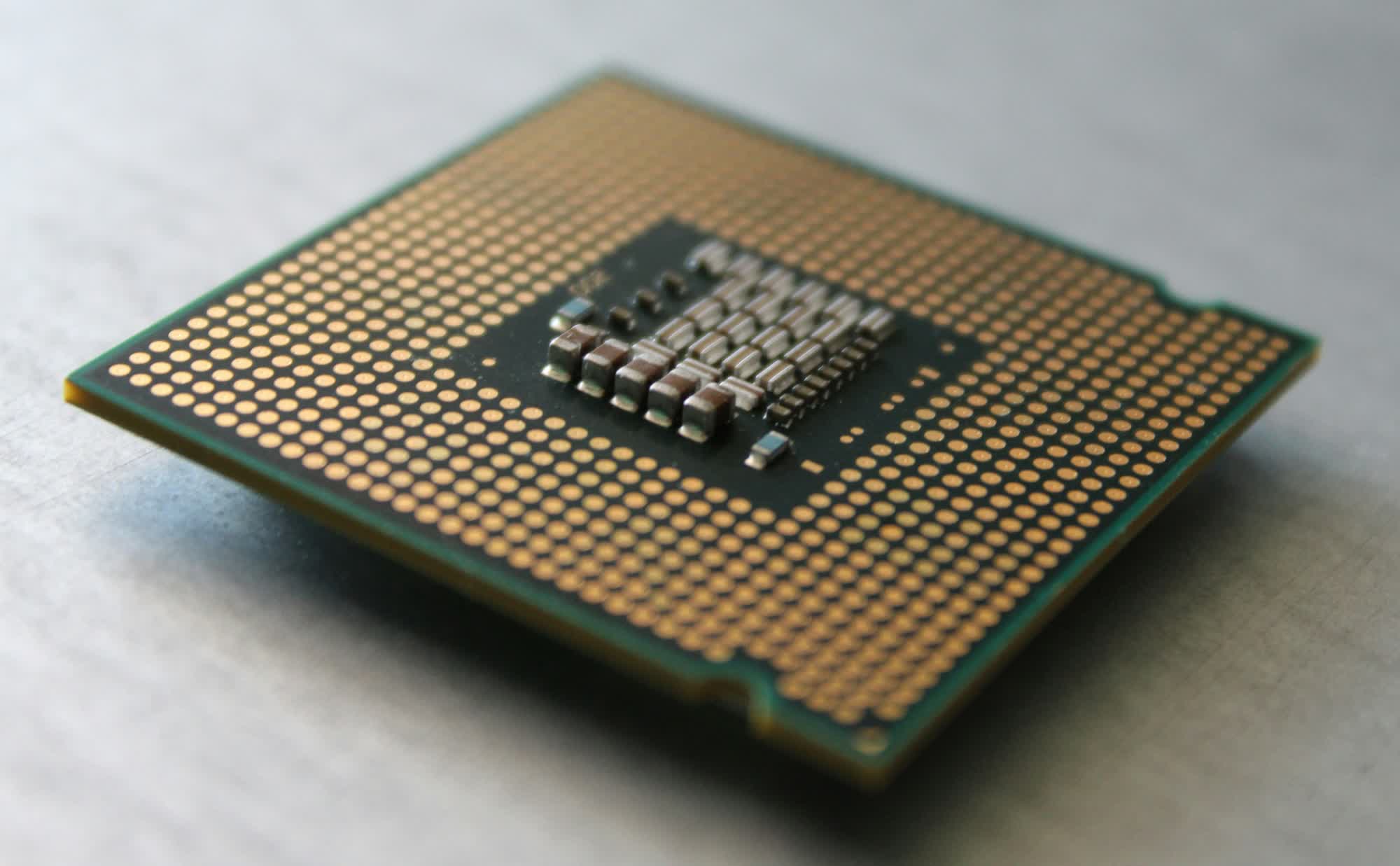
Sources have told The Wall Street Journal that Apple has begun exploring the idea of sourcing certain processors from other foundries. The discussions appear to focus on the lower end of its product lineup – chips where absolute performance and power efficiency are less dependent on bleeding-edge fabrication technology. No alternative partners were named in the report, but industry analysts have repeatedly pointed to Intel as a likely candidate.

Intel's reentry into Apple's supply chain – after being phased out of Mac systems in 2020 – would mark a significant turning point for both companies. GF Securities analyst Jeff Pu has predicted that Intel could begin fabricating chips for non-Pro iPhone models by 2028, potentially starting with the A21 or A22 series.

Tianfeng Securities analyst Ming-Chi Kuo went further, forecasting that Intel may produce Apple's lowest-end M-series processors for certain Macs and iPads as early as mid-2027. That arrangement would rely on Intel's forthcoming 18A process node, which is designed to compete directly with TSMC's 2-nanometer-class technologies.

Even so, the relationship would differ fundamentally from Apple's previous reliance on Intel. Rather than using Intel-designed x86 CPUs, Apple would continue to develop its own Arm-based chips, with Intel acting solely as a manufacturing partner.
Meanwhile, demand for advanced AI accelerators has reshaped TSMC's priorities. Nvidia has reportedly become TSMC's largest customer, displacing Apple. The surge in orders from AI chipmakers, combined with rising prices across memory and NAND supply chains, has tightened semiconductor capacity across the board. Samsung and SK Hynix have also leveraged the situation to secure higher prices for DRAM and NAND – both critical components in Apple's devices and in AI data centers.

Apple CEO Tim Cook acknowledged last week that higher memory costs have had a "minimal" impact on profit margins so far, though he expects somewhat greater pressure in the current quarter. Cook said Apple is "looking at a range of options" to manage those costs.
It remains to be seen whether Intel's fabrication comeback will power Apple's next generation of silicon. But the discussion itself underscores a broader shift in the semiconductor ecosystem – one in which even Apple, long synonymous with TSMC's cutting-edge manufacturing, must navigate a world increasingly dominated by AI demand and constrained by finite capacity.

Permalink to story:

 
If or when, the AI bubble pops...Apple seemed to be a golden goose, of sorts, to TSMC. No doubt TSMC will continue to have customers, I just wonder if this could hurt them in the long run. Ah well, if it creates competition by infusing another manufacture of chips to expand and grow, so much the merrier. But like with Micron chasing the AI cash, it could ultimately become a very unwise decision.
 
If or when, the AI bubble pops...Apple seemed to be a golden goose, of sorts, to TSMC. No doubt TSMC will continue to have customers, I just wonder if this could hurt them in the long run. Ah well, if it creates competition by infusing another manufacture of chips to expand and grow, so much the merrier. But like with Micron chasing the AI cash, it could ultimately become a very unwise decision.
oh it will absolutely hurt them, but greed is a powerful monster. Should the AI bubble pop, TSMC will have to beg apple to come back, and apple will be expecting some very steep discounts to grace TSMC with their business.
 
TSMC will have to beg apple to come back, and apple will be expecting some very steep discounts to grace TSMC with their business.
TSMC to beg someone to come back? Oh please. They were doing fine before Apple and they'll be fine if Apple leaves them. AI bubble or not, clients are lining up at TSMC's door.

As for steep discounts, again, no. Apple is probably already getting the best deal they're going to get from TSMC. They obviously know how to handle the likes of Tim Cook.

I remember a story about Steve Jobs famously walking away from an Intel chip deal because they couldn't get the price point he was stubbornly stuck on. They basically wanted Intel to sell them chips at or near cost, and Intel said no. TSMC would do the exact same thing. Even if every single AI company went bust tomorrow, TSMC would have no trouble finding clients. It's as simple as that.
 
TSMC to beg someone to come back? Oh please. They were doing fine before Apple and they'll be fine if Apple leaves them. AI bubble or not, clients are lining up at TSMC's door.

As for steep discounts, again, no. Apple is probably already getting the best deal they're going to get from TSMC. They obviously know how to handle the likes of Tim Cook.

I remember a story about Steve Jobs famously walking away from an Intel chip deal because they couldn't get the price point he was stubbornly stuck on. They basically wanted Intel to sell them chips at or near cost, and Intel said no. TSMC would do the exact same thing. Even if every single AI company went bust tomorrow, TSMC would have no trouble finding clients. It's as simple as that.
That is, quite verifiably, false. Apple was, until very recently, an unofficial "boss" of TSMC. They have many times in the past invested into TSMC for their efforts in expanding manufacturing. TSMC is today due in partnership with Apple.

TSMC is now enjoying a reverse of play, with Nvidia, Microsoft, Google and Facebook all vying for custom chips and GPU's. But if the AI bubble was to pop, every one of those players would be cancelling orders and reducing demand. Who would step in to fill that void left by those companies, if Apple has diversified their chip making partners for A and M series chips? Apple was, very recently, maxing out entire lines and that made up an enormous about of their revenue.

It's only been a few years when TSMC was nervous about Apple reducing the expectations of an iPhone series (please give me some leeway, I don't have the exact date and model handy) and their expression of lowering their own estimate of quarterly profits to the point of potential layoffs.

It is very apt when said:
Should the AI bubble pop, TSMC will have to beg apple to come back, and apple will be expecting some very steep discounts to grace TSMC with their business.
If the AI bubble pops any time in the next 24 months, this scenario will play itself out. The over supply of chips sitting around waiting on datacenter (which is measure in near decades for some), that oversupply will drop stocks, prices and, in the case of TSMC, their ability to contract at pricing they left Apple out for.

I'm not defending a rich company like Apple. I'm commenting on if TSMC made a wise decision and the fact that competition is only a good thing for consumers, which TSMC will have to start doing, if Samsung and Intel truly get their newest lines going to volume like TSMC, during this AI bubble period.
 
TSMC forgets 1 simple fact. Doesn't matter how efficient and fast their chips are. It doesn't matter if a phone last 2-3 or even 5 days while being as fast as a 7800X3D for gaming or work. If people can't buy it cus its super expensive.. yeah. Its GG. Most people stop buying expensive phones here.

Id say the same thing about video cards too. Most people have 3060/5060. Ye ye AI etc. I said people with brains and regular paychecks. In fact, im one of the few in my country that got an RTX 5080. You can see the units sold. It aint many. So yeah, greed cus ur the best can only get you soo far. Paychecks aint 5000% bigger, and they sure want more and more each year.
 
TSMC want too much money for their latest nodes and that's cuting into Apple's margins. I wouldn't be surprised if Apple is thinking about Intel's fabs and having a large stake in their business (I can't see a buyout).
 
It would take a decade after closing to bring GloFo up to modern capabilities.
Its that attitude that has led us to this point. "oh we cant do that, oh that will take too long, oh its just not possible".

I miss when we were a country of people that said "challenge accepted" instead of a country of couch potatoes that cant imagine putting effort into something.
 
Its that attitude that has led us to this point. "oh we cant do that, oh that will take too long, oh its just not possible".

I miss when we were a country of people that said "challenge accepted" instead of a country of couch potatoes that cant imagine putting effort into something.

If it were just up to us, sure. But, either retooling Glo-Fo or building a Fab from the ground up would take a decade since the components for the latest nodes take, themselves, literally years to assemble around the globe already. And that's for existing contracts.
 
I miss when we were a country of people that said "challenge accepted" instead of a country of couch potatoes that cant imagine putting effort into something.
This, good sir, this!

If it were just up to us, sure. But, either retooling Glo-Fo or building a Fab from the ground up would take a decade since the components for the latest nodes take, themselves, literally years to assemble around the globe already. And that's for existing contracts.
But that is exactly his point. We have to start somewhere. “Challenge Accepted” also means braving against the grain; dispute set backs, delays, and obstacles. Improvise, Adapt, Overcome. Our country faced incredible challenges just like this instance here.
 
This, good sir, this!


But that is exactly his point. We have to start somewhere. “Challenge Accepted” also means braving against the grain; dispute set backs, delays, and obstacles. Improvise, Adapt, Overcome. Our country faced incredible challenges just like this instance here.

Hey don't get me wrong I'm with you there (In fact I'm of the understanding that "America First" means AMERICANS first), it's just that this post was in the context of Apple looking to alternative sources to TSMC rather than increasing manufacturing capacity/capabilities. I'm saying by the time they got their own advanced fabs online (in about a decade), they probably wouldn't be having this same issue with TSMC anymore, since it's likely TSMC would have either expanded capacity themselves or that either parties' needs would have changed.
 
Hey don't get me wrong I'm with you there (In fact I'm of the understanding that "America First" means AMERICANS first), it's just that this post was in the context of Apple looking to alternative sources to TSMC rather than increasing manufacturing capacity/capabilities. I'm saying by the time they got their own advanced fabs online (in about a decade), they probably wouldn't be having this same issue with TSMC anymore, since it's likely TSMC would have either expanded capacity themselves or that either parties' needs would have changed.
That is fair. I would say, even with a decade in the future and the possibility the demand has flattened, this would be an excellent opportunity to capitalize on, given the state of our current lack of expertise (considering Intels fumbles) and that we are behind other country chip leaders here on our own soil.

Apple has, in the past, flirted with the idea of producing its own chips (mostly in rumors from good track record fellows), though they are highly unlikely to move into that sphere. The main gravamen is, of course, saying "Yes we can" or encouraging and supporting those who could, into taking that step; something we use to do as a country on nearly all fronts. Back when scientific discoveries were herald as front page news; instead of a x-rated dance of two performers singing WAP.

But I do agree it would carry risk for anyone tackling it; I also still agree with the initial premise we need more "challenge accepted" mantra and action, especially in this sphere.
 
That is fair. I would say, even with a decade in the future and the possibility the demand has flattened, this would be an excellent opportunity to capitalize on, given the state of our current lack of expertise (considering Intels fumbles) and that we are behind other country chip leaders here on our own soil.

Apple has, in the past, flirted with the idea of producing its own chips (mostly in rumors from good track record fellows), though they are highly unlikely to move into that sphere. The main gravamen is, of course, saying "Yes we can" or encouraging and supporting those who could, into taking that step; something we use to do as a country on nearly all fronts. Back when scientific discoveries were herald as front page news; instead of a x-rated dance of two performers singing WAP.

But I do agree it would carry risk for anyone tackling it; I also still agree with the initial premise we need more "challenge accepted" mantra and action, especially in this sphere.

Honestly though who would Apple even sell their unused capacity to? It seems like they're competing with just about everyone.
 
Back