
A hot potato: Like all big tech firms, Amazon gets sued often and for a variety of reasons. However, the suit filed by the District of Columbia against the retail giant isn't the kind of legal challenge it often faces. Amazon is alleged to have stopped providing paying customers of two low-income areas its fastest Prime delivery service without informing them of the changes.
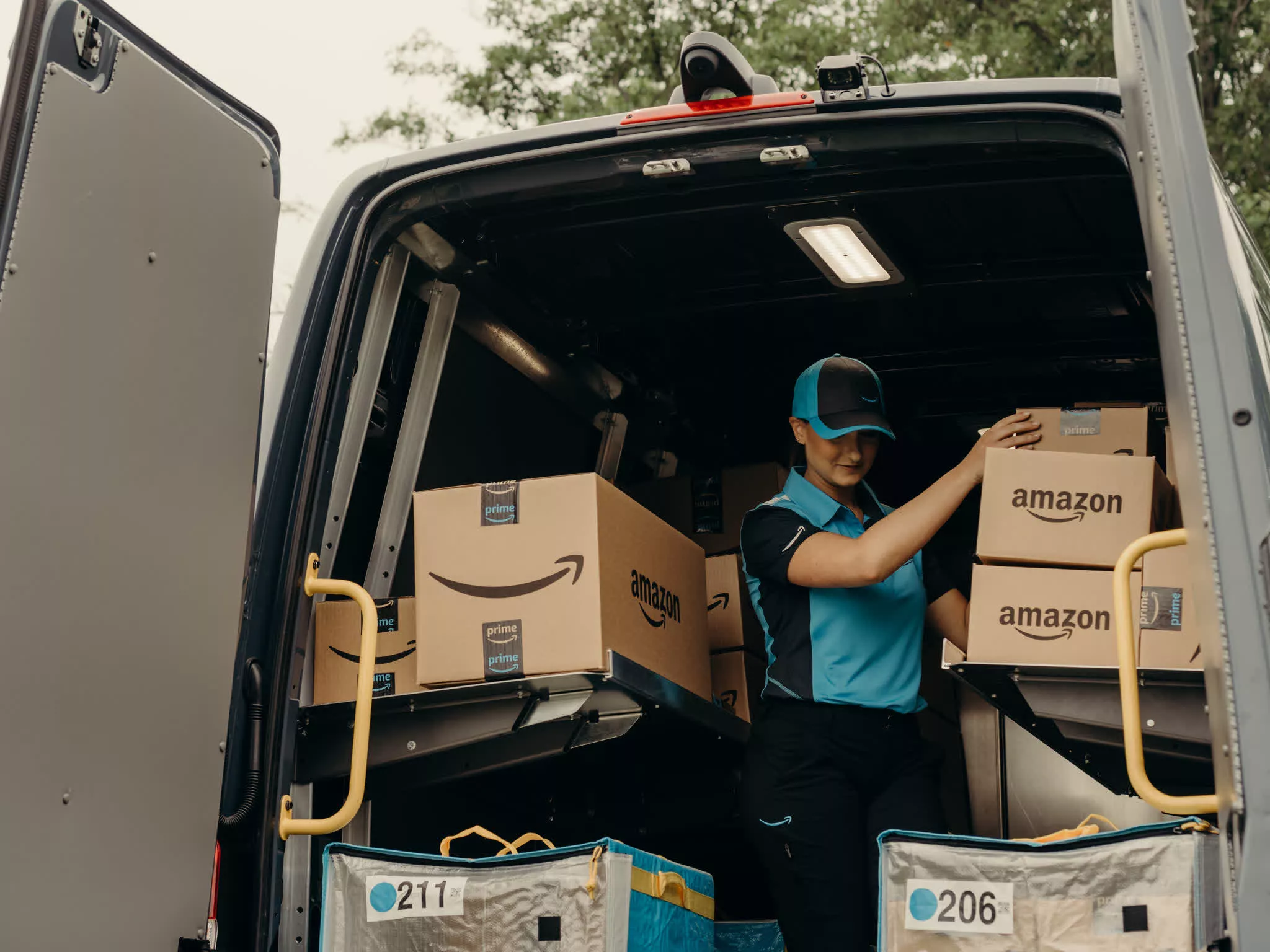
The civil lawsuit states that Amazon stopped providing its fastest delivery service to the Prime members who live in the ZIP code 20019 and 20020 areas of east D.C. in June 2022. Instead of using its own delivery system to ensure expedited deliveries, it started relying on third-party services such as UPS and the US Postal Service, resulting in slower deliveries.
Amazon admits that it did make changes to its delivery services in these ZIP codes, but it was a decision made to protect drivers' safety.
Amazon spokesperson Kelly Nantel said "There have been specific and targeted acts against drivers delivering Amazon packages" in the two ZIP codes and the company made the change to "put the safety of delivery drivers first."
The District of Columbia's attorney general's office claims that Amazon never told any of the Prime members in the ZIP codes about the change even though their package delivery times slowed down. The suit also alleges that Amazon never informed customers in these areas about the exclusions when they signed up for Prime memberships.
It's noted that the areas where Amazon refuses to deliver items itself are predominantly black neighborhoods with lower incomes and higher levels of unemployment.
The suit states that nearly 50,000 Prime customers live in the ZIP codes, about half their population – and have ordered more than 4.5 million Prime-eligible items over the last four years.
"Amazon is charging tens of thousands of hard-working Ward 7 and 8 residents for an expedited delivery service it promises but does not provide," District of Columbia Attorney General Brian Schwalb said in a statement.
"While Amazon has every right to make operational changes, it cannot covertly decide that a dollar in one ZIP code is worth less than a dollar in another."
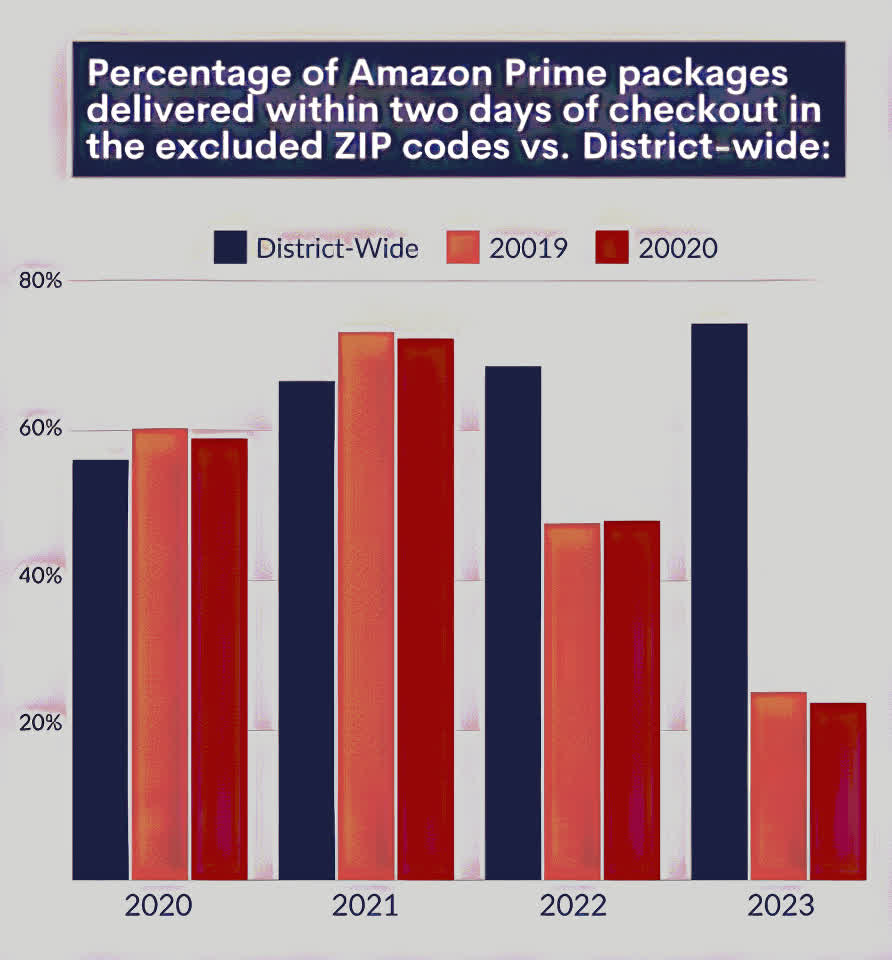
In 2021, before it made the change, more than 72% of Amazon packages in the ZIP codes were delivered within two days. That figure was down to just 24% last year. This is despite two-day delivery rates in Washington, D.C. continuing to improve in recent years.
When some customers noticed that their delivery times had slowed down and complained to Amazon, the company "deceptively implied" that the delays "were simply due to natural fluctuations in shipping circumstances, rather than an affirmative decision by Amazon," the lawsuit says.
Amazon's refusal to deliver to these areas to keep their drivers safe isn't the suit's issue. It's that the company never informed customers about the change and they still pay the full price of an Amazon subscription while not receiving the same service as other Prime members.
"The claims made by the attorney general, that our business practices are somehow discriminatory or deceptive, are categorically false," Nantel added. "We're always transparent with customers during the shopping journey and checkout process about when, exactly, they can expect their orders to arrive."
The suit accuses Amazon of violating the District's Consumer Protection Procedures Act (CPPA). It asks for a jury trial and wants Amazon to pay restitution or damages to affected Prime members, as well as civil penalties.
Amazon faces lawsuit for limiting Prime deliveries in two Washington D.C. areas over safety concerns


