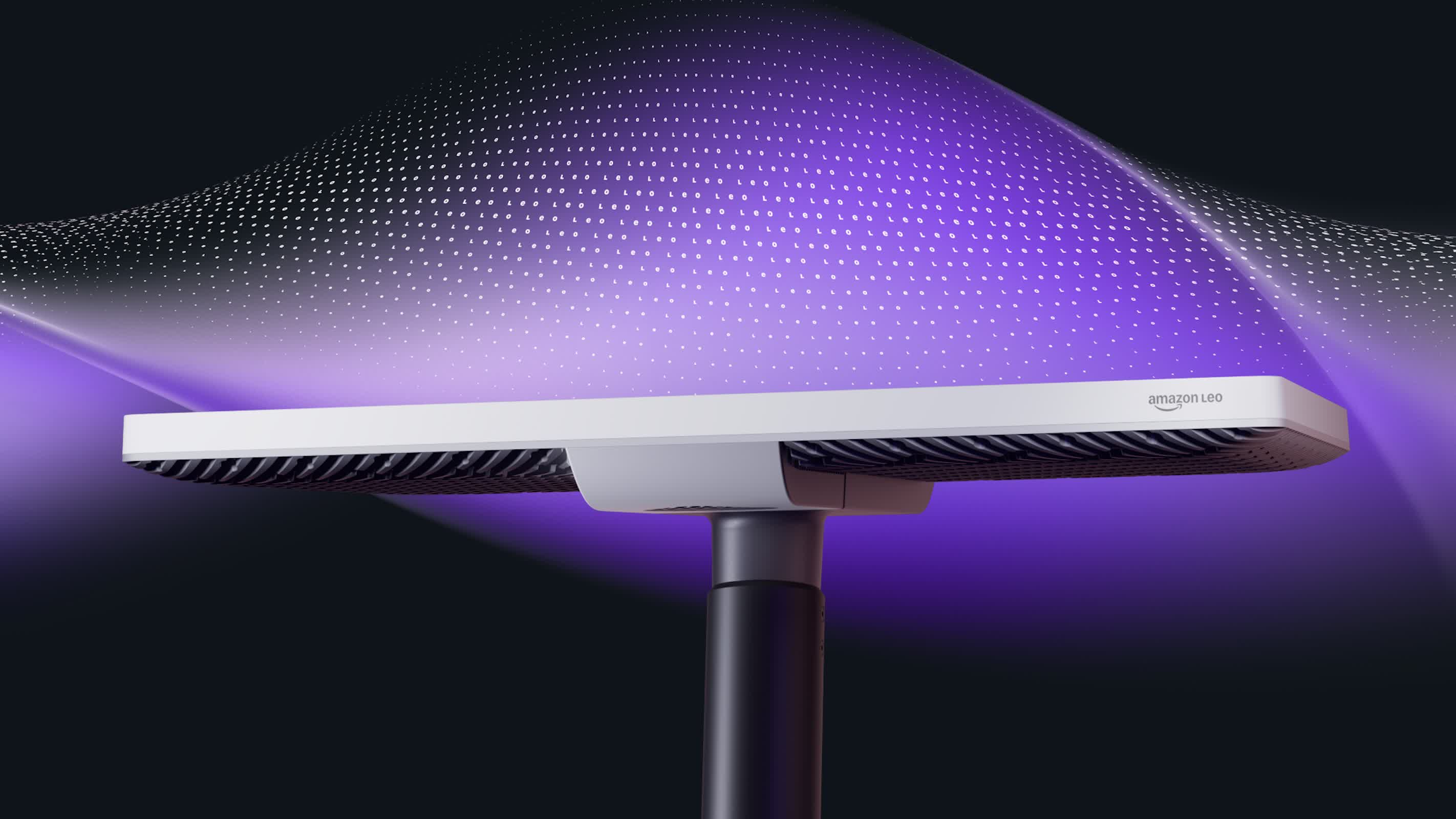
What just happened? Amazon has moved its rebranded Leo satellite network a step closer to commercial service by unveiling Leo Ultra, a high-speed ground terminal now entering a private preview for business and government customers. The flat, 20-by-30-inch phased-array antenna is the company's first production-grade enterprise terminal for low-Earth-orbit broadband.
The company has not disclosed pricing or full availability timelines, but is framing Leo as an "enterprise-grade" platform rather than a consumer-focused service at launch. In parallel with the Ultra terminal, Amazon is also expanding its satellite network, reporting roughly 150 satellites in orbit and planning additional launches as it builds toward an initial operational constellation.
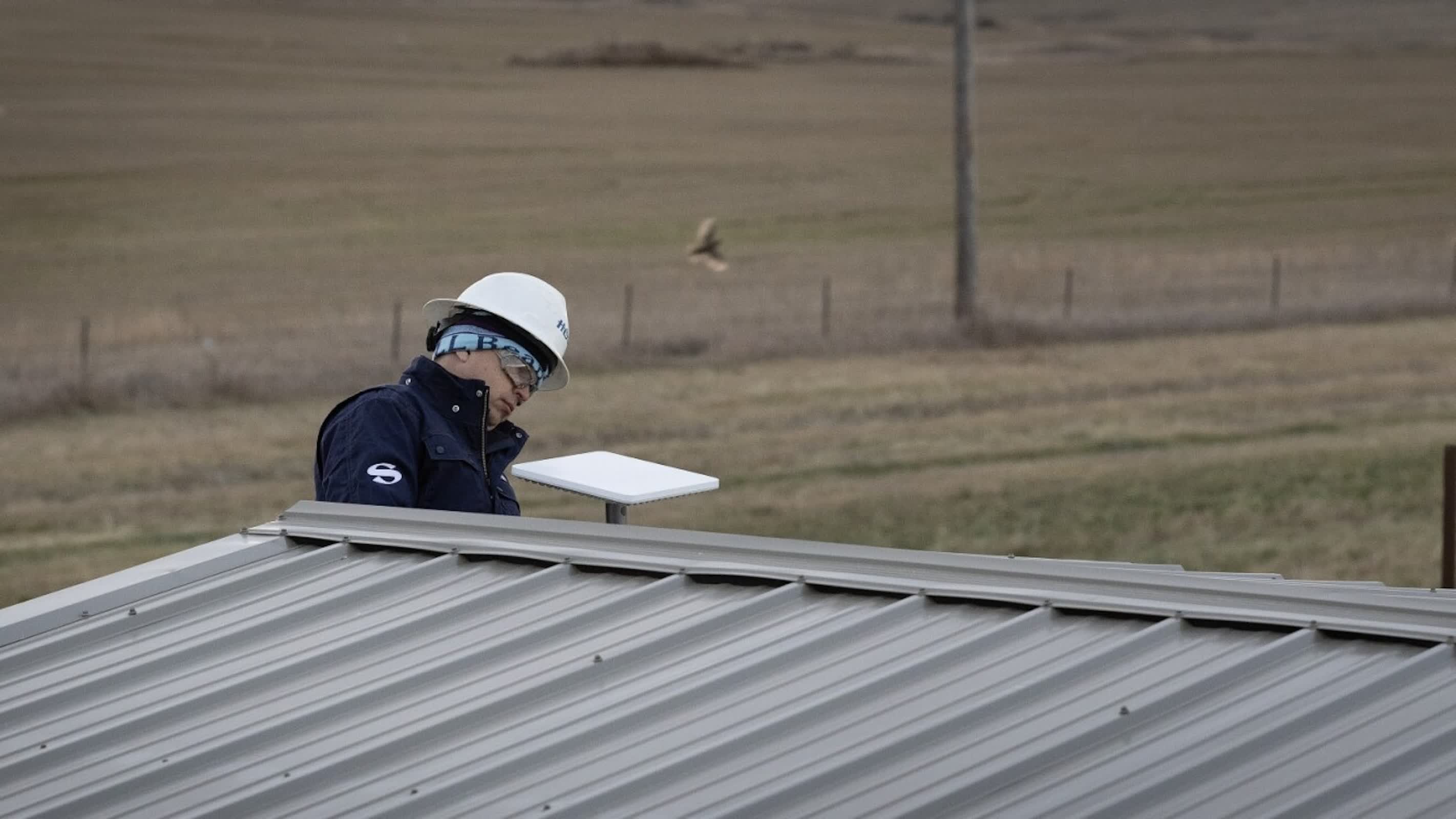
Leo Ultra is designed for permanent installations, using electronic beam steering rather than mechanical movement, eliminating moving parts and simplifying deployment on rooftops, masts, or other outdoor structures.
Internally, the terminal uses custom silicon developed by Amazon for Leo, coupled with proprietary RF design and signal-processing algorithms tuned for the company's LEO constellation. The hardware supports full-duplex operation, meaning it can transmit and receive simultaneously across its phased array, which is central to achieving simultaneous high-rate upload and download performance.
On paper, Leo Ultra is positioned as the fastest customer terminal in production, with download speeds of up to 1 Gbps and upload speeds of up to 400 Mbps available simultaneously over a single panel. Those figures place the device above Amazon's other Leo terminals: the mid-sized Leo Pro unit, roughly 11 inches square, supports up to 400 Mbps downstream, while the compact 7-inch Leo Nano is rated up to 100 Mbps.
The company is emphasizing low latency as a key differentiator compared with traditional geostationary satellite links, leveraging orbital altitudes in the roughly 590 – 630 kilometer (367 – 392 miles) range typical of LEO systems. The Ultra terminal's custom signal-processing stack is designed to maximize throughput within those constraints, targeting workloads such as real-time video collaboration, telemetry, and cloud-based applications where jitter and round-trip delays are more pronounced.
Leo Ultra is tightly coupled to Amazon's cloud ecosystem. The Leo architecture supports "Direct to AWS" connectivity, in which traffic from the terminal can be routed directly into AWS regions and services without traversing the public internet, effectively extending the satellite link as an extension of a customer's virtual private network.
Amazon is also positioning the platform as a way to build private networks over satellite, combining the terminal with enterprise routing and security policies rather than treating it as simple broadband backhaul. For customers, the Leo Ultra can be used as a primary or backup path for workloads already running in AWS, reducing the need for additional middle-mile infrastructure and potentially lowering the attack surface compared with legacy satellite paths that rely on shared, unencrypted links.
In the current satellite broadband market, the most direct comparison for Leo Ultra is SpaceX's Starlink business hardware. Starlink's Performance Kit, aimed at enterprise and high-demand users, is rated for download speeds up to about 400 Mbps, roughly half of what Amazon quotes for Leo Ultra's downstream capacity.
SpaceX has separately discussed a V3 satellite platform with an aggregate capacity target of about 1 Tbps and has said that gigabit-class user speeds are on its roadmap, but those capabilities are not yet broadly available to customers.
The launch of Leo Ultra comes as researchers continue to highlight security weaknesses in older satellite communication systems, particularly on geostationary (GEO) links used for backhaul and specialized connectivity. A research team from UC San Diego and the University of Maryland, for example, has documented extensive use of unencrypted traffic on GEO satellites, capturing cleartext data such as VoIP calls, SMS messages, corporate emails, login credentials, and internal operational records.
In this context, Amazon's emphasis on modern encryption and private networking for Leo, paired with direct connectivity to controlled cloud environments, is likely to be a major point of interest for security-conscious enterprises evaluating whether to migrate away from legacy GEO services.
Amazon's new Leo Ultra terminal promises 1Gbps satellite broadband


