AMD accidentally confirms Radeon RX 8600 and 8800 GPUs are also coming

Daniel Sims

Posts: 2,463   +74
Staff
Something to look forward to: Following months of rumors, AMD has stopped just short of confirming plans to launch two Radeon RX 8000 graphics cards early next year. While the company hasn't officially named the GPUs, recent firmware code and comments from AMD leave little doubt of an impending CES announcement.
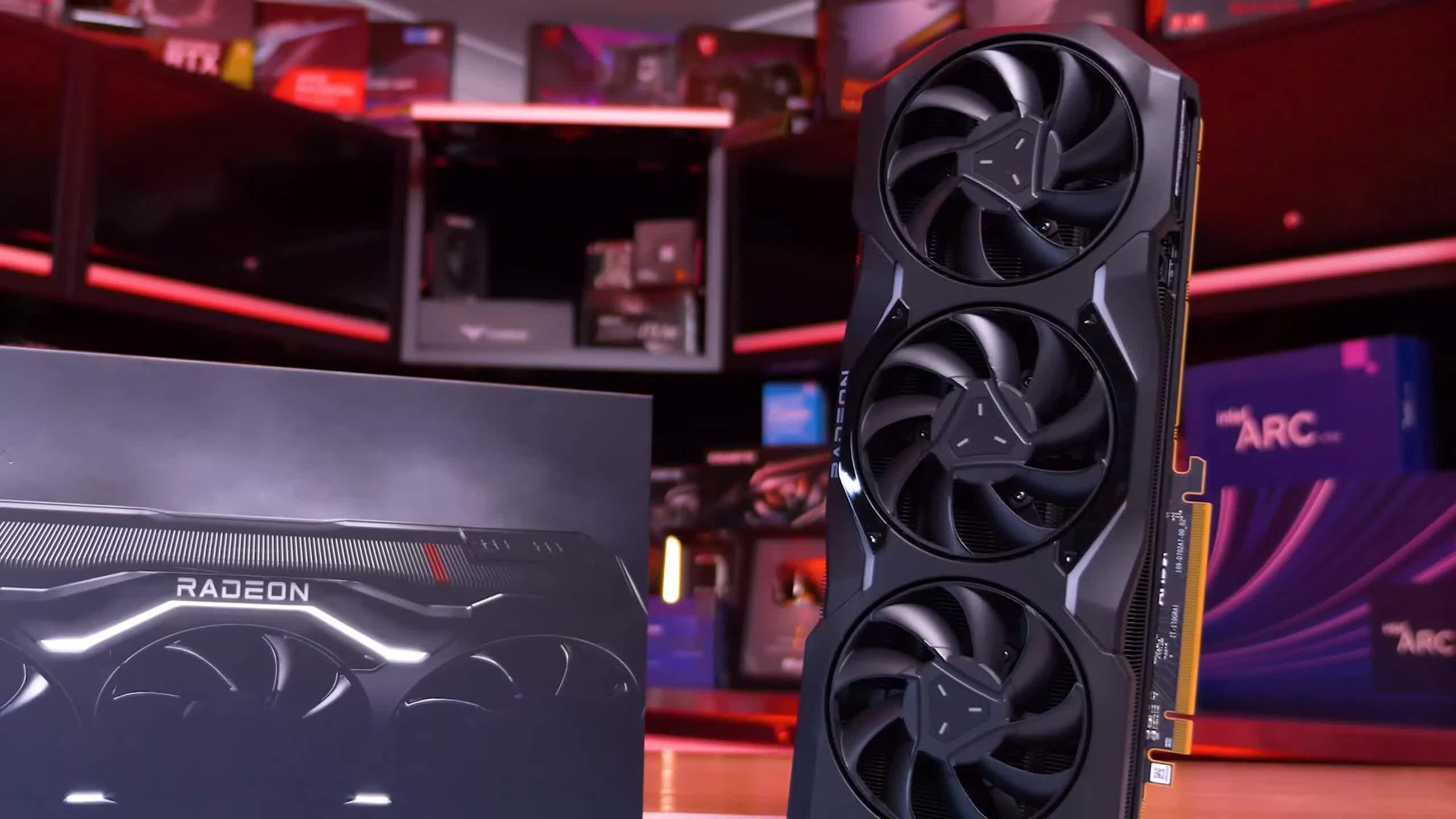
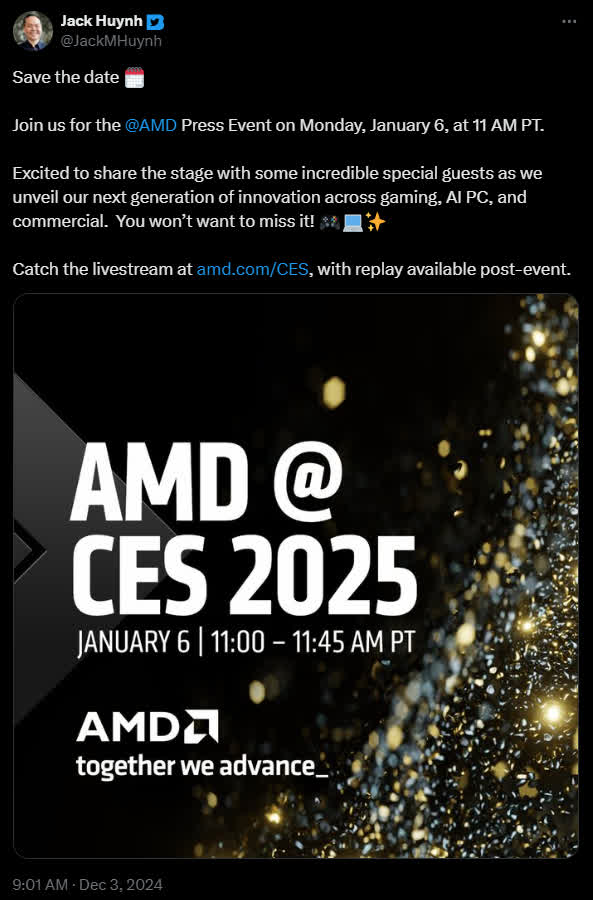
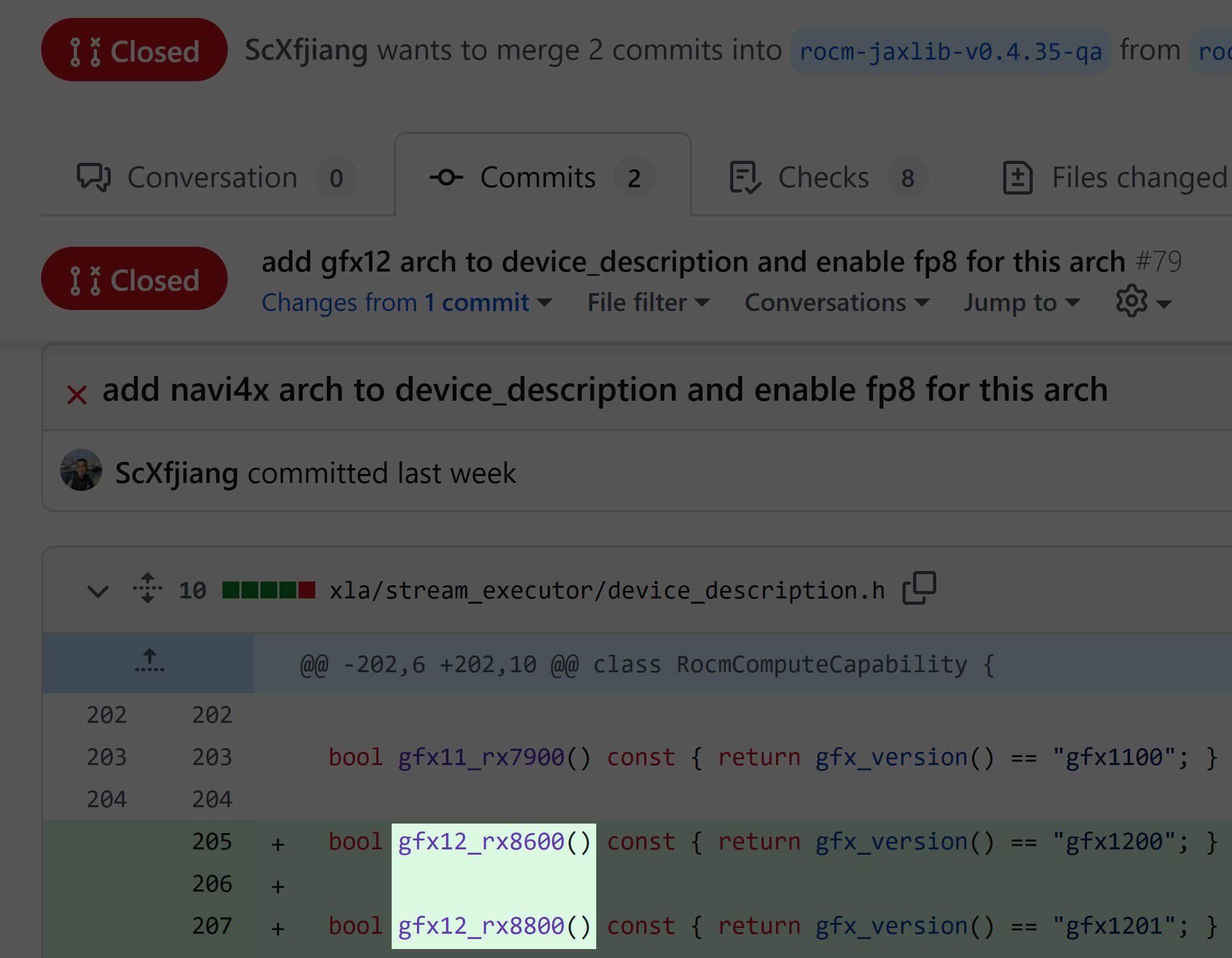
A recent update on AMD's ROCm GitHub page contains the company's first direct mention of the Radeon RX 8800 and 8600, two graphics cards from the upcoming RDNA4 lineup. The company has also announced that it will discuss gaming and other subjects at a January 6 CES keynote, stoking anticipation for a GPU unveiling.

A commit from last week on AMD's public xla development page lists the two cards under the label "gfx12," which follows a "gfx11" designation assigned to RX 7900, indicating that "gfx12" is a codename for the company's next-generation GPUs. Rumors have long suggested that RDNA4 will see an early 2025 launch, but a complete picture of AMD's plans is still materializing.
During the company's earnings call for the third quarter of 2024, CEO Lisa Su confirmed that the first RDNA4 cards are set for early 2025, promising new AI features and dramatic increases in ray tracing performance. The comments substantiate earlier reports that AMD is working to catch up with Nvidia in those two areas.

Ray tracing runs significantly faster on Team Green's RTX GPUs, and tests show that Nvidia's machine learning-based DLSS upscaling technology handles lower resolutions better than AMD's spatial FSR method. These gaps are a likely factor behind Nvidia's commanding 88 percent market share in the discrete graphics sector.
Jack Huynh, senior vice president of AMD's Computing and Graphics Business Group, previously confirmed that the next stage of FSR, FSR4, will incorporate AI-based upscaling and frame generation. The technology aims to enhance energy efficiency, possibly in order to improve battery life on handheld PCs using the company's upcoming Ryzen Z2 Extreme APU.

Furthermore, leakers recently described an RX 8800 XT that outperforms the 7900 XTX by around 45 percent in multiple games featuring ray tracing. The so-called "epic" improvement allegedly makes the 8800 XT a match for Nvidia's RTX 4080 Super and possibly the upcoming 5070. The RDNA4 card includes 16GB of VRAM, draws 220W, and enters mass production later this month.

The company intends to focus on the mid-range and mainstream GPU sectors, conceding next year's enthusiast race to Nvidia's RTX 5080 and 5090, which are also expected to appear at CES. So an RX 8900 seems unlikely for now. However, a three-way mainstream graphics card competition is brewing between RDNA4, the RTX 5060, and Intel's recently unveiled Arc Battlemage lineup.

Permalink to story:

 
It's my understanding that RDNA4 is a complete redesign amd has very little in common with previous RDNA architectures. There was the MCU problem on RDNA3 that caused some of the performance issues.

But, man, I'd we can get 7900xtx performance out of an 8800 for ~$600 then nvidia might actually have something to worry about. Go after that "midranged" market where 90% of sales happen.
 
It's my understanding that RDNA4 is a complete redesign amd has very little in common with previous RDNA architectures. There was the MCU problem on RDNA3 that caused some of the performance issues.

But, man, I'd we can get 7900xtx performance out of an 8800 for ~$600 then nvidia might actually have something to worry about. Go after that "midranged" market where 90% of sales happen.

It's a monolithic chip designed for efficiency across the board (Shaders occupation, AI, ray tracing, performance per area/watt/U$). However, I wouldn't expect it to match the 7900XTX exactly; it should be close, but not quite on par.

Maybe around 90% of the XTX's performance, with faster ray tracing (though, honestly, I find that irrelevant).
 
90% raster perf of 7900XTX, 30 -40% more RT perf, 500-550usd/euros msrp and it will be sold like hot cakes. That perf, it it is true, is perfect for anyone who wants to stay in 1080p high refresh rate or 1440p for 4 to 5 years easily.
 
Why do these accidental leaks occur right before launch and companies don't take action against these leaks?
 
Not Bad, not bad. Being near the 4080S with a 8800 in RT, that is surprising.
When AMD said they were skipping high end this time I thought they would land in lower territories. Good for them, good for us. Now, if they don't go nuts on the pricing...
 
Last edited:
Not Bad, not bad. Being near the 4080S with a 8800 in RT, that is surprising.
When AMD said they were skipping high end this time I thought they would land in lower territories. Good for them, good for us. Now, if they don't go nuts on the pricing...
What do you mean HIGH END? that is already HIGH END, if you mean 4090 territory with their GOD-AWFUL PRICING, then NO, amd should never invest there, because nobody goes there (0.1 % of gamers).
 
It's my understanding that RDNA4 is a complete redesign amd has very little in common with previous RDNA architectures. There was the MCU problem on RDNA3 that caused some of the performance issues.

But, man, I'd we can get 7900xtx performance out of an 8800 for ~$600 then nvidia might actually have something to worry about. Go after that "midranged" market where 90% of sales happen.

It's the nicer outcome out of AMD stepping back. 7900XTX perf with an RT parity to match the best of Ada for ~£/$600 or so is great... only I already have a 7900XTX paid for and even that boosted RT isn't enough to buy in again right away. If it was something more like last upgrade; 6800XT to 7900XTX (+50 fps at 3440x1440) with a raster boost as well as that RDNA4 RT uplift I might look twice, even if it cost a fair bit more than that £/$600 figure.
Call me spoilt but AMD made me so... £800-1000 for 100 fps at 4K vs £1600-2600 for 130 fps at 4K may have that effect.
 
Back