AMD unveils its 2nd-gen Epyc CPUs, "the world's fastest x86 processors"

midian182

Posts: 11,726   +177
Staff member
Why it matters: AMD might be worrying Intel in the consumer CPU market following the launch of its Ryzen 3000 line, but Chipzilla still dominates the data center industry, where it holds a 95 percent market share. But that might start to change following the launch of team red’s second-generation, Epyc Rome processors, which it says are the most powerful x86 processors in the world.
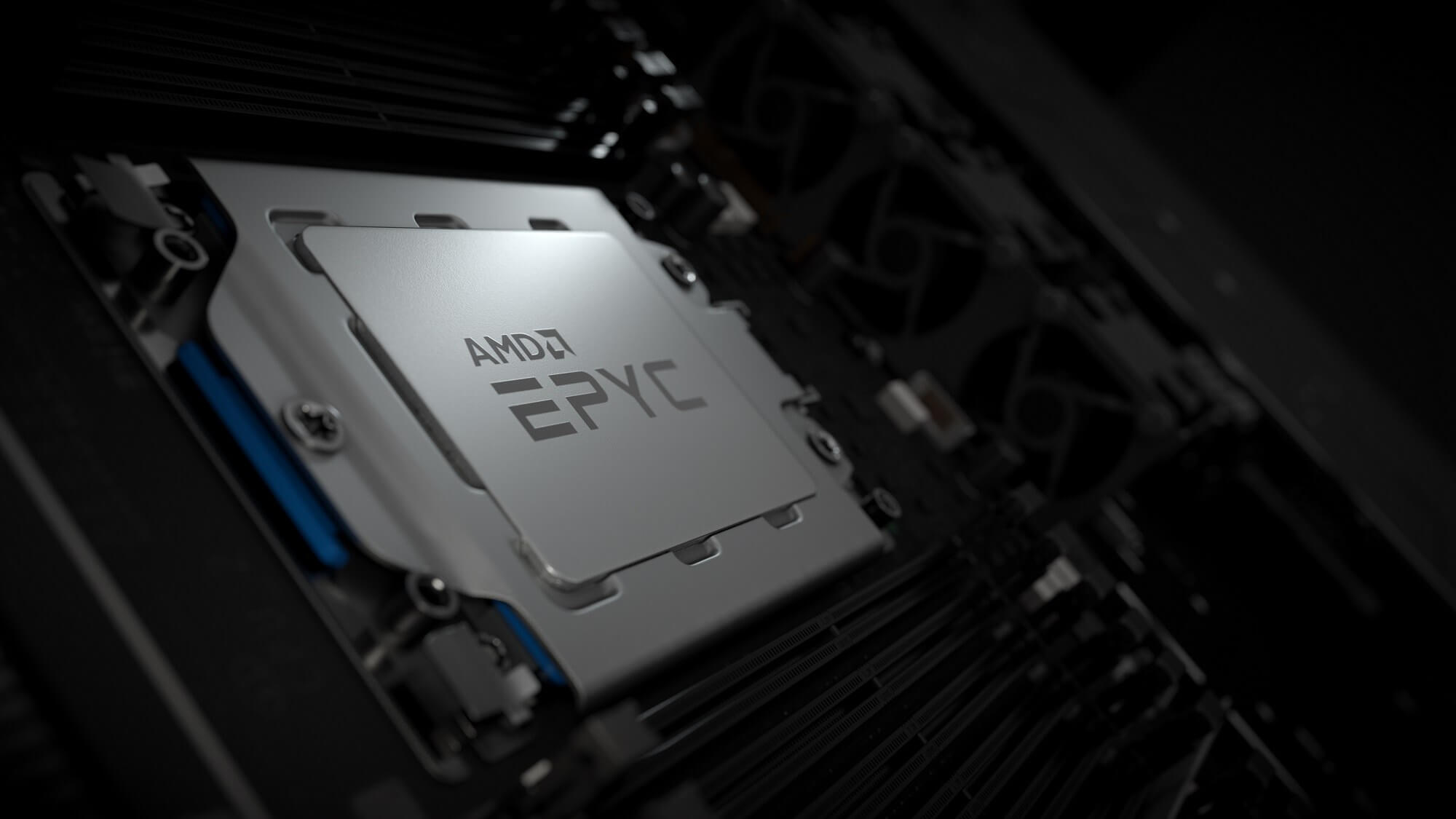
Based on AMD's Zen 2 technology, the Epyc 7xx2 chips have the distinction of being the world’s first 7-nanometer server processors, thereby offering better performance and efficiency than their predecessors.
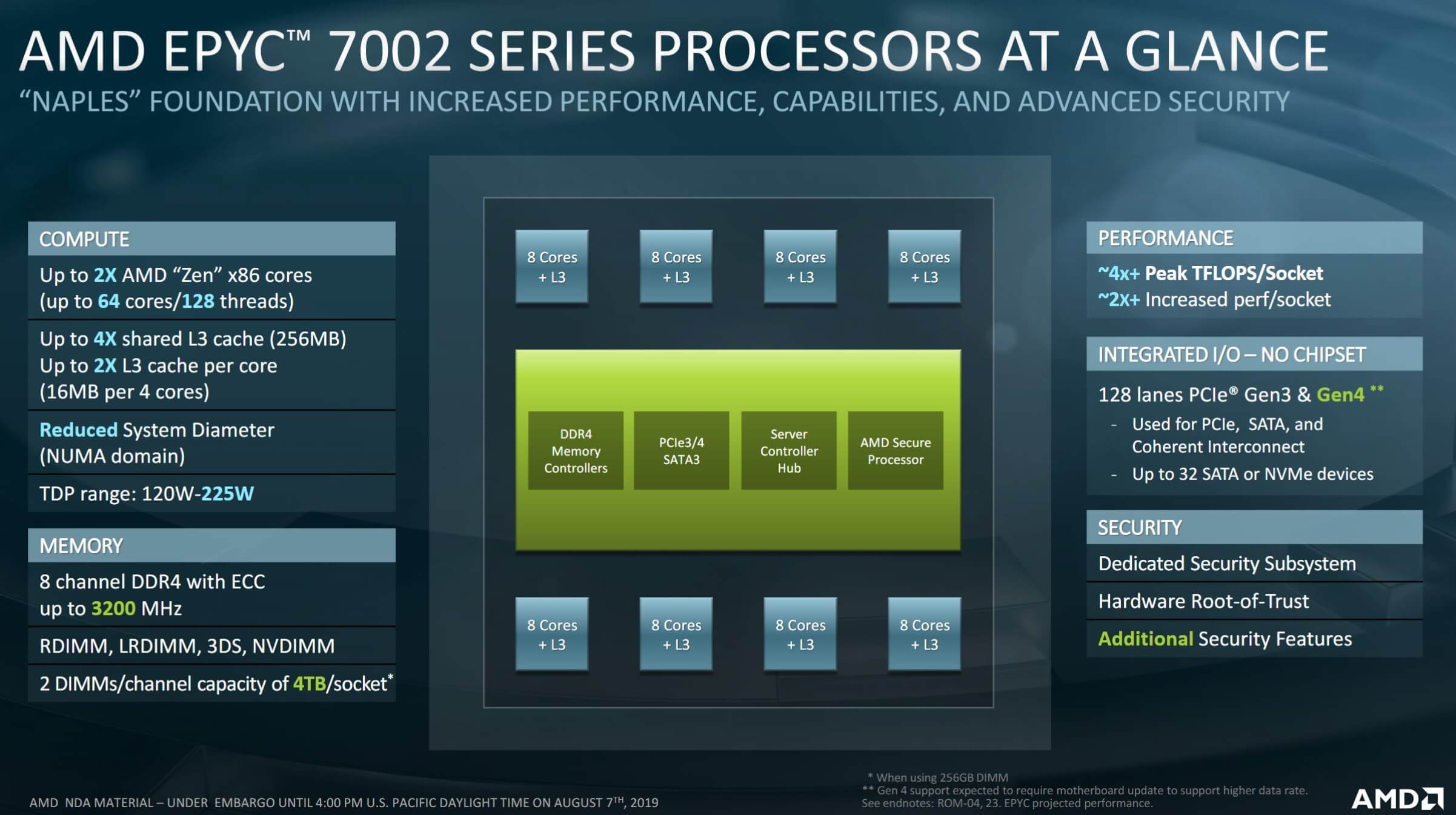
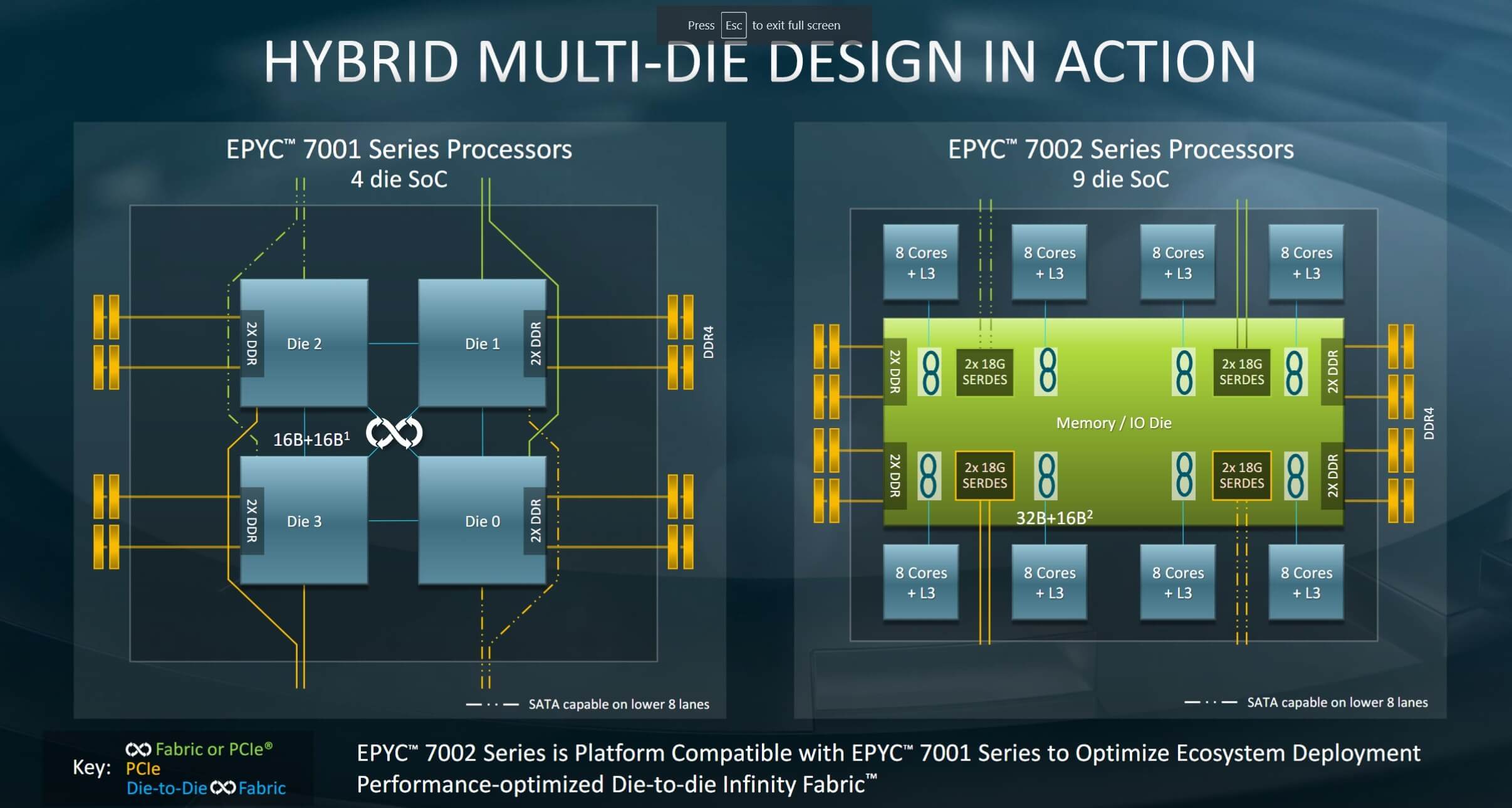
The processors will be built as nine-die packages, as opposed to the four dies found in the first generation. They feature between eight and 64 cores (128 threads), combining up to eight 7nm chiplets connected through the 2nd-gen Infinity Fabric, with a 14-nanometer I/O die in the center. AMD calls this setup hybrid multi-die architecture. Compared to the last generation of Epyc processors, the Rome chips offer twice the performance per socket and about 4X peak theoretical FLOPS.
We’ve heard plenty about Ryzen 3000’s support of PCIe 4.0, which brings twice the bandwidth of gen 3.0. Epyc 7xx2 is the first PCIe 4.0-ready x86 server processor, offering 128 lanes and a peak PCIe bandwidth of 512GB/s.
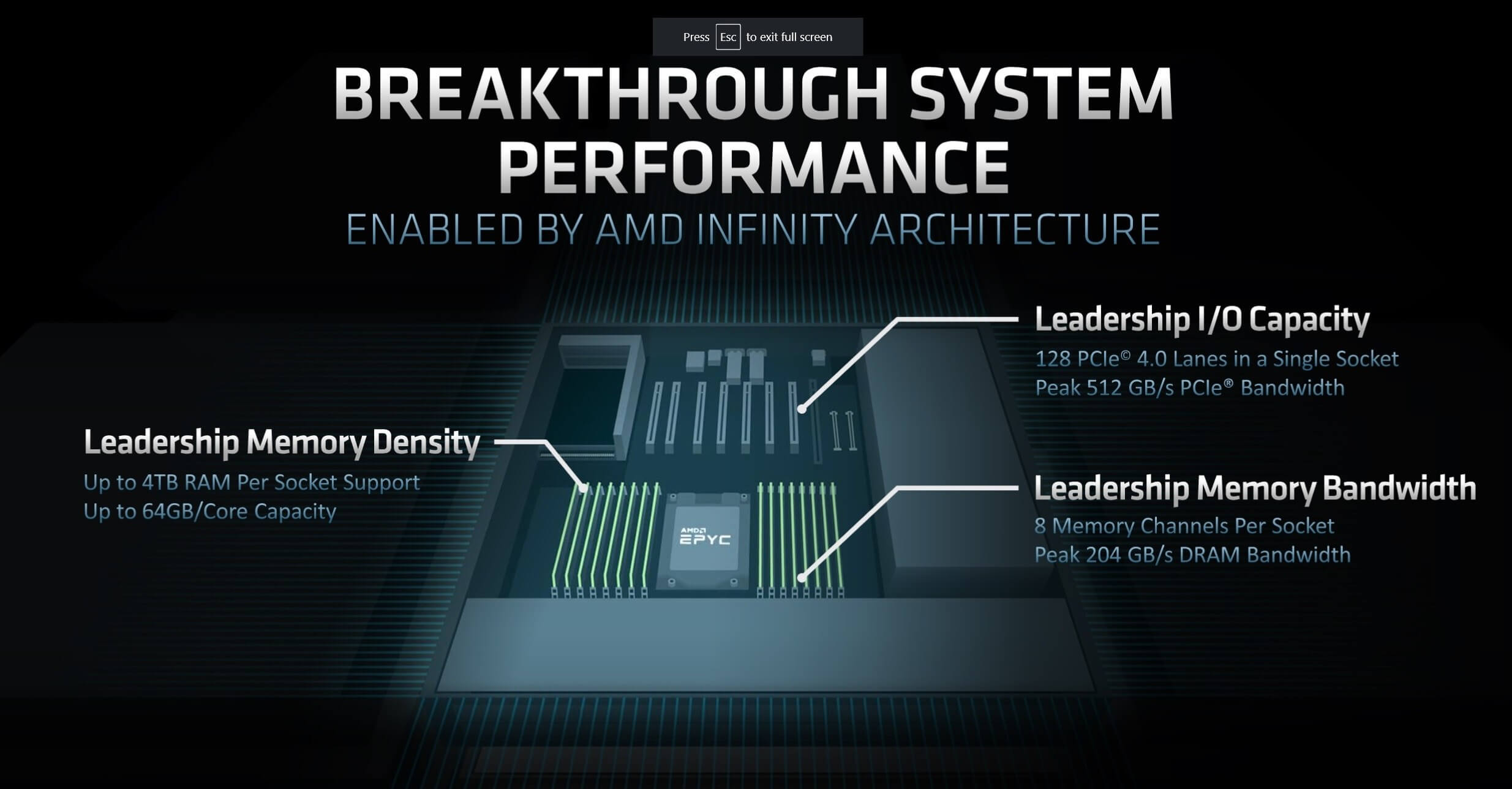
The chips also boast several security features, including Secure Memory Encryption, Secure Encrypted Virtualization, and support for up to 509 keys, as well as in-built Spectre V2 mitigations. Additionally, the chips support up to 4TB of DDR4-3200 spread across eight channels, putting it ahead of the Intel Xeon’s six channels of DDR4-2933.
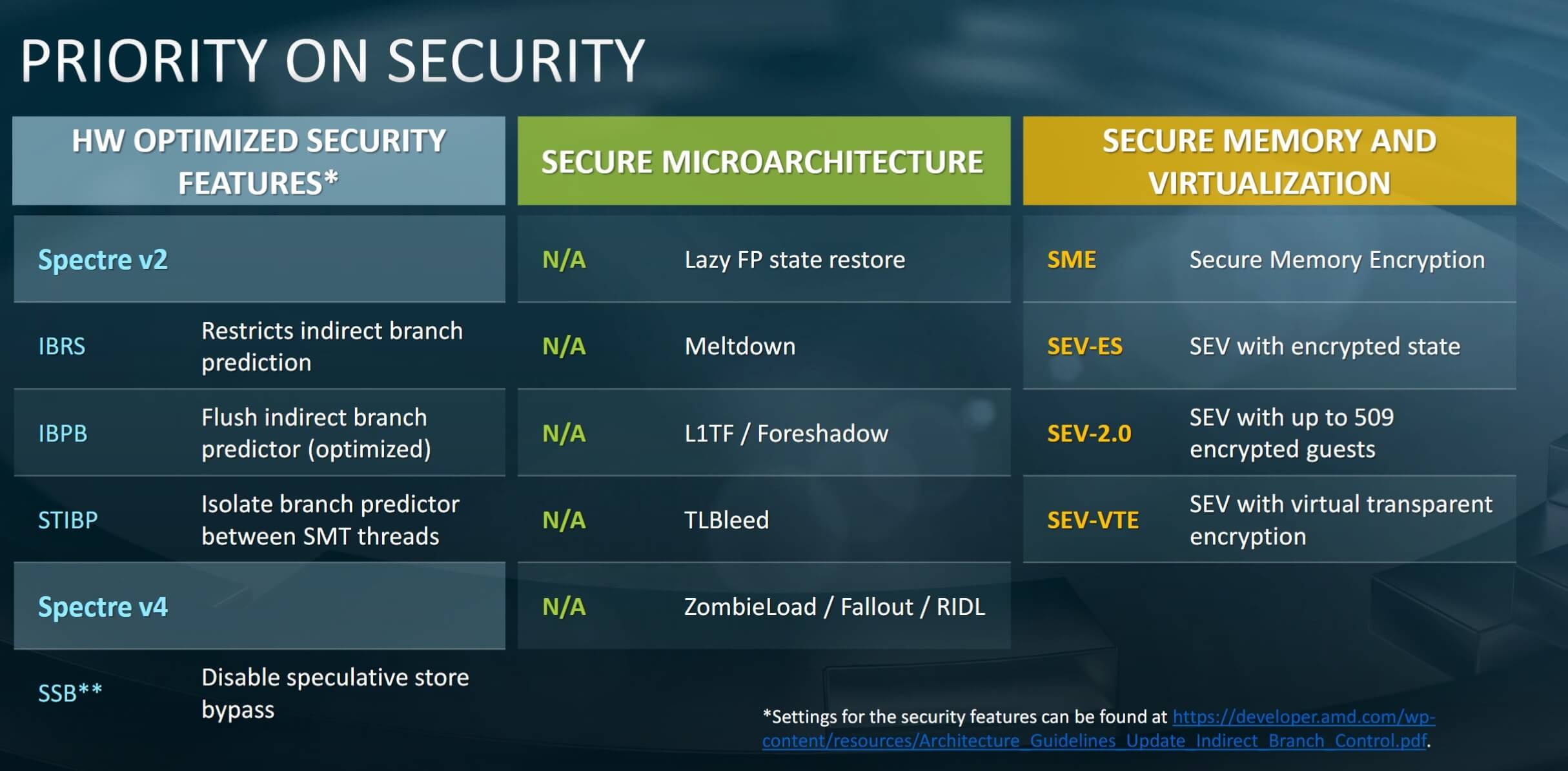
Speaking of Xeon, Scott Aylor, general manager of AMD's Datacenter Solutions Group, said when it comes to "high volume, high growth-relevant workloads," AMD’s processors have an 80 to 100 percent performance advantage over the competition.

"So when we take and bend the curve on performance, generation on generation, in terms of doubling performance, and having that level of lead over and above our competitor, you can imagine why customers and partners are super excited," he added.
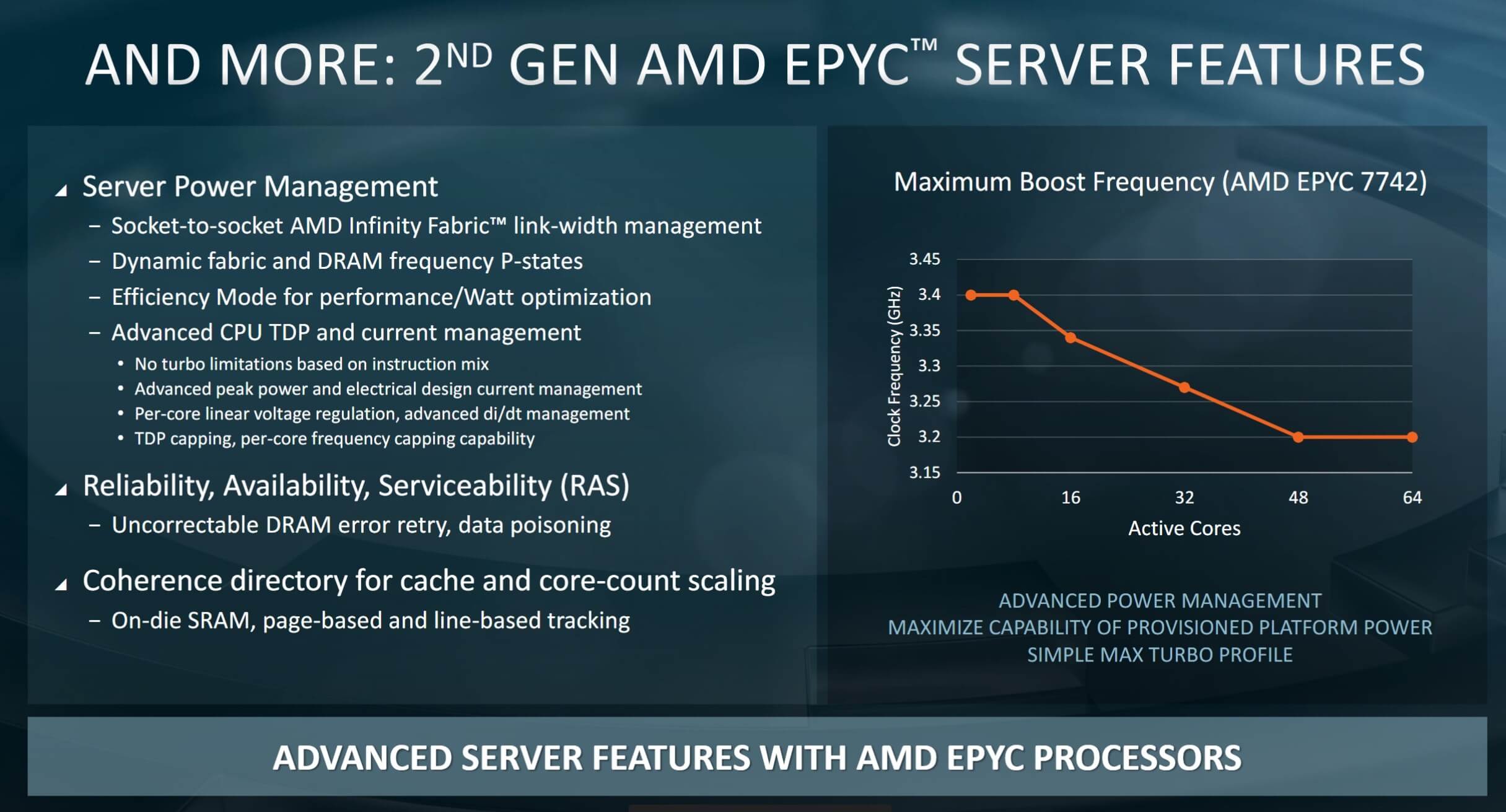
Epyc Rome processors start at $450 for the 8-core/16-thread 7232P and reach $6,950 for the 64-core/128-thread 7742, which has a base frequency of 2.25GHZ and a boost of 3.40GHz. Intel’s 28-core/56-thread Xeon 8280, for comparison, is $10,009.

Several big-name customers were brought on stage during AMD’s launch event to talk about their support of Epyc. These included Google, Twitter, Microsoft, HPE, Cray, Lenovo, and Dell.

After years of being pretty much unchallenged in the consumer CPU space, Intel now has AMD breathing down its neck—Lisu Su’s firm is ahead of team blue in some regions. With the second-gen Epyc processors, it looks as if Intel could also see a chunk of its server market share bitten off by its rival.

Permalink to story.

 
So glad that Intel are being challenged again, too long they have spent resting on their laurels! Competition is healthy and when it isn't its the consumers that suffer.

I'm not team AMD or team Intel, I'm team best product available at the time for my price point, hence swapping out a i5-4690K for Ryzen 5 3600 last month.
 
The Chiplet design is genius, creates so much flexibility and amazing yields at Fabrication.

I wouldn't be surprised if Eypc's 64/128 CPU is making more margin of profit than the Intel's much more expensive 28/52 CPU due to how yields work.

I really hope the Big Enterprise manufacturers jump on board and offer servers with these new CPU's. Can easily see AMD having 20% market share in 2 -3 years time.
 
It's going to be interesting to see how things compare in the benchmarks, especially in terms of the AVX stuff Intel still struggles with.
The Chiplet concept certainly looks like it can allow AMD to undercut Intel more dramatically on price but I'm a little concerned about the thermal throttling of the boost, reducing all cores to a max of 3.2GHz when hitting 48 active cores. With Intel you could by comparison can run a quad Xeon 8280 board with 112 cores all running at 3.3GHz (massive increase in cost though).
 
Double the performance at half the price, Intel is screwed!

Did anyone notice that Tom's Hardware didn't even have an article about the new Intel CPU bug... Its not the first time they either don't have an article or if they do, its only on the their front page for a very short time, meanwhile the Pro Intel articles are posted much longer.
 
2 times the performances, half the power and half the price...

If AMD is not able to take 20-40% of the server market in the next couple of year, then I don't know what will be able to do so. Companies need to realize that it is the time to ditch Intel. They seek performances over security making their product totally incompatible with government business.
 
I guess Intel was watching very carefully that particular presentation.

I bet there was rather large order for toilet paper after it finished. It most certainly hit the fan in large quantities. ;D

Seriously EPYC looks amazing, and I loved that Steve Ballmer moment 'kick ***'. LOL
 
Server administrators don't care about performance or even price; they care about stability. Rebooting a server isn't like your gaming PC; it can take 1-3 HOURS during which time your clients don't have access to their data and are livid.
Even with superior CPUs, it's going to take AMD 5-10 years to break the stranglehold on data centers. The best thing AMD has in its favor right now is the SPECTRE and MELTDOWN vulnerabilities have caused Intel CPUs in data centers to lose as much as 40% performance. In the short term, those administrators will just buy another server to augment the loss, but if Intel doesn't do something meaningful to fix the issue, when it comes to replace those servers, AMD will have an opportunity.
 
Server administrators don't care about performance or even price; they care about stability. Rebooting a server isn't like your gaming PC; it can take 1-3 HOURS during which time your clients don't have access to their data and are livid.
Even with superior CPUs, it's going to take AMD 5-10 years to break the stranglehold on data centers. The best thing AMD has in its favor right now is the SPECTRE and MELTDOWN vulnerabilities have caused Intel CPUs in data centers to lose as much as 40% performance. In the short term, those administrators will just buy another server to augment the loss, but if Intel doesn't do something meaningful to fix the issue, when it comes to replace those servers, AMD will have an opportunity.
What are you talking about? When you buy a server, you care about how fast it is, how much it costs, and how much power and heat it outputs, because at the end of the day, the faster the server is, the better your applications perform, the cheaper it is, the less your datacenter buildouts are, and the less power/heat a server uses/outputs, the lower your electricity and cooling costs are. All of this stuff is extremely important in a modern datacenter. I've personally spent weeks implementing solutions that would reduce our cooling by just a few percent utilization, because that represents thousands of dollars saved per year.

Yeah, stability is important, but what logic are you using to imply that AMD CPUs aren't stable? It's not like they're crashing computers and servers all the time.

Finally, servers reboot in 15 minutes or less, depending on the vendor, operating system, and specs of the server, not 1-3 hours. Could you imagine patching a Windows server and waiting three hours for it to come back? Don't talk about stuff you have no clue about.
 
Rebooting a server isn't like your gaming PC; it can take 1-3 HOURS during which time your clients don't have access to their data and are livid.
Even if it does take that amount of time, which it does not, there is redundancy built-in to the well-designed data center such that the average customer will never notice.

Data center managers also have to pay an electric bill, too...

Maybe it will take AMD as long as you suggest, but with a few more high-profile wins, such as this one in the HPC arena https://www.techspot.com/news/79967...rst-exascale-supercomputer-speeds-excess.html I highly doubt it will take long for data centers to take notice.
 
So glad that Intel are being challenged again, too long they have spent resting on their laurels! Competition is healthy and when it isn't its the consumers that suffer.

I'm not team AMD or team Intel, I'm team best product available at the time for my price point, hence swapping out a i5-4690K for Ryzen 5 3600 last month.

does it work better? performance is higher?
 
does it work better? performance is higher?
Oh lawdy is it just! Processor was effectively bottlenecking my system in Battlefield One, Civ 5 and War for the Overworld, it was paired with a GTX 970 and 16GB RAM (OC to 2400MHz).

It wasn't the most efficient use of my money but PC Gaming is my main hobby so I felt I could justify it.
 
Server administrators don't care about performance or even price; they care about stability. Rebooting a server isn't like your gaming PC; it can take 1-3 HOURS during which time your clients don't have access to their data and are livid.
Even with superior CPUs, it's going to take AMD 5-10 years to break the stranglehold on data centers. The best thing AMD has in its favor right now is the SPECTRE and MELTDOWN vulnerabilities have caused Intel CPUs in data centers to lose as much as 40% performance. In the short term, those administrators will just buy another server to augment the loss, but if Intel doesn't do something meaningful to fix the issue, when it comes to replace those servers, AMD will have an opportunity.
If you have 1 hour of downtime because a server crashed, you're doing something horribly, horribly wrong.
 
I think the most appealing iteration of the EPYC line will be the 12c/24t version. Assuming that the TR version isn't less expensive.
 
2 times the performances, half the power and half the price...

If AMD is not able to take 20-40% of the server market in the next couple of year, then I don't know what will be able to do so. Companies need to realize that it is the time to ditch Intel. They seek performances over security making their product totally incompatible with government business.

20-40% is a big chunk. There is also a lot of actions Intel could take here.. Release New chips and/or lower prices etc. to not lose that much marketshare.
 
Some of you guys don't understand something, companies usually upgrade quite slowly, like when they really have to and there's no other way. And people tend to stick with what they had before for the simple fact that it worked and it was reliable. They don't upgrade if there's a new CPU on the market if their infrastructure works, because they loose money from the downtime and other unforseen circumstances.
 
Congrats, AMD. But Ms. Lisa, would you please let us DIYers know what's your updated plan for the X399 platform and Threadripper CPUs?
 
Back