Antimatter rockets could make interstellar travel a reality with 300x more powerful propulsion

zohaibahd

Posts: 976   +19
Staff
Why it matters: Warp speeds, hyperdrives, and hyperspace jumps – sci-fi has teased us with the prospect of zipping between stars for decades now. But thanks to technological limitations, we are yet to get any closer to that reality. There might be a way, though: a new study examines the potential of harnessing antimatter as a fuel source capable of flinging spacecraft across the cosmos faster than any existing technology.
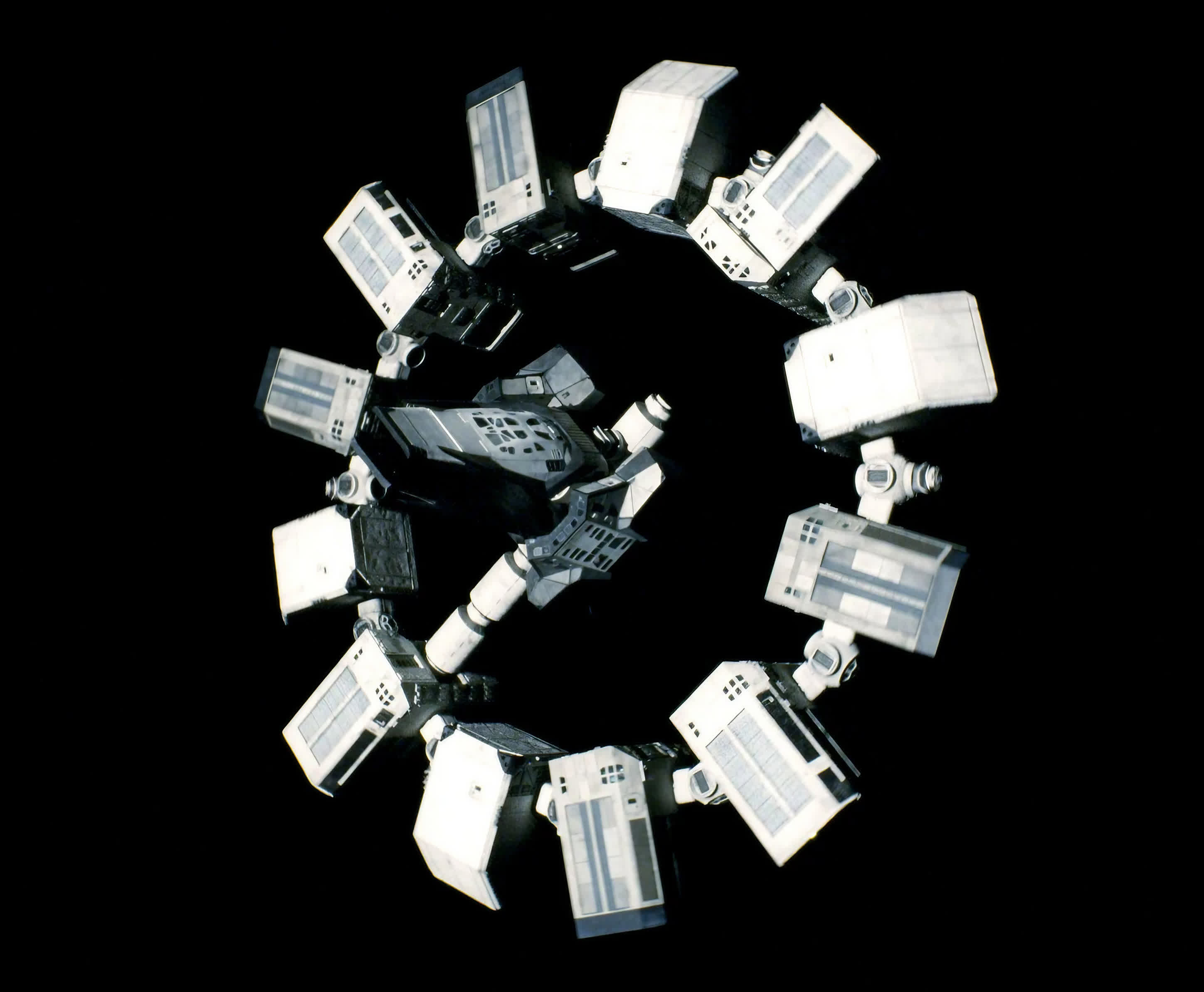
For the uninitiated, antimatter is the bizarre "evil twin" of normal matter, with opposite charges and physical properties. In the rare event the duo collides, it results in an annihilation that unleashes pure energy in an explosive event. Just a tiny amount of antimatter packs astronomical energy – millions of times more potent than conventional fuels like rocket propellant.

The study by researchers from the United Arab Emirates University crunched the numbers, and the results are incredible. A mere gram of antimatter, specifically antihydrogen, could theoretically generate enough energy to propel 23 space shuttles.

"To depict this magnitude, this energy, kilogram for kilogram, is about ten billion times more than the hydrogen-oxygen combustion that powers space shuttles' main engines and 300 times more than the fusion reactions at the Sun's core," remarked the researchers in the study published in the journal Science Direct.
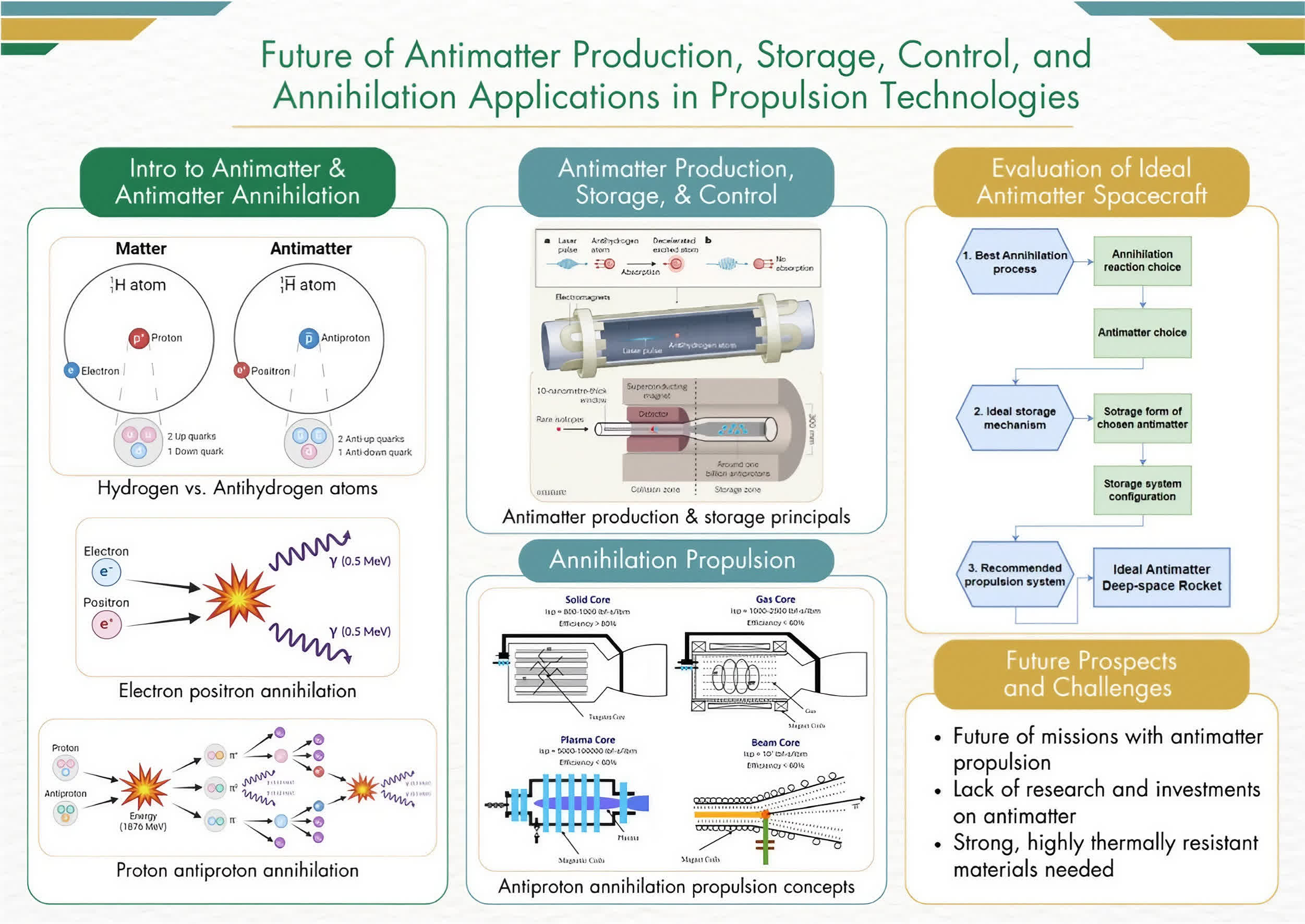
Moreover, the specific impulse from antimatter engines could theoretically reach a whopping 20 million meters per second, which the researchers say could make "interstellar propulsion a goal instead of a dream."

With that kind of thrust, a crewed antimatter rocket wouldn't just explore the solar system; it could realistically voyage to neighboring stars within a normal human lifetime. In fact, the researchers talk about traversing the solar system in just days or weeks.

All said, the numbers are pretty promising. But as is always the case with theory, there's a big catch. Antimatter isn't exactly a common resource and there are some major technical and economic hurdles.

For starters, antimatter instantaneously vaporizes when it touches normal matter. Isolating and storing it requires incredibly sophisticated (and expensive) containment systems using powerful electromagnetic fields. The current record is just 16 minutes before annihilation at CERN's particle colliders.

Then there's the astronomical cost of manufacturing antimatter. Those same CERN facilities can only produce around 10 nanograms per year at a price of millions per gram. Building enough fuel for an antimatter rocket would require stellar-sized budgets and sophisticated antimatter production that's far beyond today's capabilities.

However, while formidable, those obstacles aren't necessarily permanent brick walls. The paper suggests that continuing R&D could help crack the containment and manufacturing challenges. Hopefully, it will happen in our lifetimes.

Image credit: Fandom

Permalink to story:

 
Interesting concept, but not feasible at this time.

I wonder if the paper discussed how, given the availability of "economical" antimatter, they would overcome the time dilation issue. Perhaps these articles present a slightly different concept that would not suffer the effects of time dilation, however, it might be possible to power it with "economical" antimatter.

For a less technical discussion try this.
 
Last edited:
My take remains the same: If we live in a universe where FTL travel is not feasible, then the sheer time to reach the next closest solar system pretty much mandates generational ships (or at *best* one-way trips). Tech like this can work for in-system transit, but really doesn't move the needle much if your destination is Alpha Centauri.
 
Interesting concept, but not feasible at this time.

I wonder if the paper discussed how, given the availability of "economical" antimatter, they would overcome the time dilation issue. Perhaps these articles present a slightly different concept that would not suffer the effects of time dilation, however, it might be possible to power it with "economical" antimatter.

For a less technical discussion try this.
How about making healthy and affordable food a reality?? When will that happen?
We'll soon have unmanned flights bringing fresh groceries to earth from alpha centauri and beyond, taking advantage of time dilation.
 
Invention produces anti-matter for interstellar propulsion. Technology far away but who knows someday, scientist, engineers will find the correct solution.

:)
 
We struggle to make enough of it for experiments.
Fun fact fluorine is much easier to store than antimatter. If my school science is still correct fluorine is the most reactive element, Just throw it in a container and allow sides to form a fluorine compound

Never watched "back to the future"
but a flux capacitor that manages to solely capture antimatter from the foam/flux of nothingness is the way to - ie particles popping in and out of existence all the time
 
I have a suspicion that attractive as the proposition sounds, it’s not going to work. Interstellar space seems to be nearly empty, but I would not be surprised if in traversing a cylinder of space one spacecraft wide by an interstellar distance (at least 4 light-years) long, the probabilities are such that it becomes somewhere between likely and almost inevitable that you’ll hit a bit of matter large enough to destroy the craft at the speeds contemplated. Something the size of a pea at 1/10th light speed is a very fast bullet indeed. I wish it were otherwise.
 
I have a suspicion that attractive as the proposition sounds, it’s not going to work. Interstellar space seems to be nearly empty, but I would not be surprised if in traversing a cylinder of space one spacecraft wide by an interstellar distance (at least 4 light-years) long, the probabilities are such that it becomes somewhere between likely and almost inevitable that you’ll hit a bit of matter large enough to destroy the craft at the speeds contemplated. Something the size of a pea at 1/10th light speed is a very fast bullet indeed. I wish it were otherwise.
I was going to write the same. Speed is not enough without material so strong that it would make it safe to hit foreign objects at such speed in space.
 
It costs about $62.5 trillion to create 1 gram of antimatter. $6,250 trillion per kg. It would be cheaper to build planet moving engines on each planet and move them to us.
 
There's no free lunch. Manufacturing antimatter requires energy and matter (particle collisions). Even if we could increase the efficiency, I doubt we could get much more out than we would put in. Proton-antiproton annihilations also emit 50% of their energy as neutrinos (the other half as light), and neutrinos pass through almost everything, so that's basically lost energy. Positron emission is another source, and is used in the medical field, but as it stands, it takes more energy to produce the materials that decay into releasing positrons than the positron annihilation generations back.

I'm a Star Trek fan, so it pains me to say such things, as I would love to have me a warp drive. Nevertheless, there it is.

A bigger question to answer: where did all the antimatter go? In theory, all the normal and anti matter should have annihilated each other shortly after the Big Bang. One of the big remaining mysteries of the universe (along with, well, all the others).
 
How about making healthy and affordable food a reality?? When will that happen?
On one hand this is a real concern, on the other hand humanity didn't reach the current level only by striving for a full belly. When some of the people needn't concern themselves with surviving, their mind began to wonder and invented things that we now take for granted: Electromagnetic Waves, Laser, X-rays were purely theoretical and of no practical use at the moment of discovery.
 
Even if we get capacity to create antimatter cheaply, I think it will more likely be made into smaller and more powerful weapons first. Imagine a bomb that surpasses nuclear bombs in the size of a postage stamp.
 
There's no free lunch. Manufacturing antimatter requires energy and matter (particle collisions).
As do chemical fuels.

Even if we could increase the efficiency, I doubt we could get much more out than we would put in. Proton-antiproton annihilations also emit 50% of their energy as neutrinos (the other half as light),
No, only about a third is light (gamma rays) and that energy can be partially recovered. The remainder are a soup of various mesons (pions and the like) that undergo further decay. These charged particles are what provide the thrust.

You're very correct that the half released as neutrinos is (at our current tech level) lost energy. But you forget that for any but the shortest of space missions, rockets are not energy-bound, but momentum-bound. They're limited by their reaction mass ... which makes specific impulse the primary metric.
 
How about making healthy and affordable food a reality?? When will that happen?
It is not a problem for as long as people purposely pick really unhealthy alternatives.
Yes, it is much easier to eat healthy if you are not limited to the budget options.
But you can buy a lot of things that are truly healthy.
And when I see people 300+ pounds, I doubt they ever tasted those healthy foods.
We will not make people to eat healthier for as long as we sell all of this garbage that gifts heart diseases at the age of 30.
 
I have a suspicion that attractive as the proposition sounds, it’s not going to work. Interstellar space seems to be nearly empty, but I would not be surprised if in traversing a cylinder of space one spacecraft wide by an interstellar distance (at least 4 light-years) long, the probabilities are such that it becomes somewhere between likely and almost inevitable that you’ll hit a bit of matter large enough to destroy the craft at the speeds contemplated. Something the size of a pea at 1/10th light speed is a very fast bullet indeed. I wish it were otherwise.

Deflector Shields to maximum...
 
It is not a problem for as long as people purposely pick really unhealthy alternatives.
Yes, it is much easier to eat healthy if you are not limited to the budget options.
But you can buy a lot of things that are truly healthy.
And when I see people 300+ pounds, I doubt they ever tasted those healthy foods.
We will not make people to eat healthier for as long as we sell all of this garbage that gifts heart diseases at the age of 30.

Oil. Whether in liquid or solid forms is extremely energy dense. Same goes for fats in the same form.
 
Back