Apple hit with $2 billion payout in record UK class-action ruling

Daniel Sims

Posts: 2,463   +74
Staff
What just happened? Apple has spent years battling lawsuits and hefty fines from governments over its app store policies. A new collective-action lawsuit in the United Kingdom adds another $2 billion to the Cupertino giant's mounting legal bills, this time over its widely criticized commission fees.
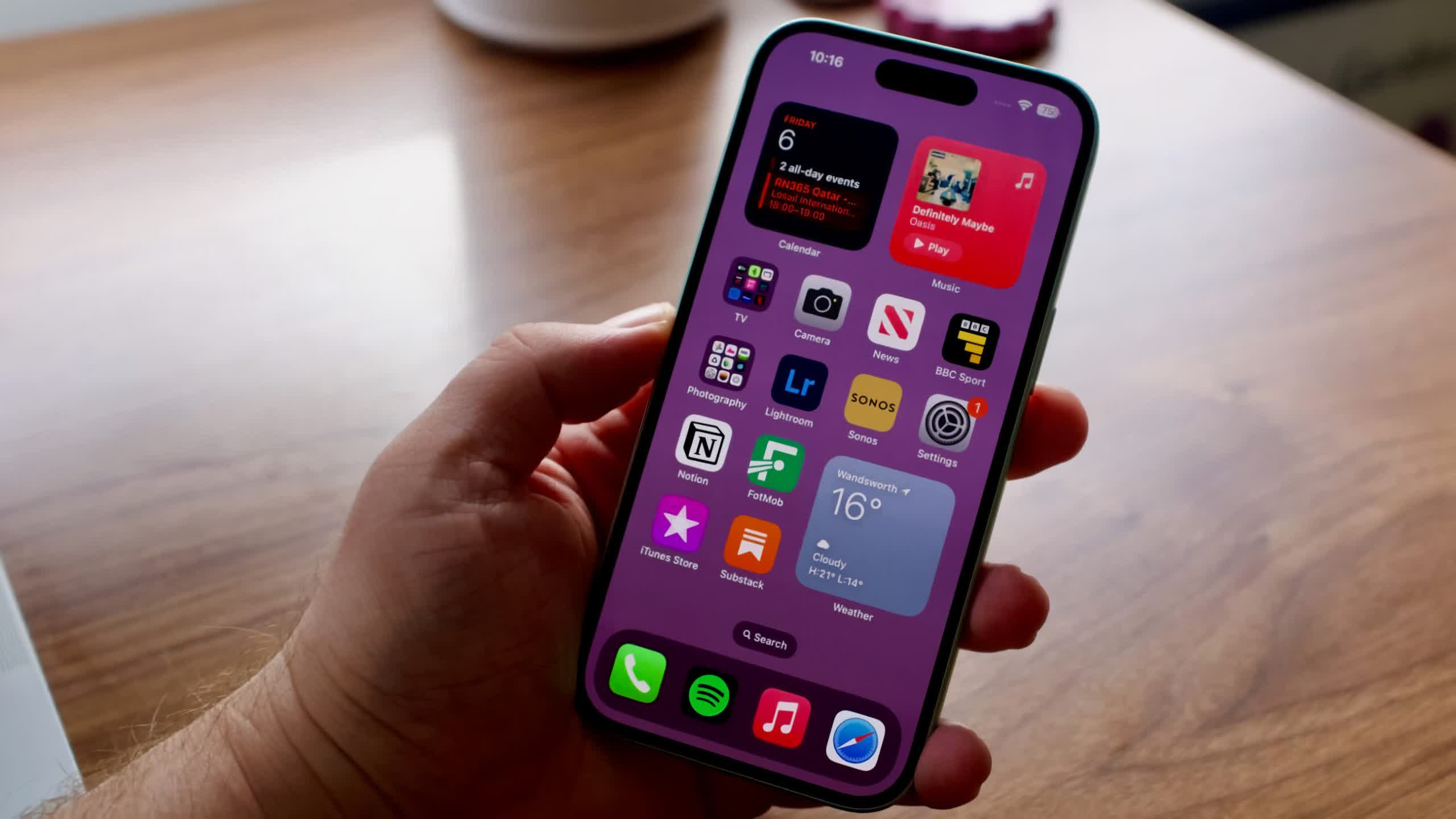
The United Kingdom's Competition Appeal Tribunal ruled that Apple abused its dominant position by imposing onerous commission fees on app developers, passing unnecessary costs onto consumers. As a result of the country's first mass-action lawsuit, the tech giant must pay up to £1.5 billion ($2.01 billion US).

British academic Rachel Kent filed the lawsuit on behalf of 20 million iPhone and iPad owners in the UK, arguing that the Apple App Store's standard 30-percent cut on all purchases is excessive. While Apple claimed that 85 percent of developers pay nothing, services such as Spotify have said the fees hurt their business.

The ruling declares that UK users are entitled to hefty damages. Apple has pledged to appeal the judgment, and a hearing next month will determine how much each claimant will receive. If all plaintiffs claim their share, it should work out to about £75 ($100) per person.
The case is one of many in which regulators from the United Kingdom, European Union, United States, and other regions are challenging Apple and Google's restrictions on mobile app distribution and payment processing. Earlier this year, Apple lost a long-running legal battle against Epic Games in the US, forcing the company to loosen its rules on third-party payment processors.

Although Apple made sweeping changes to its App Store policies under protest to comply with the EU's Digital Markets Act, regulators deemed the measures insufficient and continued issuing fines. The company appealed a $580 million DMA penalty in July, insisting its restrictions are essential for device security.

App developers and lawmakers have pushed Apple and Google to permit third-party app stores and sideloading on mobile devices. Earlier this year, members of Congress introduced two bipartisan bills that would compel Apple to open its platform.

Meanwhile, Meta, Spotify, and other developers have formed a coalition to challenge what they describe as a duopoly of mobile software walled gardens. A recent survey suggests that most developers expect third-party app stores to drive growth in the coming years. Apple's restrictions on web browser engines have drawn similar criticism, with developers arguing that many apps wouldn't exist if iOS browsers were less restricted

Permalink to story:

 
I dont like the way they won this case.

What is being established here is that the government can tell you what your commission fee can be. Sure, it's fun dunking on apple because they're rich, but I can think of plenty of ways this could be abused to control competition and make it impossible for all but the largest to compete on the lower margins.

It also opens the door to the government setting limits on other things. Margin? Profit? Capex? Wages? Who gets to decide what qualifies as excessive? The limits are endless in how much they can micromanage using "excessive amounts" as cause.
 
I dont like the way they won this case.

What is being established here is that the government can tell you what your commission fee can be. Sure, it's fun dunking on apple because they're rich, but I can think of plenty of ways this could be abused to control competition and make it impossible for all but the largest to compete on the lower margins.

It also opens the door to the government setting limits on other things. Margin? Profit? Capex? Wages? Who gets to decide what qualifies as excessive? The limits are endless in how much they can micromanage using "excessive amounts" as cause.
I agree with most of this. However, I also see this as Apple's doing by forcing their AppStore monopoly. If they had actual competition (like they've been told to allow in parts of the world), I wouldn't see it as a problem.

That said, the UK does also like to be ridiculous...
 
I agree with most of this. However, I also see this as Apple's doing by forcing their AppStore monopoly. If they had actual competition (like they've been told to allow in parts of the world), I wouldn't see it as a problem.

That said, the UK does also like to be ridiculous...
Agreed. I'm totally in favor of the DMA's actions forcing alternative stores, and argue they dont go far enough.

With alternative stores, Apple should be allowed to charge what they want, assuming those stores dont have restrictions like they do now. Otherwise, any store in a country with a weak currency could open a copy of the store with lower prices and dominate the market by sheer price alone.
 
England needs this dough to keep their lights on. They have lost their way
That's hilarious - 2nd largest GDP growth in the G7 and 6th largest overall GDP (despite it's tiny population) - yeah the UK is really struggling to keep the lights on. Don't believe everything the Russian bot farms and far-right misinformation spreaders tell you.
 
I dont like the way they won this case.

What is being established here is that the government can tell you what your commission fee can be. Sure, it's fun dunking on apple because they're rich, but I can think of plenty of ways this could be abused to control competition and make it impossible for all but the largest to compete on the lower margins.

It also opens the door to the government setting limits on other things. Margin? Profit? Capex? Wages? Who gets to decide what qualifies as excessive? The limits are endless in how much they can micromanage using "excessive amounts" as cause.
When you have a monopoly/duopoly and you also restrict the market, then yes, the government can intervene.

"It also opens the door to the government setting limits on other things." - no it doesn't. you need to take monopolies more seriously. the "you can do whatever you want as long as you make a profit" policy of the US doesn't work in the EU.
 
Agreed. I'm totally in favor of the DMA's actions forcing alternative stores, and argue they dont go far enough.

With alternative stores, Apple should be allowed to charge what they want, assuming those stores dont have restrictions like they do now. Otherwise, any store in a country with a weak currency could open a copy of the store with lower prices and dominate the market by sheer price alone.
Alternative stores do have restrictions. And the EU ruled that Apple has to allow app devs to inform users of different payment and distribution methods, but Apple is charging "service fees" for anybody who does this. The process for both devs and users is also very tedious and falls under malicious compliance category which does not fly in the EU where you have to follow the spirit of the law.
 
Alternative stores do have restrictions. And the EU ruled that Apple has to allow app devs to inform users of different payment and distribution methods, but Apple is charging "service fees" for anybody who does this. The process for both devs and users is also very tedious and falls under malicious compliance category which does not fly in the EU where you have to follow the spirit of the law.
Seems to be flying pretty well, considering the EU left that door WIDE open, and the EU has already clarified that the current app store policy is compliant with their regulations.
When you have a monopoly/duopoly and you also restrict the market, then yes, the government can intervene.

"It also opens the door to the government setting limits on other things." - no it doesn't. you need to take monopolies more seriously. the "you can do whatever you want as long as you make a profit" policy of the US doesn't work in the EU.
Apple doesnt have a monopoly. It's not even a real duopoly, considering that alt stores are mandated on iOS and google has always had them.

You need to take government overreach more seriously. If you dont think the government will abuse law that allows them to restrict profits under threat of massive fines....well....I suggest you open up a history book sometime.
 
That's hilarious - 2nd largest GDP growth in the G7 and 6th largest overall GDP (despite it's tiny population) - yeah the UK is really struggling to keep the lights on. Don't believe everything the Russian bot farms and far-right misinformation spreaders tell you.
You're a saint. I won't even reply to Rudy anymore, he brings nothing to the discourse.
 
It also opens the door to the government setting limits on other things. Margin? Profit? Capex? Wages? Who gets to decide what qualifies as excessive? The limits are endless in how much they can micromanage using "excessive amounts" as cause.
Wages? Yes please.
Companies where employees get paid minimum wage and cameras are used to track if they don't spend more than their alotted time on toilet breaks.. whilst upper management is paid millions each.
Imo a lot of companies could do with splitting their profits amongst the workforce a lot more fairly and I'm pretty sure a maximum wage would greatly contribute towards that.
Won't ever happen unless every single country decides to do the same though.
 
Seems to be flying pretty well, considering the EU left that door WIDE open, and the EU has already clarified that the current app store policy is compliant with their regulations.
Apple doesnt have a monopoly. It's not even a real duopoly, considering that alt stores are mandated on iOS and google has always had them.

You need to take government overreach more seriously. If you dont think the government will abuse law that allows them to restrict profits under threat of massive fines....well....I suggest you open up a history book sometime.
Why are you defending Apple and laying about things? Here you go, a fine for non-compliance earlier this year:

"Under the DMA, app developers distributing their apps via Apple's App Store should be able to inform customers, free of charge, of alternative offers outside the App Store, steer them to those offers and allow them to make purchases.

The Commission found that Apple fails to comply with this obligation. Due to a number of restrictions imposed by Apple..."

The only door open is the one for the EU to continue giving Apple fines for breaking the law.

"Apple doesnt have a monopoly. It's not even a real duopoly" - it must be fun living in a fantasy world.

"You need to take government overreach more seriously." - I am, and the answer will always be: consumers should be protected, not companies. if companies refuse to self regulate then the government is forced to step in. this concept is completely foreign to the regular US Joe, where people's lives are insignificant in the pursuit of profit.
 
Wages? Yes please.
Companies where employees get paid minimum wage and cameras are used to track if they don't spend more than their alotted time on toilet breaks.. whilst upper management is paid millions each.
Imo a lot of companies could do with splitting their profits amongst the workforce a lot more fairly and I'm pretty sure a maximum wage would greatly contribute towards that.
Won't ever happen unless every single country decides to do the same though.
I am not a fan of practices such as using cameras for tracking how much time an employee spends in the bathroom. But I remember reading a post somewhere, someone was boasting to be spending a much time as possible in the bathroom because he hated to work there.
There are plenty of people who would do anything to not work. Many of these practices have very simple and practical explanations.
It is better to give employees ability to fire people rather than using such practices hoping that those who hate the place would choose to quit. That Amazon retraining program is the same thing: "if you do not want to quit, we will make you."
It would be better if they could just fire people rather than doing things that humiliate employees much more.
 
I am not a fan of practices such as using cameras for tracking how much time an employee spends in the bathroom. But I remember reading a post somewhere, someone was boasting to be spending a much time as possible in the bathroom because he hated to work there.
There are plenty of people who would do anything to not work. Many of these practices have very simple and practical explanations.
It is better to give employees ability to fire people rather than using such practices hoping that those who hate the place would choose to quit. That Amazon retraining program is the same thing: "if you do not want to quit, we will make you."
It would be better if they could just fire people rather than doing things that humiliate employees much more.
There's a much more simple solution that doesn't require excessive micro managing or privacy invasion.
Judge people by the work they do. If they get far less done than others or the quality isn't sufficient than that's ground for a talk. It doesn't improve, you fire them.
If you can't judge this you shouldn't be in the position to fire people.

That's literally the only standard employees should get judged by, the pace and quality of their work. Just don't do it by silly measurements, don't be Amazon where you judge the delivery driver simply by how much they can deliver and have them peeing in bottles because they can't meet the quota otherwise.
 
Back