Rumor mill: Apple is overhauling its Mac chip roadmap to place artificial intelligence at the center of its hardware strategy. Instead of completing the M6 lineup with the usual Pro, Max, and Ultra variants, the company is reportedly moving directly to the M7 generation and planning significantly larger Neural Engine upgrades, according to people familiar with the plans.

This fall's Macs are still expected to debut with a base M6 chip. Under Apple's traditional release pattern, that chip would be followed by M6 Pro and M6 Max variants for higher-end laptops, along with an M6 Ultra for desktop-class machines.
This time, that sequence will reportedly stop after the entry-level chip. The company has already moved on to the M7 design, taping it out only about six months after the M6 reached the same stage. The compressed timeline highlights how urgently Apple wants its Macs to handle increasingly demanding AI workloads.
According to the internal roadmap, the first M7 Macs are scheduled to launch in the first half of 2027. Higher-end M7 Pro and M7 Max systems are expected later that year, while the M7 Ultra is targeted for 2028.
Apple has skipped an Ultra chip before – the M4 family did not include one – but abandoning every high-end M6 variant at once would mark a first. People briefed on the plans say Apple determined that the M7's AI-focused upgrades were significant enough to justify skipping further M6 development.
At the center of those changes is the Neural Engine, Apple's dedicated on-chip AI hardware that powers on-device generative models, accelerated inference, and Apple Intelligence features. Apple has refined the Neural Engine with every Mac chip generation since the M1 debuted in 2020, and the M4 represented one of the biggest improvements to date.
The company now wants the M7, particularly the M7 Ultra, to approach the level of performance developers expect from dedicated AI accelerators rather than traditional general-purpose desktop processors.
Memory support is a major part of that effort. The M7 Ultra is being designed to support up to 1.5 terabytes of unified memory. That is roughly double the capacity planned for the upcoming M5 Ultra server chip and matches the maximum RAM configuration available on Apple's 2019 Intel-based Mac Pro.
With that much memory, significantly larger AI models can remain in memory, reducing bottlenecks and limiting the need to rely on external storage or cloud-based compute. Whether Apple ships Macs with the full 1.5TB configuration will depend on memory availability, as supply constraints and elevated prices remain concerns.
These desktop plans tie directly into Apple's server strategy. The company is preparing a more powerful AI server based on the M5 Ultra, known internally as J246. Engineers are already working on a successor built around an M7 Ultra-derived server chip, with a launch window targeted for around 2029.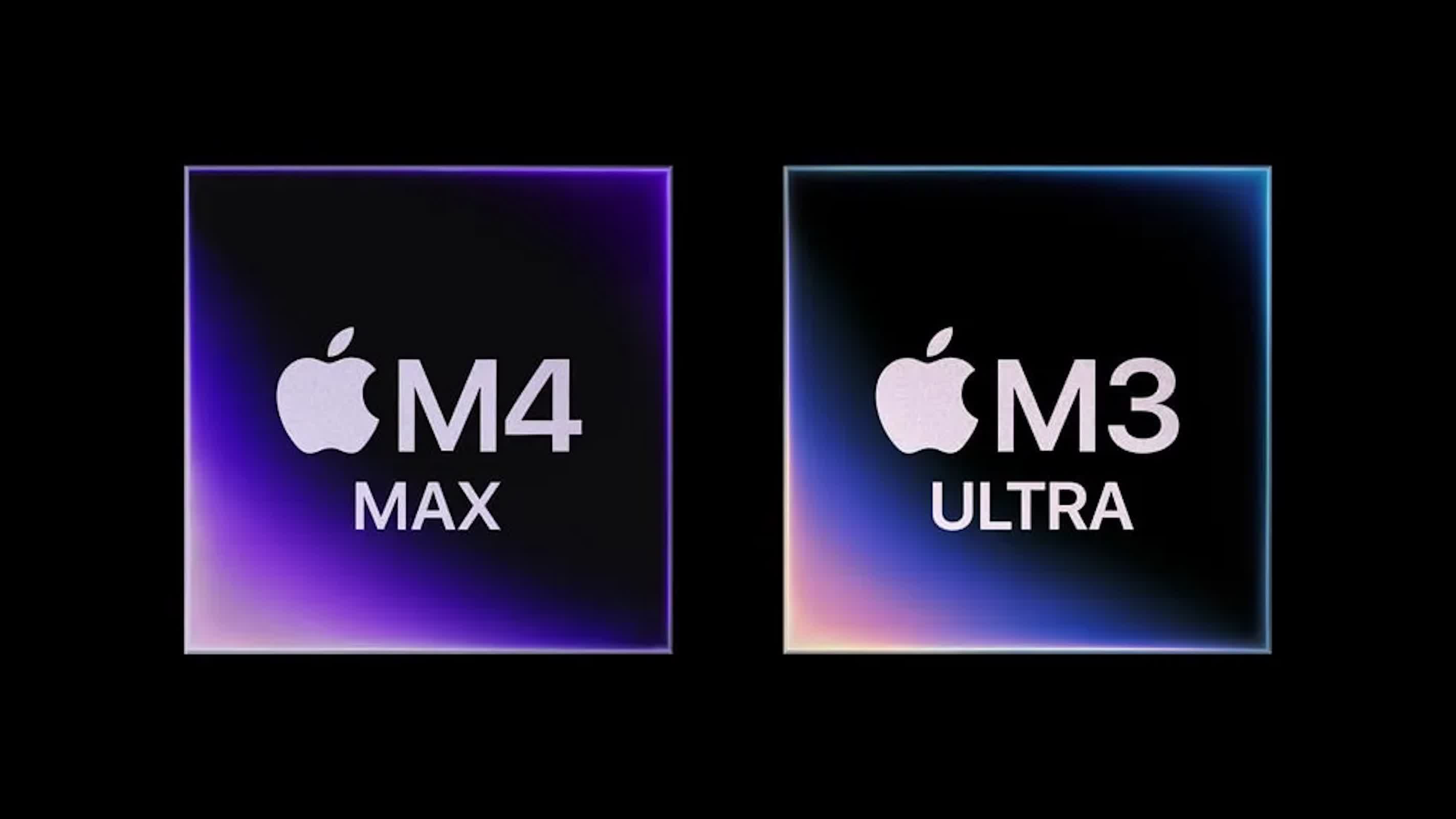
In other words, the same architecture expected to power Apple's highest-end Macs could also underpin the next generation of servers running Apple Intelligence in the cloud.
Beyond the M7 family, Apple is developing an M8 generation with even more AI-focused silicon. The lineup reportedly includes a processor code-named Soko, targeted for 2028, along with other chips for high-end Macs under the Cardinal name.
The 2028 chips are planned for a 1.4-nanometer process, which should deliver another leap in efficiency. The shift comes as AI chips encounter increasing power and cooling constraints, pushing Apple to prioritize more transistors for neural processing units and memory bandwidth rather than simply expanding CPU and GPU cores.
All of this hardware development comes alongside a more mixed picture on the software side. Apple has struggled to deliver AI-powered services at the pace many expected. Apple Intelligence and the redesigned Siri have rolled out more slowly than planned, forcing the company to adjust expectations along the way.
Still, Apple's hardware teams have spent more than a decade building the foundation for this moment, often through projects that never reached consumers.
The most notable example is the company's abandoned self-driving car initiative. From the beginning, Apple targeted full Level 5 autonomy and invested heavily in machine learning and custom silicon capable of processing massive amounts of AI workloads in real time.
The car project never reached the market, but the chip development work directly contributed to the Neural Engine architecture that first appeared in the iPhone X in 2017 before expanding to Macs and other devices. That same hardware foundation now sits at the center of Apple's AI strategy.
With the M7 and M8 families, Apple is treating AI as the primary driver of its chip designs rather than simply an additional feature. AI workloads are now shaping which chips get developed, when they launch, and how their architectures are built.
Apple is reportedly skipping M6 Pro, Max, and Ultra chips to fast-track AI-focused M7 Macs


