Apple's AirPods Pro 2 gain FDA approval as over-the-counter hearing aids

Daniel Sims

Posts: 2,469   +74
Staff
Why it matters: With a $250 price tag, Apple's AirPods Pro 2 qualify as a premium set of earbuds. However, recent FDA authorization has transformed the device into one of the most affordable hearing aids on the market. Beginning later this year, Apple's advanced hardware and software will offer consumers a flexible and accessible way to manage mild to moderate hearing loss.
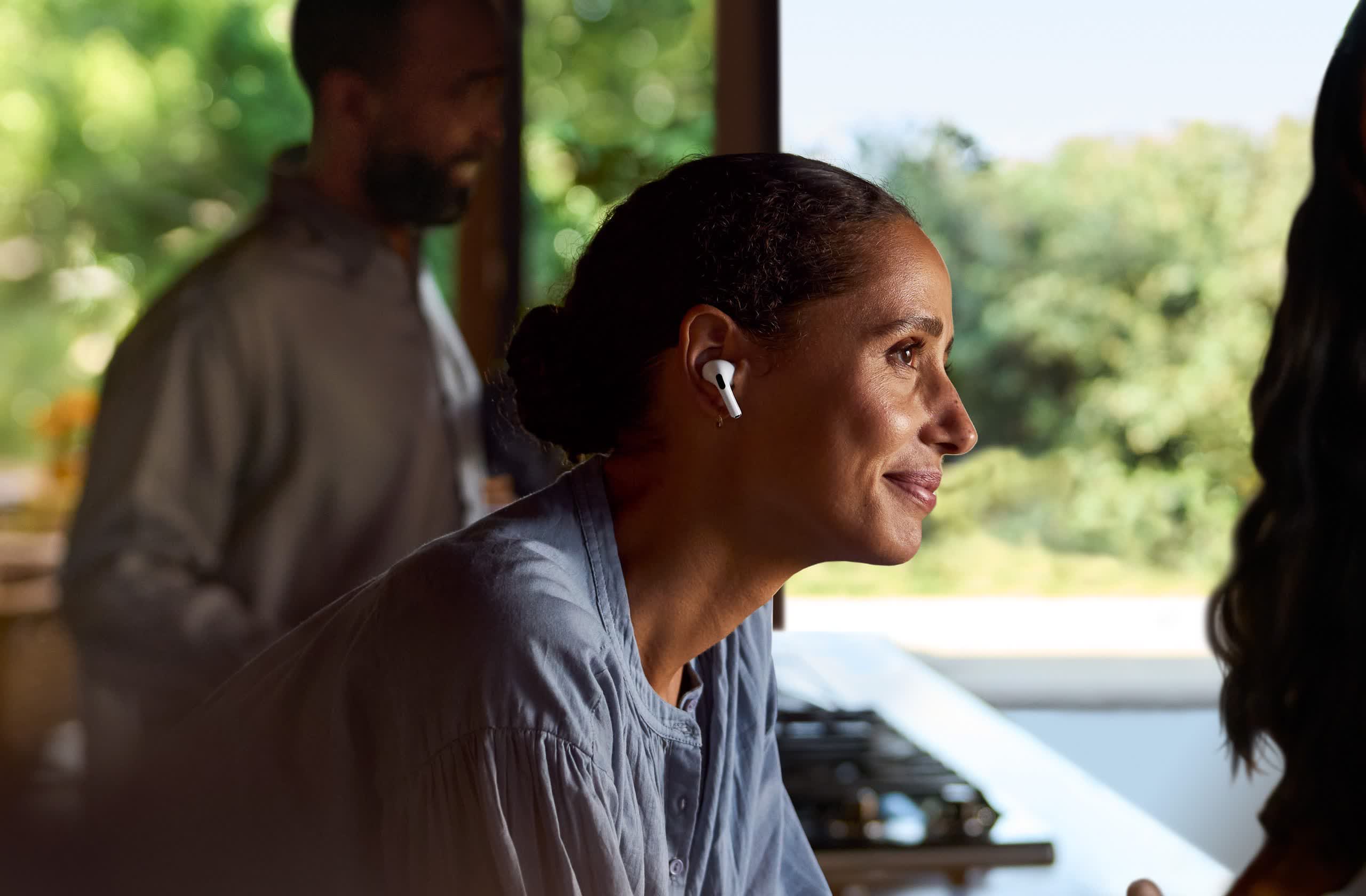
Apple introduced new hearing health functionality for the AirPods Pro 2 during its recent Glowtime product showcase. Shortly afterward, the US Food and Drug Administration classified the device and Apple's hearing software as over-the-counter-grade hearing aids.

While some prescription hearing aids can cost tens of thousands of dollars, Apple's premium earbuds could significantly lower the cost of hearing assistance, making it accessible o millions of people with mild to moderate hearing loss. Additionally, iOS apps will offer extensive customization options, surpassing the capabilities of traditional hearing aids.

The FDA's approval specifically applies to Apple's "Hearing Aid" app, which allows users to fine-tune how their AirPods manage noise levels and respond to various external sounds. Ear health professionals can create audiograms for the app, which were tested using proven scientific methods. All users can generate a personalized hearing profile, affecting how the AirPods process music, videos, games, and other audio inputs. Additionally, AirPods Pro 2 will receive software to help users prevent and diagnose hearing loss.

With the release of iOS 18 on September 16, AirPods Pro 2 will introduce a new "Hearing Protection" feature, automatically engaged across all listening modes. The ear tips will activate passive noise reduction, while the device's H2 processor protects against loud, intermittent sounds 48,000 times per second. If a user attends a live concert while wearing AirPods Pro, a high dynamic range algorithm will protect their ears without compromising the music's quality.

Later this year, the Hearing Aid app will launch, offering an easy-to-use hearing test based on pure-tone audiometry and acoustic science. Users tap an icon on the screen to indicate when they hear a noise during the test, and the results, presented in straightforward language, can assist doctors in assessing hearing health. Even if the results show little to no hearing loss, the AirPods can analyze which frequencies a user hears most easily and optimize the audio experience accordingly.

The Hearing Aid functionality, exclusive to AirPods Pro 2, will be available in over 100 countries, including the US, Japan, and Germany.

Permalink to story:

 
Great! So now you cannot tell a regular wearer of AirPods Pro from a deaf person.

Apple should make those in a different/special color at least - traditionally, grey-brown for such purpose.
 
It's a known fact that wearing these in-ear earphones for prolonged periods at loud volumes damages the wearer's hearing, my audiologist told me that, so now Apple who is the manufacturer of the best selling in-ear earphones is releasing a product they claim can double as an over the counter hearing aid.
These tech giants are hoodwinking the public.
 
It's a known fact that wearing these in-ear earphones for prolonged periods at loud volumes damages the wearer's hearing, my audiologist told me that, so now Apple who is the manufacturer of the best selling in-ear earphones is releasing a product they claim can double as an over the counter hearing aid.
These tech giants are hoodwinking the public.

Could he have meant the noise cancelation? Because the airpods pro doesn’t tax your ears from weight and form. But you are correct concerning noise cancelation, people think it only cancels out sound - but it’s actually bombarding your ear with sound you can’t hear. You can turn that off completely though, and with hearing aid functionality it will naturally not be active
 
"Sound you can't hear." That makes no sense, please explain.
Noise-cancelling audio devices use a built-in microphone to analyze the ambient sound waves around you and generate the opposite sound waves to reduce surrounding sound. Noise-cancelling devices have a built-in microphone which produces the opposite reversed sound waves to neutralize surrounding noise.
So when there is constant noise, the Microphone will generate sound constantly to "cancel out" the sound waves you would otherwise be hearing. For the user this will sound like there is absence of noise, while the opposite is true. Using noise cancellation in very quiet rooms will however make it seem like "it's not working" as the few noises you're hearing aren't constant enough for it to "trigger"
 
Noise-cancelling audio devices use a built-in microphone to analyze the ambient sound waves around you and generate the opposite sound waves to reduce surrounding sound. Noise-cancelling devices have a built-in microphone which produces the opposite reversed sound waves to neutralize surrounding noise.
So when there is constant noise, the Microphone will generate sound constantly to "cancel out" the sound waves you would otherwise be hearing. For the user this will sound like there is absence of noise, while the opposite is true. Using noise cancellation in very quiet rooms will however make it seem like "it's not working" as the few noises you're hearing aren't constant enough for it to "trigger"

That's not "bombarding your ear with sound you can’t hear". That's creating inverse wave sounds that cancel out environmental sounds. Which seems to be the opposite: preventing your ears from being bombarded with sound.
 
That's not "bombarding your ear with sound you can’t hear". That's creating inverse wave sounds that cancel out environmental sounds. Which seems to be the opposite: preventing your ears from being bombarded with sound.
You cannot «cancel» soundwaves - you create «an inverse soundwave» - which is by definition also sound. Ah well, google it, there’s a reason they don’t recommend using it for long sessions
 
You cannot «cancel» soundwaves - you create «an inverse soundwave» - which is by definition also sound.
From the Sound Guys:

"The two waves are then said to be “out of phase” and subtracted from one another as the positive pressures of one wave are acting against the negative pressures of the other, and vice versa. Think of it as trying to add one and subtract one. You’re just left with zero."

If the waves have opposite polarity and are well matched, they cancel out leaving you with the opposite of sound. No sound. That's the entire reason for existence of noise cancelling headphones, the background sound is gone as it arrives at your ears and you only hear your music track.

Of course this is subject to how well your noise canceling headphones work and some people have issues with it because no technique is ever perfect, that's to be expected and why people pay more for better implementations, just like every other product. But these headphones aren't adding anything to what's going into your ears and being detected by your auditory system, instead they're removing the environmental sounds and generally doing a very good job of it.
 
Back