Apple's China exposure makes it most vulnerable in US-China trade war

DragonSlayer101

Posts: 979   +14
Staff
A hot potato: Global financial markets posted three consecutive days of losses as the trade war between the U.S. and the rest of the world escalated. The tech sector has been hit particularly hard by President Trump's tariffs, with all major U.S. tech companies losing a significant portion of their market value. Apple has seen the hardest hit, shedding nearly 20 percent of its market cap in one of the steepest declines in the company's history before a mild recovery on Tuesday.
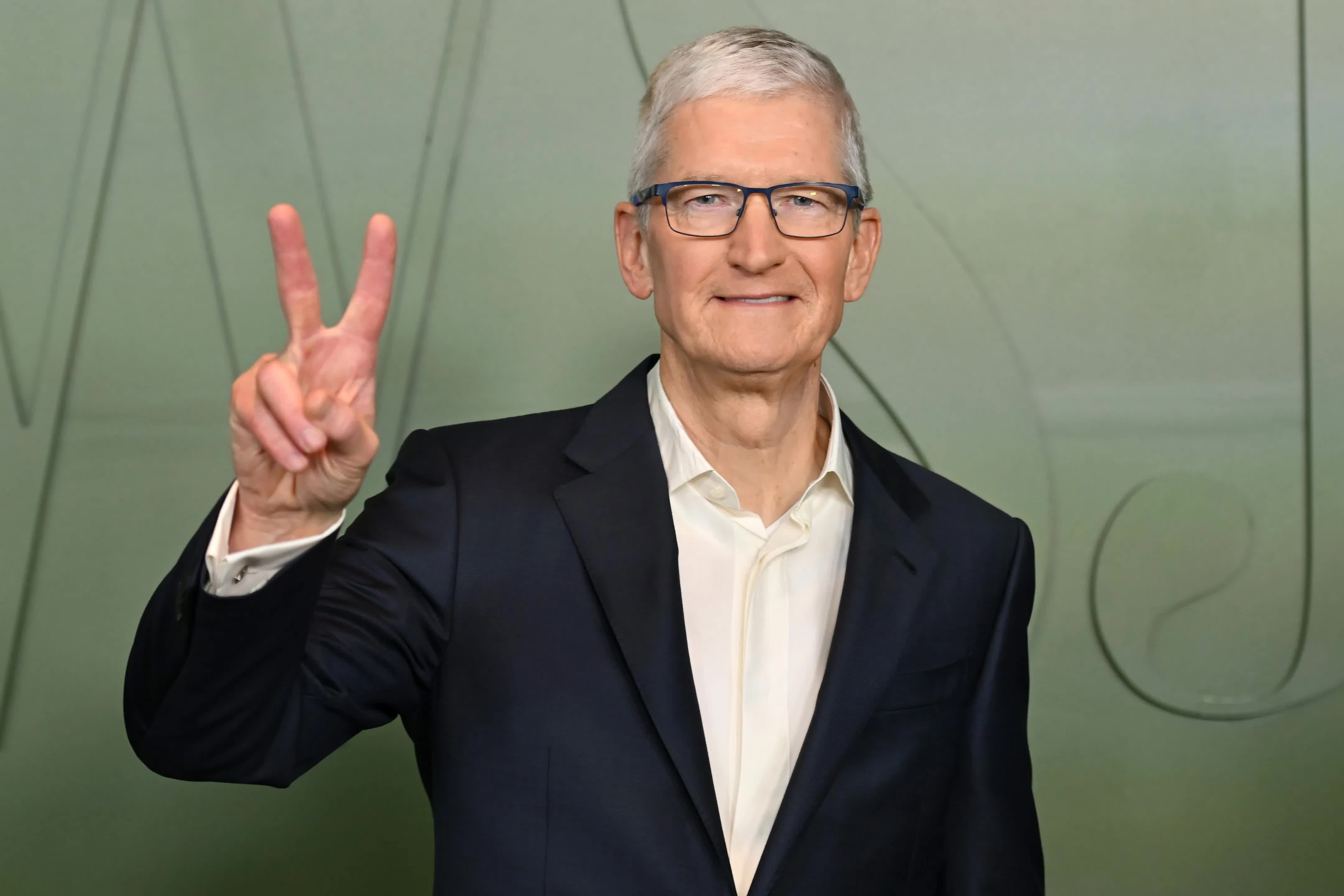
While most major American tech companies have much to lose in a global trade war, Apple – the world's largest by market cap – is the most vulnerable of the so-called "Magnificent Seven" due to its heavy reliance on China. Most of Apple's products, including its best-selling iPhone models, are manufactured in the communist nation, meaning the proposed 50 percent tariffs would affect it more severely than most.

Related: Consumers race to Apple stores as tariff fears spark iPhone rush

Apple also has manufacturing partners in Vietnam, Thailand, and India, but those countries are facing increased tariffs under Trump's new plan as well. Since Apple does not currently manufacture any of its products in the U.S., analysts believe that if the proposed tariffs are enacted, the company will either have to absorb the additional costs or raise prices – potentially reducing its profit margins or losing market share.

According to UBS analysts, the tariffs could increase the price of the flagship iPhone 16 Pro Max by as much as $350 if Apple chooses to pass the cost on to consumers.

Despite the downturn, tech stocks staged a mild rebound on Tuesday. Hopes that President Trump might delay or soften the proposed tariffs helped lift investor sentiment. Out of the big tech "Magnificent Seven" Nvidia led the recovery with a gain of about 4%, while Meta, Tesla, Amazon, Apple, Microsoft, and Alphabet rose around 1-3%.

Source: Companies by Marketcap

However, the broader picture remains shaky, underscoring ongoing concerns about the impact of a prolonged trade war. Last Thursday, rumors of a potential tariff delay triggered a volatile trading session, but not before the "Magnificent Seven" lost a staggering $1.8 trillion in market value in mere days. Apple's stock plummeted nearly 20 percent over the past three sessions, wiping out nearly $640 billion in market cap. The stock is up three percent in early Tuesday trading, but still down more than 16 percent over the last five days.

Meanwhile, Brazilian media is speculating that Apple could shift iPhone production to Brazil to avoid the proposed tariffs on China. While Apple has not commented on these rumors, Brazil currently faces only a 10 percent tariff under the Trump administration's new plan – far less than India, which would be subject to a 26 percent tariff.

Apple has been assembling products in Brazil in partnership with Foxconn since 2011. However, these facilities primarily serve the local market with entry-level models.

Permalink to story:

 
Dang, looks like Tim Apple's going to have one less yacht in his fleet as he churns across Earth's boiling oceans during the final days of consumerism.
 
104% tariffs against Chyna just signed.

GG inflation, you win in the end.

Gonna be wild how buying something off Temu will be a sign of extreme wealth in a few years tho...
 
Corporate always have ways to get around this. It will be visible or not visible, then a few months/years after have a charity drive to get tax breaks to recoup their losses.
 
Last edited:
And... the market ended up closing at a loss for the fourth consecutive day.
Apple is down 24% in the last month.
 
As an outsider looking in at the US, each day is more extraordinary than the last. Watching that fat, orange, deeply stupid, deeply troubled, petulant maniac ransack your country and turn a once great nation into this weird, international laughing stock is both sad and compelling. Every morning there's a new story as he ramps up the crazy.
 
As an outsider looking in at the US, each day is more extraordinary than the last. Watching that fat, orange, deeply stupid, deeply troubled, petulant maniac ransack your country and turn a once great nation into this weird, international laughing stock is both sad and compelling. Every morning there's a new story as he ramps up the crazy.

Most don't know this, but the U.S. hasn't been earning since 1975. It's been buying more than it's been selling since, and to keep buying more, it has to borrow more, which it's been doing since 1982. And how much does it owe? It has to borrow more just to pay for part of the interest of what it borrowed before. In short, its total debt is literally impossible to pay back, and it's hoping that most countries will make things cheap and keep relying on the dollar so that it can continue its borrowing-spending binge indefinitely.

If any, that gives new meaning to "the crazy".
 
As an outsider looking in at the US, each day is more extraordinary than the last. Watching that fat, orange, deeply stupid, deeply troubled, petulant maniac ransack your country and turn a once great nation into this weird, international laughing stock is both sad and compelling. Every morning there's a new story as he ramps up the crazy.
As you're an outsider, you must not be aware of the preexisting problems Trump is addressing:
- WW2 level federal government debt (more debt than our GDP): https://fiscaldata.treasury.gov/americas-finance-guide/national-debt/
- American factories being closed in favor of importing goods (US Trade Deficit): https://ustr.gov/issue-areas/reciprocal-tariff-calculations
- Mass unvetted immigration
 
As you're an outsider, you must not be aware of the preexisting problems Trump is addressing:
- WW2 level federal government debt (more debt than our GDP): https://fiscaldata.treasury.gov/americas-finance-guide/national-debt/
- American factories being closed in favor of importing goods (US Trade Deficit): https://ustr.gov/issue-areas/reciprocal-tariff-calculations
- Mass unvetted immigration
You make it sound like he has a grip on reality and this isn't just more random lunacy from a deeply unintelligent delusional sociopath! You only have to listen to him speak for a couple of minutes to see he can barely string a sentence together let alone plan some revolutionary economic policy.
 
You make it sound like he has a grip on reality and this isn't just more random lunacy from a deeply unintelligent delusional sociopath! You only have to listen to him speak for a couple of minutes to see he can barely string a sentence together let alone plan some revolutionary economic policy.
You make it sound like the policies have nothing to do with the problems I listed out. They are directly addressing them. Are you saying that the issues are insignificant? Instead you're focused on your judgement of someone based on a couple of minutes of some video you watched.
 
You make it sound like the policies have nothing to do with the problems I listed out. They are directly addressing them. Are you saying that the issues are insignificant? Instead you're focused on your judgement of someone based on a couple of minutes of some video you watched.
I've been watching Donald Trump for decades (unfortunately). When it comes to lunacy, dishonesty, misogyny, bigotry or corruption he never disappoints. Now he's suddenly got rid of all the tariffs except China. No doubt you'll explain that away as part of his masterplan not either a panicked cancellation because the world isn't playing ball or market manipulation and shorting to make himself and his billionaire buddies some more money at our expense? As I've said before, if that orange monstrosity took a sh1t on your lawn, you and the rest of The Cult of Trump would set up a holy site and prey to the sacred excrement.
 
I've been watching Donald Trump for decades (unfortunately). When it comes to lunacy, dishonesty, misogyny, bigotry or corruption he never disappoints. Now he's suddenly got rid of all the tariffs except China. No doubt you'll explain that away as part of his masterplan not either a panicked cancellation because the world isn't playing ball or market manipulation and shorting to make himself and his billionaire buddies some more money at our expense? As I've said before, if that orange monstrosity took a sh1t on your lawn, you and the rest of The Cult of Trump would set up a holy site and prey to the sacred excrement.
You seem to be unable to pay attention to anything but the existence of Donald Trump. I guess if you want to ignore the real issues affecting the country, then go right ahead but I'm not going to keep having a conversation with someone who does that. As long as you do, you'll continue to believe in nothing but this laundry list of perceived explanations for his behavior.
 
You seem to be unable to pay attention to anything but the existence of Donald Trump. I guess if you want to ignore the real issues affecting the country, then go right ahead but I'm not going to keep having a conversation with someone who does that. As long as you do, you'll continue to believe in nothing but this laundry list of perceived explanations for his behavior.
Because he's the maniac coming up with all this random nonsense. He's putting tariffs in one day then repealing them the next. He's the reason the US is now regarded by the rest of the world as a lunatic asylum.
 
Because he's the maniac coming up with all this random nonsense. He's putting tariffs in one day then repealing them the next. He's the reason the US is now regarded by the rest of the world as a lunatic asylum.

I think what he's doing is using reciprocal tariffs. That is, he wants other countries to react and see if they'll negotiate. Why is he doing that? Because the global economy has been a "lunatic asylum" for many decades. Here's why:

After WW2, the U.S. encouraged others to use the dollar for trade because it was the most stable currency then. Had they used their own currencies for that and one of them fell apart economically for one reason or another, then it could drag the others that held its currency with it.

In short, by using the dollar for trade, global economic stability would be ensured, thus avoiding another world war. And that's what happened, except that there was a catch:

The country whose currency is used for trade would eventually experience trade deficits, and with that poor economic growth. Why? Because for your currency to be used for trade, it has to be strong, which means its value is high. But if the products that you make and sell are paid for and priced in dollars, then likely they will be expensive for most countries, while what you can buy from them will be very cheap.

Which is exactly what happened: as the U.S. could barely sell more to others, its economic growth started to slow down. After that, it began to experience not only continuous but growing trade deficits: it was buying more than what it was selling. But how's that possible? It began to borrow more money each time because it deregulated financing in the 1980s.

In short, the U.S. has been racking up tremendous amounts of debt to buy more stuff from others (which it could easily do because labor costs in those countries are so low) while not selling enough because what it sells are priced in dollars and too expensive for many. And it can borrow more each time because everyone else needs the dollar.

What about those other countries? They were counting on the U.S. to buy more because that's the only way they could sell more and thus earn more, and by earning more they could decrease poverty and industrialize. In short, everyone's assuming that this arrangement, where the U.S. borrows and spends heavily while the rest sell to them and thus earn more, could go on indefinitely. There's your "lunatic asylum".

But there's another catch: as these countries sold and earned more, they became richer, and they--Brazil, Russia, India, China, and South Africa, plus over forty developing economies--have been trying to slowly move away from the dollar, which is what the U.S. doesn't want to happen because less demand for the dollar means less borrowing, and less borrowing means less spending, and with that the U.S. won't be able to buy what it needs and will be saddled with a lot of debt.

In short, what you think the "orange bad man" is doing these countries are already doing: moving from a unipolar global economy with the U.S. on top to a multipolar one, where there would be less reliance on the dollar.

Here's where it gets even more complicated:

These countries have become richer, but how can they maintain their wealth if the U.S. stops buying from them?

Also, as they become richer, then their costs also go up, and that includes their labor costs. That means what they sell will also become more expensive for others, and with that they will end up selling less and become less rich.

Even weirder, ever wonder why even many U.S. products sold in the U.S. are made elsewhere? It reached a point when labor costs overseas were so low U.S. companies, which would have also been trying to sell to overseas markets, decided to outsource and manufacture goods in the same regions where they would sell. At least that would keep prices low, but at the same time give them access to cheap labor.

But what happens when those countries become richer because they are manufacturing things? Wouldn't their labor costs, if not costs overall, eventually go up?

We can go on with this, but I think I made my point. I might be wrong because I'm not an economist, but I'm guessing that this is what's been happening during the last few decades.
 
I think what he's doing is using reciprocal tariffs. That is, he wants other countries to react and see if they'll negotiate. Why is he doing that? Because the global economy has been a "lunatic asylum" for many decades. Here's why:

After WW2, the U.S. encouraged others to use the dollar for trade because it was the most stable currency then. Had they used their own currencies for that and one of them fell apart economically for one reason or another, then it could drag the others that held its currency with it.

In short, by using the dollar for trade, global economic stability would be ensured, thus avoiding another world war. And that's what happened, except that there was a catch:

The country whose currency is used for trade would eventually experience trade deficits, and with that poor economic growth. Why? Because for your currency to be used for trade, it has to be strong, which means its value is high. But if the products that you make and sell are paid for and priced in dollars, then likely they will be expensive for most countries, while what you can buy from them will be very cheap.

Which is exactly what happened: as the U.S. could barely sell more to others, its economic growth started to slow down. After that, it began to experience not only continuous but growing trade deficits: it was buying more than what it was selling. But how's that possible? It began to borrow more money each time because it deregulated financing in the 1980s.

In short, the U.S. has been racking up tremendous amounts of debt to buy more stuff from others (which it could easily do because labor costs in those countries are so low) while not selling enough because what it sells are priced in dollars and too expensive for many. And it can borrow more each time because everyone else needs the dollar.

What about those other countries? They were counting on the U.S. to buy more because that's the only way they could sell more and thus earn more, and by earning more they could decrease poverty and industrialize. In short, everyone's assuming that this arrangement, where the U.S. borrows and spends heavily while the rest sell to them and thus earn more, could go on indefinitely. There's your "lunatic asylum".

But there's another catch: as these countries sold and earned more, they became richer, and they--Brazil, Russia, India, China, and South Africa, plus over forty developing economies--have been trying to slowly move away from the dollar, which is what the U.S. doesn't want to happen because less demand for the dollar means less borrowing, and less borrowing means less spending, and with that the U.S. won't be able to buy what it needs and will be saddled with a lot of debt.

In short, what you think the "orange bad man" is doing these countries are already doing: moving from a unipolar global economy with the U.S. on top to a multipolar one, where there would be less reliance on the dollar.

Here's where it gets even more complicated:

These countries have become richer, but how can they maintain their wealth if the U.S. stops buying from them?

Also, as they become richer, then their costs also go up, and that includes their labor costs. That means what they sell will also become more expensive for others, and with that they will end up selling less and become less rich.

Even weirder, ever wonder why even many U.S. products sold in the U.S. are made elsewhere? It reached a point when labor costs overseas were so low U.S. companies, which would have also been trying to sell to overseas markets, decided to outsource and manufacture goods in the same regions where they would sell. At least that would keep prices low, but at the same time give them access to cheap labor.

But what happens when those countries become richer because they are manufacturing things? Wouldn't their labor costs, if not costs overall, eventually go up?

We can go on with this, but I think I made my point. I might be wrong because I'm not an economist, but I'm guessing that this is what's been happening during the last few decades.
You give him way too much credit. He can't even tie his own shoelaces.
 
Back