
The big picture: The new iPad Air has arrived, bringing the M4 chip to Apple's mid-range tablet lineup for the first time (the chip was previously available only in the more expensive iPad Pro). Most of this year's changes are internal, as the exterior design remains largely unchanged. The hardware upgrades are expected to become more significant once the company's long-promised AI features – part of Apple Intelligence – are fully deployed.

Apple's M4 chip delivers up to 30 percent faster performance compared to last year's M3 chip, according to Apple. The performance gap is significantly larger when compared with older Apple M1 chip devices, reaching roughly 2.3× improvement. While the upgrade from M3 to M4 is more incremental, users upgrading from M1-based models are likely to notice a much larger performance boost.
On the graphics side, the chip includes a 9-core GPU supporting second-generation hardware-accelerated ray tracing and mesh shading. Apple claims users upgrading from M1 devices can experience more than 4× faster 3D rendering performance, which should be particularly noticeable in gaming and creative workloads.
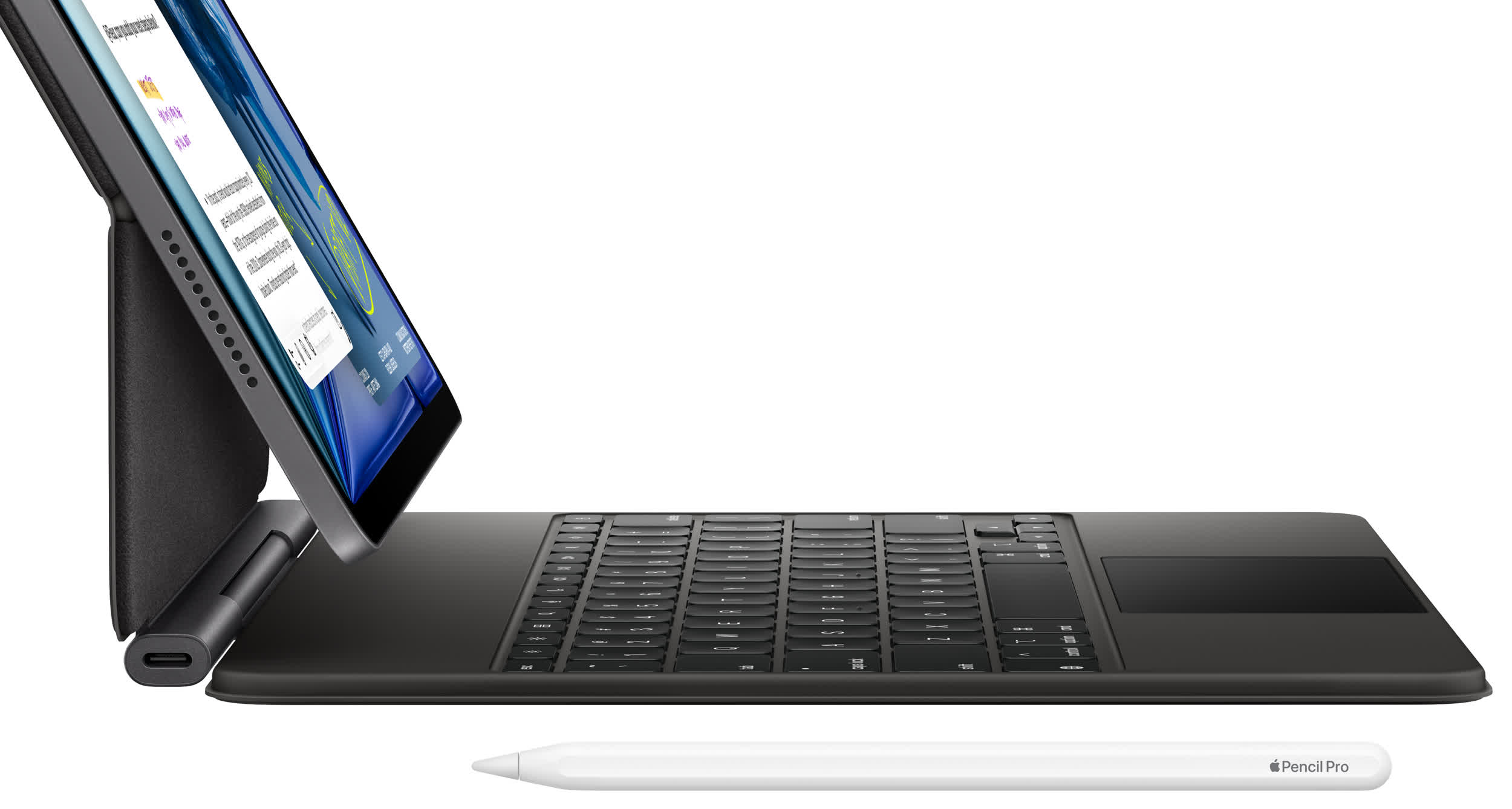
RAM capacity has also increased by 50 percent, reaching 12GB of unified memory with 120GB/s memory bandwidth. While iPadOS 26 is designed to manage memory efficiently, the additional RAM is expected to provide greater headroom for future on-device AI workloads and improve performance for the 16-core Neural Engine during local machine learning tasks.
On the connectivity front, Apple is bringing its custom N1 wireless chip and C1X cellular modem to the iPad Air lineup for the first time. The device supports Wi-Fi 7, Bluetooth 6, and Thread networking compatibility. Apple claims the C1X modem can deliver up to 50 percent faster cellular data speeds while consuming up to 30 percent less power than previous-generation hardware.
The tablet ships with iPadOS 26 pre-installed, introducing a redesigned window management system that brings the iPad closer to laptop-style multitasking behavior.
Display sizes remain unchanged at 11 inches and 13 inches. Pricing also remains the same despite significant increases in memory and component costs associated with broader industry demand. The 11-inch model starts at $599, while the 13-inch version is priced at $799. Educational customers receive a $50 discount on both configurations.
Pre-orders begin March 4 in the United States and other major markets, with shipments scheduled to start on March 11.
Apple's iPad Air gets M4 performance upgrade without price increase


