Bottom line: Apple's services business is starting to feel the effects of rules that allow app developers to send iPhone users to payment systems outside the App Store. The changes are beginning to slow App Store spending and weaken the commission model that has helped make services one of Apple's most profitable businesses.
The Cupertino company reported $30.7 billion in services revenue for the June quarter, a record but below analysts' expectations of $31.4 billion. Gross margin for the division was 75.6%, also below forecasts, according to Visible Alpha. Apple shares fell about 9% in the days after the results.
Chief Financial Officer Kevan Parekh said recent App Store changes contributed to the weaker performance, along with foreign exchange effects. Apple also warned in regulatory filings that it "may not earn a commission at all" when users make purchases through alternative payment systems.
The comments are among Apple's clearest acknowledgments that regulatory changes are affecting a business long valued for its high margins. Apple charges commissions of up to 30% on digital purchases and subscriptions made through its in-app payment system. As more developers direct users to outside payment options, some of those transactions can avoid Apple's fees.
A US court order resulting from Epic Games' lawsuit last year required Apple to let developers link users to payment options outside the App Store. Apple cannot charge a commission on those transactions. The ruling changed the way apps can handle transactions on the iPhone and weakened Apple's control over the payment process.
Credit: The Financial Times
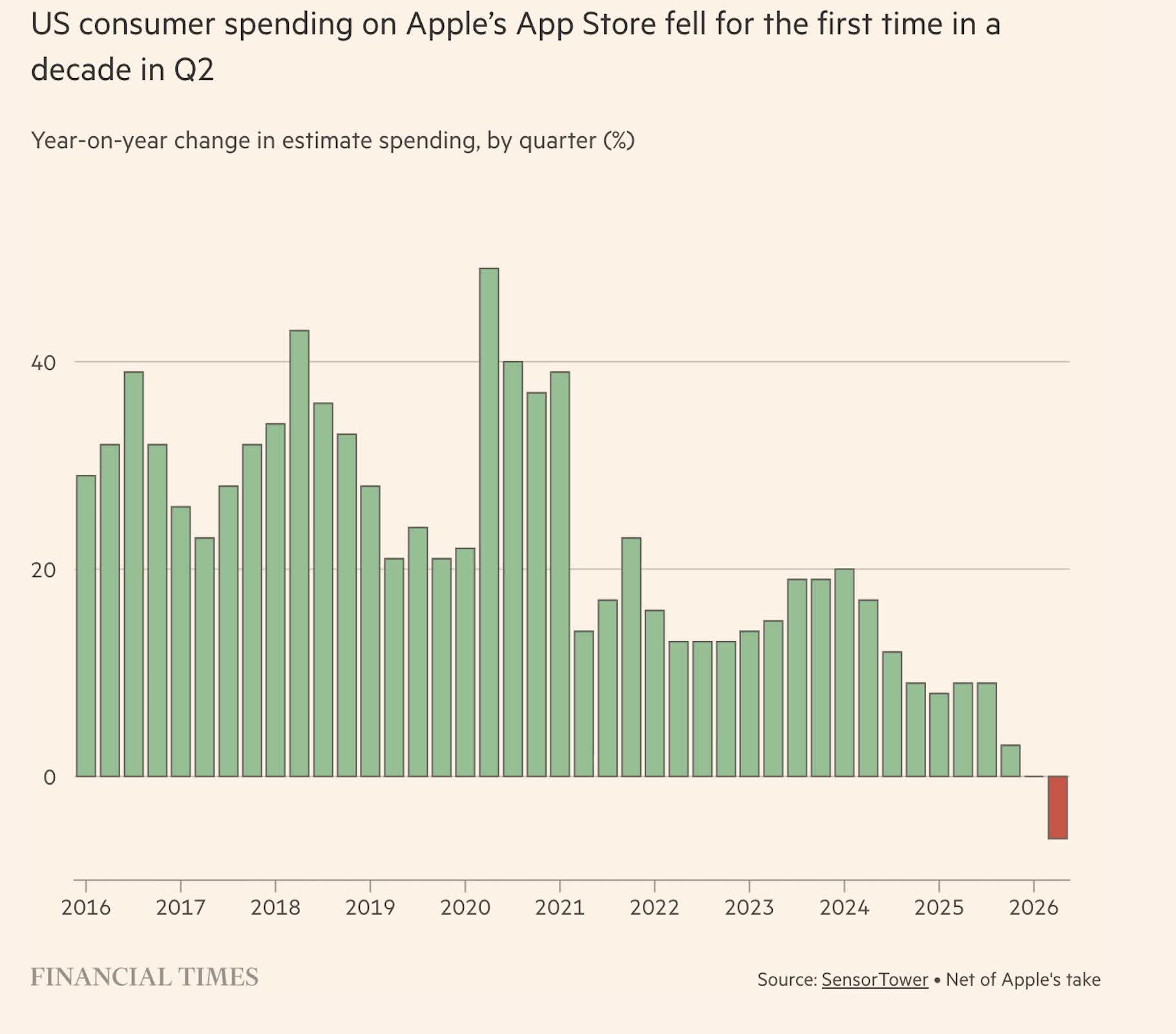
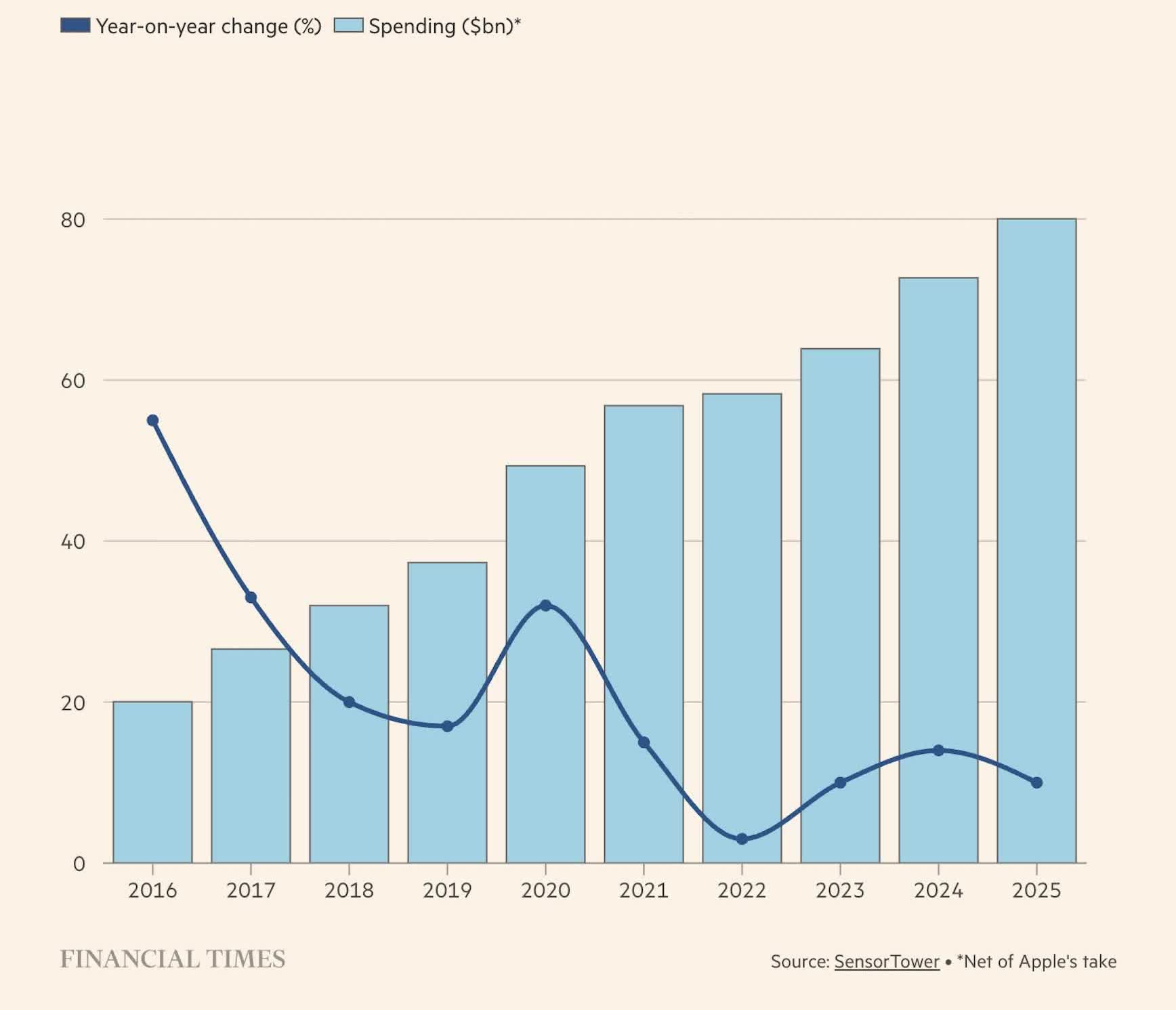
Sensor Tower said consumer spending through the US App Store fell 6% in the second quarter. That compares with 9% growth a year earlier. Global spending through the App Store rose 3%, down from 13% growth in the prior-year period.
The research firm said US spending had been "significantly impacted" by the Epic ruling. It also cited weaker consumer spending and broader economic uncertainty.
Appfigures estimated that Apple's US commission revenue has fallen 18% this year. Its data also showed App Store revenue declining in Brazil and Japan, where new app store rules have recently taken effect.
Apple has argued that its control over app distribution and payments helps protect users. Regulators, however, have pushed for more choice. The European Union, South Korea, and Brazil have required Apple to open parts of its mobile platform to alternative app stores or payment systems. Similar proposals are being considered in the UK and Australia.
Global consumer spending growth on the App Store has also been slowing
Credit: The Financial Times
The EU fined Apple €500 million last year over alleged violations of the Digital Markets Act. Apple is appealing the decision. In the US, the Supreme Court has agreed to review parts of the Epic case after a judge found Apple had failed to comply with an earlier order on App Store payment rules.
Investors are closely watching the services business because it has become a major source of Apple's profit growth. UBS analyst David Vogt called slower App Store growth a "concern." Bank of America analyst Wamsi Mohan said services revenue was "somewhat weaker than we expected."
"It would make sense that it starts to show up in the numbers . . . we were surprised that it really wasn't traceable before," Nicholas Rodelli, director of legal research at Washington Analysis, told the Financial Times. "Apple's premium valuation is predicated on services, and the App Store is really the crown jewel of that," he added. "We think the market is going to reprice the durability of the services business take rate."
Apple declined to comment.
Apple's services business is finally feeling the pain of losing control over App Store payments


