Birmingham faces IT catastrophe as Oracle project costs balloon from £20m to £170m

Skye Jacobs

Posts: 2,010   +58
Staff
Facepalm: Birmingham City Council has delayed the launch of its new income management system after key testing results fell short, reigniting concerns over the troubled Oracle software rollout and rising costs, which could reach £170 million. Testing of the CivicaPay system earlier this month showed a pass rate of 73.3 percent with 10 critical issues outstanding – well below the council's requirement of a 95 percent pass rate with no severe defects.

The council confirmed that the CivicaPay-based system, designed to replace the malfunctioning banking reconciliation platform introduced with Oracle Fusion in 2022, will not go live until November at the earliest.

Oracle program leader Philip Macpherson told The Register that most defects were related to data quality, and that a system refresh completed in September had resolved some issues. However, the shortfall forced the project board to delay the rollout.

Members of the Audit and Risk Committee were informed at the time, but news of the problems had already surfaced in the press, intensifying tensions between elected officials and council officers.

Birmingham, Europe's largest local authority, has been unable to submit audited accounts since abandoning its older SAP system in April 2022 in favor of Oracle Fusion. What had been envisioned as an "out-of-the-box" implementation quickly became complicated by customizations, including the council's own reconciliation solution, which failed on launch.
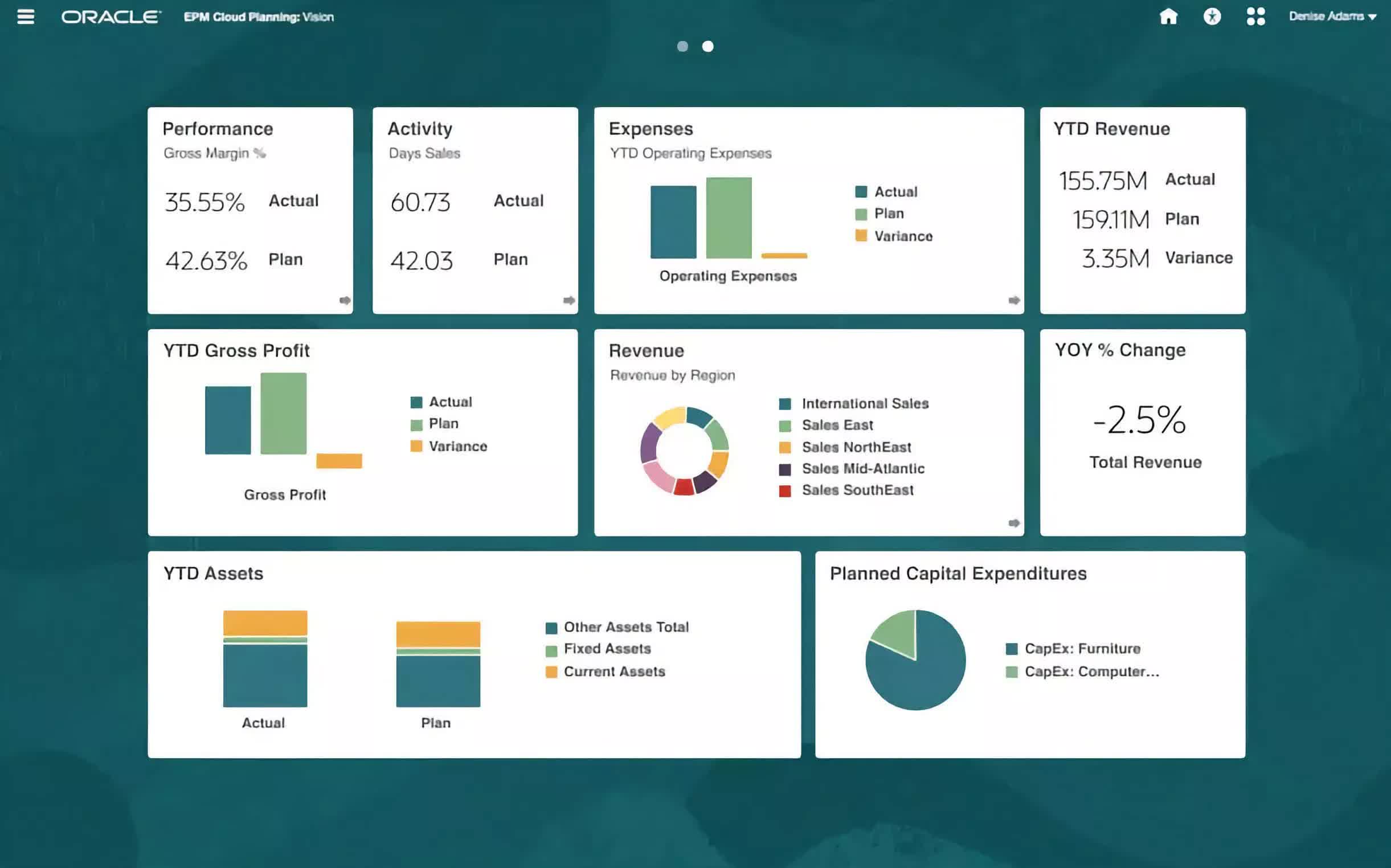
The collapse of Oracle's financial management platform was a key factor in the council's effective bankruptcy declaration in September 2023, alongside long-standing equal pay liabilities. Officials were forced to begin a full reimplementation of Oracle software, with the go-live target set for April 2026. To bridge the gap, the council turned to the CivicaPay IMS in March 2024, originally promising delivery by March 2025. That deadline has slipped repeatedly, first to April, then September, and now further into November.

In the absence of a functioning reconciliation system, staff have been handling key processes manually, generating significant additional costs. In the 2024/25 budget, councillors had already earmarked £5.3 million to cover backfilling roles and hiring temporary staff to support manual accounting work. Frustration mounted at this week's Audit Committee meeting, as elected members were informed of the latest delay after details had appeared in the media before they were officially briefed.

Conservative councillor Meirion Jenkins was highly critical of the scale of overruns, noting that the project had originally been budgeted at just under £20 million. "We're now running at £170 million, right? And the officers are again telling us, don't worry. It's in hand. I think we do need to worry. The audit committee was misled the first time round. Now it's happened again," he said.

The initial £19.965 million budget, approved in 2018, was intended to cover three years of development through the 2021 financial year. That figure rose to £40 million following delays that pushed Oracle Fusion's go-live date to April 2022. With the need for a complete reimplementation made clear in 2024, the budget increased again to £131 million.

Carol Culley, the council's executive director of finance, said the current £170 million projection includes licensing and operating costs for the existing Oracle system as well as expenses associated with building a new platform. It also incorporates a £20 million provision for 2026/27, which Culley said would be reduced in future years as the new system matured and required less support.

The project remains under the oversight of central government commissioners, appointed after the council declared effective bankruptcy last year. One of them, Myron Hrycyk, who serves as Crown representative for Oracle, IBM, and Microsoft, urged councillors not to sacrifice quality for speed.

"It is a complex implementation, and it's right to be cautious about it," Hrycyk said. "If you rush at this hoping to save some funds, you will probably pay for it 10 or 20 times over in sorting it out afterwards. I really urge you not to rush this. Get it right."

Permalink to story:

 
I'm probably just mean and curmudgeonly, but these types of situations just crack me up.
as a 25+ year veteran in the IT field, I understand how these things balloon in cost, but I do not accept that it's necessary. a lot of standard, dim, mainline bureaucratic thought patterns lead to this, so suck on it
 
I'm probably just mean and curmudgeonly, but these types of situations just crack me up.
as a 25+ year veteran in the IT field, I understand how these things balloon in cost, but I do not accept that it's necessary. a lot of standard, dim, mainline bureaucratic thought patterns lead to this, so suck on it

I'm with you on this one... After over 35 years in large scale software deployment as a Project Manager and Business Systems Analyst, I can without reservation state that the underlying problem here is mentioned in the article... Ad Hoc customisation requests by the customer... its the bain of all large scale software deployments. A software package and price is agreed upon, then the customer makes hundreds, sometimes thousands of incremental change requests that add exponentially larger issues to the stability and effectiveness of the original proposed solution... you can almost predict the inevitable degradation to uselessness to a date...
 
I'm probably just mean and curmudgeonly, but these types of situations just crack me up.
as a 25+ year veteran in the IT field, I understand how these things balloon in cost, but I do not accept that it's necessary. a lot of standard, dim, mainline bureaucratic thought patterns lead to this, so suck on it
The thing I dont get is WHY they keep doing this. Like.....why retire your old system when the new one isnt working?

They did this at work. They shut down an old system and brought in a new one. Nobody in IT was consulted before they did this. The new service was cloud based and, surprise surprise, had issues in the morning when all their customers were logging in. Oh, and the vast majority of the promised features that we were told the system totally supported were not implemented like they were on the old system.

So instead of doing the logical thing, that is, bring the old system back, go to the new company, and demand the $2 million purchase amount back since they lied, management instead pushed forward for over half a year until a ton of reports just....were not done.

IT was called in. The state was called in. Various agencies we work with were all called in. The manager in question got grilled far past well done and had to be escorted out of the room in tears. Lady, what did you THINK was going to happen? Why didnt you just bring the old system back? Instead, on top of the purchase, we had to pay 16 people unlimited doubletime for 5 months to manually catch up then pay another $2 million to consultants to get the system working like it was supposed to. So much money just.....flushed down the drain.

They're ALL like this......
 
The £170 million cost is pretty disingenuous. It includes the cost of running the old system instead of the new system over multiple years. It is also the cost from when implementation began in 2018 until 2027, so it’s over a 10 year period. Considering they have a £3+ billion annual taxpayer budget, this represents close to 0.5% of their annual budget.

One reason there were so many issues is because they wanted functionality from customizations of the old system in the new system as well. It would be good to know how long they were running on the SAP system to get an idea of how much repeated work they needed for the Oracle system.

For clarification, Oracle is providing their “people and finances” ERP, but payments are what’s causing the delay of sunsetting their old system and manual workarounds.
 
Last edited:
The £170 million cost is pretty disingenuous. It includes the cost of running the old system instead of the new system over multiple years. It is also the cost from when implementation began in 2018 until 2027, so it’s over a 10 year period. Considering they have a £3+ billion annual taxpayer budget, this represents close to 0.5% of their annual budget.

One reason there were so many issues is because they wanted functionality from customizations of the old system in the new system as well. It would be good to know how long they were running on the SAP system to get an idea of how much repeated work they needed for the Oracle system.

For clarification, Oracle is providing their “people and finances” ERP, but payments are what’s causing the delay of sunsetting their old system and manual workarounds.
According to the article, the old system was shut down in 2022.

"Birmingham, Europe's largest local authority, has been unable to submit audited accounts since abandoning its older SAP system in April 2022 in favor of Oracle Fusion"

Is there a source showing the SAP system is still running?

Also, having 3 billion in the taxpayer budget doesnt matter if their spending is larger then 3 billion.

"The collapse of Oracle's financial management platform was a key factor in the council's effective bankruptcy declaration in September 2023, alongside long-standing equal pay liabilities."
 
It sounds like everyone involved should get sacked or sued. There should be a standard system that works for all councils. If departments want unusual customisations then there should be an investigation as to why they actually need a customisation and, if it's still required, they should be charged for the implementation and the ongoing maintenance cost. It is possible to design systems to be flexible but trying to add customisations to rigidly designed systems just leads to maintenance nightmares.
 
It sounds like everyone involved should get sacked or sued. There should be a standard system that works for all councils. If departments want unusual customisations then there should be an investigation as to why they actually need a customisation and, if it's still required, they should be charged for the implementation and the ongoing maintenance cost. It is possible to design systems to be flexible but trying to add customisations to rigidly designed systems just leads to maintenance nightmares.
That would require there to be an IT department that is in control of all the systems for all councils, and a central office managing all that. Even in England, that is a very tall ask.
 
According to the article, the old system was shut down in 2022.

"Birmingham, Europe's largest local authority, has been unable to submit audited accounts since abandoning its older SAP system in April 2022 in favor of Oracle Fusion"

Is there a source showing the SAP system is still running?

Also, having 3 billion in the taxpayer budget doesnt matter if their spending is larger then 3 billion.

"The collapse of Oracle's financial management platform was a key factor in the council's effective bankruptcy declaration in September 2023, alongside long-standing equal pay liabilities."
I might’ve been somewhat mistaken, I had read this:
Carol Culley, executive director of finance, said the new £170 million figure included not just the running cost and licensing of the current system and the reimplementation of the new Oracle system, but also a £20 million budget provision for 2026/27, which would be tapered in future years to run the new system and strengthen support.
 
That would require there to be an IT department that is in control of all the systems for all councils, and a central office managing all that. Even in England, that is a very tall ask.
Then they should make one! If councils all have similar requirements then it makes sense to roll out standardised systems to meet those requirements. Standardised systems would be easier to maintain and cheaper to implement (actually anything would be cheaper than this). It would also be more rewarding to work on than continually updating systems to do things that they were never intended to do.

(I'm obviously an idealist)
 
Oh no, an Oracle implementation that went overbudget; who could have seen such a thing happen?

But seriously, Ad Hoc customer requests to a boxed implementation will *always* lead to massive problems. You either go full-custom, or you buy off the shelf. Trying to mix and match *never* works.
 
And folks wonder how a human can be worth more than a bank:
5fd2931a7b7e0500191074b4
 
Back