Editor's take: The Cambridge Dictionary's latest update is part of its ongoing effort to track the constant evolution of English. As language continues to be shaped by digital culture and everyday experience, the dictionary's expansion reflects a broader trend: English is adapting and growing at one of the fastest rates in its history.
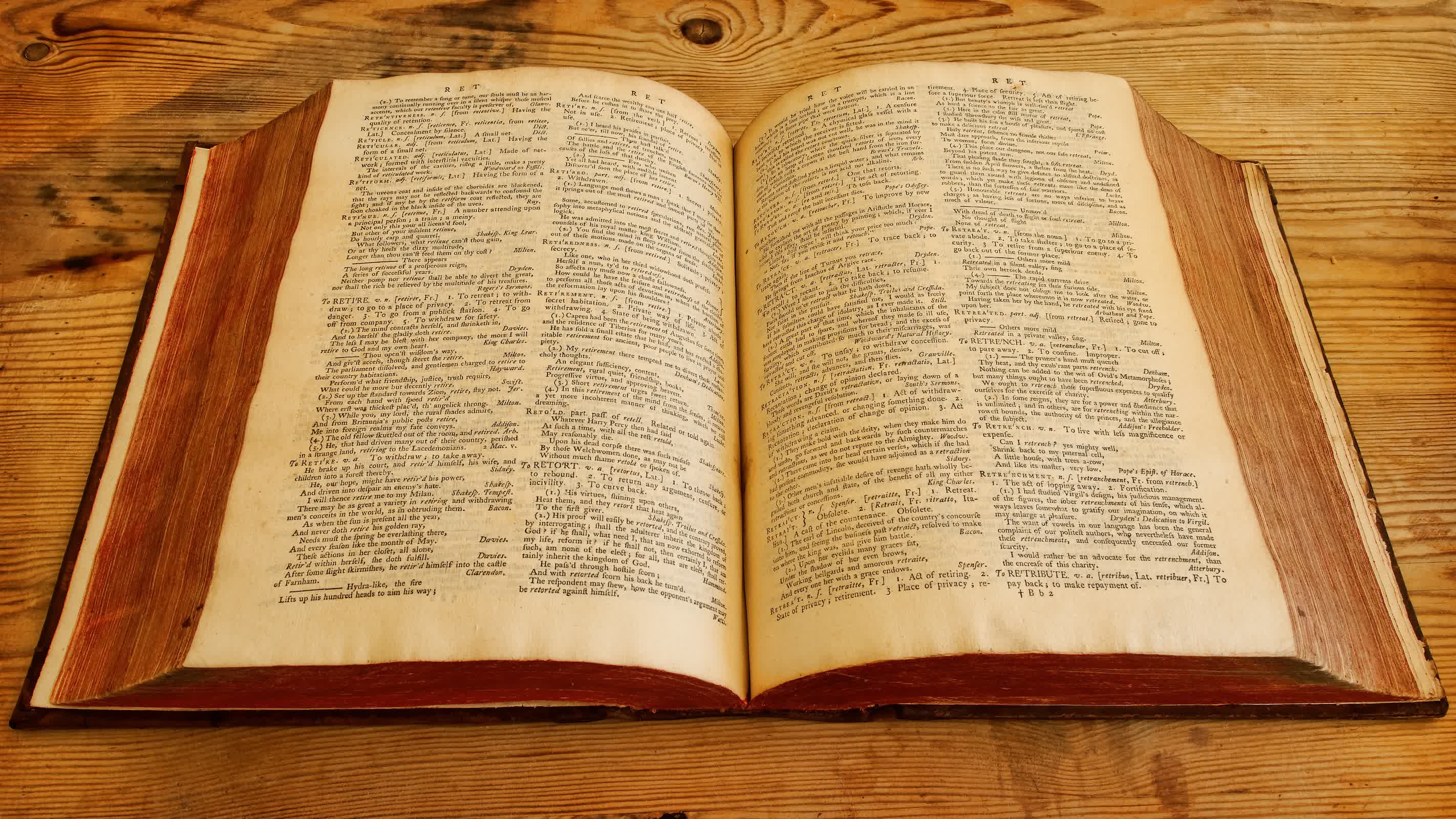
The Cambridge Dictionary has added 6,212 new words, phrases, and meanings to its website in the last year, highlighting how trends from social media, pop culture, and younger generations are quickly changing the way people use English.
Among the newly recognized entries are "skibidi," "delulu," "tradwife," and "broligarchy." Each term reflects a distinct cultural or societal phenomenon and underscores how language adapts to accommodate the zeitgeist of different generations.
Skibidi has its roots in online culture, specifically a viral animated YouTube series titled Skibidi Toilet. This term has acquired multiple uses, ranging from expressing approval or disapproval – such as calling something "cool" or "bad" – to functioning more as playful filler in conversation.
Its widespread adoption is evident in phrases like "What the skibidi are you doing?" and "That wasn't very skibidi rizz of you." Its popularity has reached beyond online circles; in October of the previous year, entrepreneur and reality television personality Kim Kardashian drew attention by displaying a birthday gift from her daughter – a necklace engraved with the phrase Skibidi Toilet. The word has found particular resonance with Generation Alpha, a demographic term recently added to the dictionary, which refers to individuals born in the 2010s.
Another addition is delulu, a shortened form of delusional. This slang encapsulates the idea of someone believing in things that are not real or true, typically as a matter of choice. The term broke into mainstream political discourse in March 2025 when Australian Prime Minister Anthony Albanese used the phrase "delulu with no solulu" during a parliamentary speech, which demonstrated how rapidly youth expressions can permeate official narratives.
Within the realm of fashion and personal style, "lewk" has gained traction. It represents a distinct, notable ensemble or fashion choice, especially one that draws attention for being unique or striking. The term has become common in fashion journalism and was popularized in part by the influence of the television show RuPaul's Drag Race.
A more socially charged term is "tradwife," an abbreviation of traditional wife. It describes women, especially those who publicly share aspects of their domestic life on social media, who adopt or advocate conventional gender roles focused on homemaking and caregiving. The rise of the tradwife identity has sparked both interest and controversy on platforms like Instagram and TikTok.
Hannah Neeleman, known as @ballerinafarm, has been described as a leading figure in this movement, while actress Millie Bobby Brown has been labeled a tradwife by some online followers, referencing her rural lifestyle and daily routines.
The dictionary's update also acknowledges the evolving structures of influence with broligarchy, a term fusing bro and oligarchy. It references groups of powerful men, particularly in technology, who wield significant wealth and sway in political or business arenas. The word surfaced in commentary describing the presence of high-profile technology executives such as Jeff Bezos, Elon Musk, and Mark Zuckerberg during President Trump's January 2025 inauguration.
Additionally, the term inspo, derived from inspiration, has solidified its place as shorthand for anything – especially online content – that motivates or sparks ideas. Fitness influencer Alaya F, for example, has used the word when sharing innovative exercise tips with her followers.
Cambridge Dictionary adds more than 6,000 new words shaped by digital culture


