ChatGPT now has its own web search engine

Alfonso Maruccia

Posts: 2,554   +948
Staff
AI vs Web: Alphabet attempted to curb ChatGPT's growing popularity by accelerating the launch of its AI-based consumer services. However, the chatbot continued to gain market share and public interest. Now, it's going on the offensive, challenging Google's monopolistic position in the web search business.

OpenAI has just launched its new ChatGPT Search service, which offers a novel way to use the AI chatbot to find relevant information on the web. According to OpenAI, ChatGPT is now significantly more proficient at internet searching, offering "fast, timely" answers to users' questions. The chatbot's prompt-based interface can now work alongside up-to-date information and data, though it may still produce occasional hallucinations.

The web search feature will be available on the ChatGPT main site as well as through official apps for desktop PCs and mobile devices. Access is afforded to all Team and ChatGPT Plus users, while enterprise and education customers will receive it in the coming weeks. All free users will eventually gain access over the next few months.
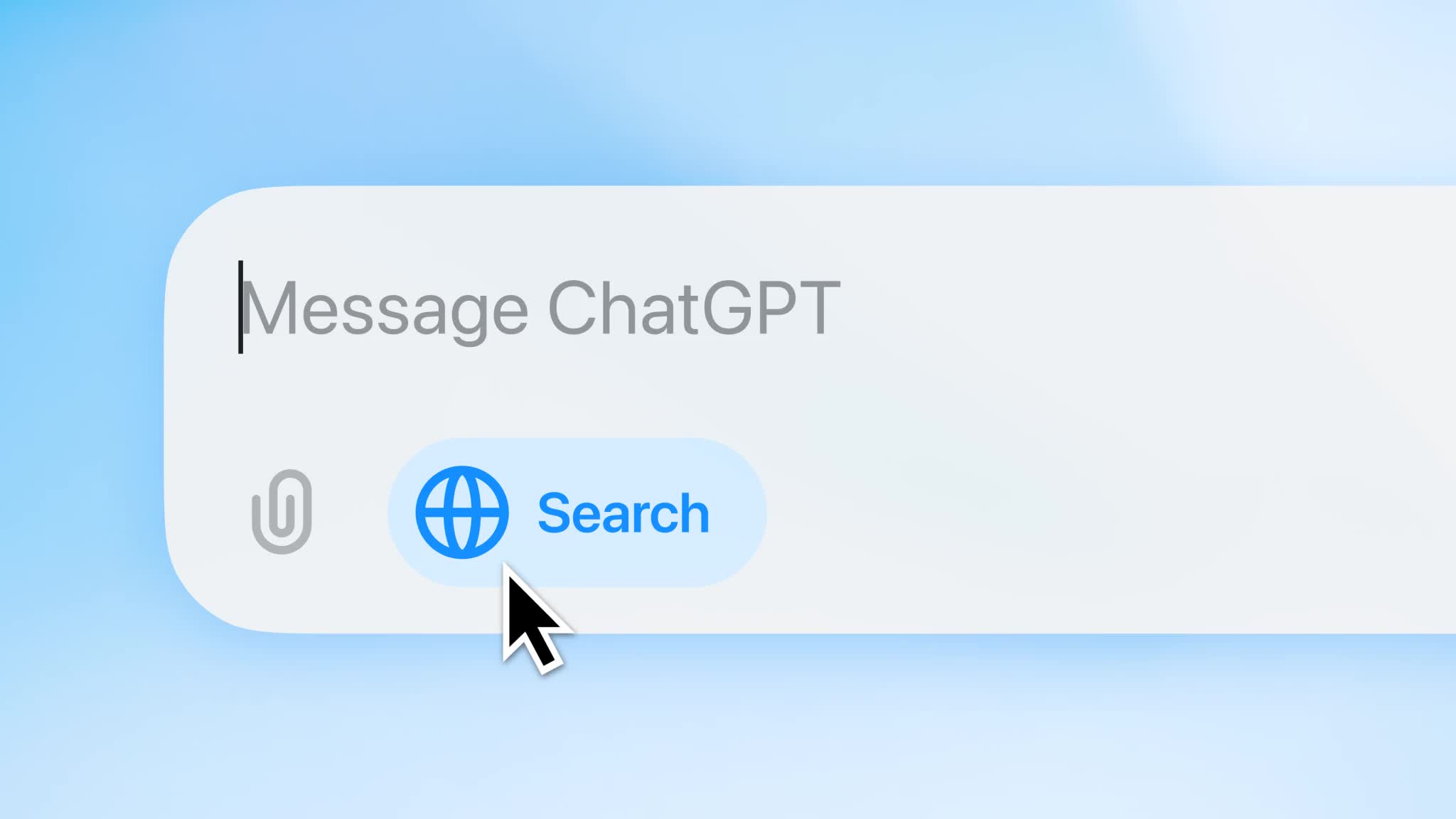
OpenAI noted that today's web search is not as useful as it once was, claiming that obtaining relevant answers often requires "a lot of effort." With ChatGPT Search, users will no longer need to conduct multiple search queries or browse links. Instead, the chatbot can provide a "better answer" to search requests and further refine results through follow-up questions.

ChatGPT search results will now include the sources consulted by the chatbot, displayed in a sidebar on the right. OpenAI explains that its search model uses a fine-tuned version of GPT-4, trained with novel, "synthetic" data generation techniques. These search results are powered by unnamed third-party search providers, along with high-quality content partners to further refine accuracy.
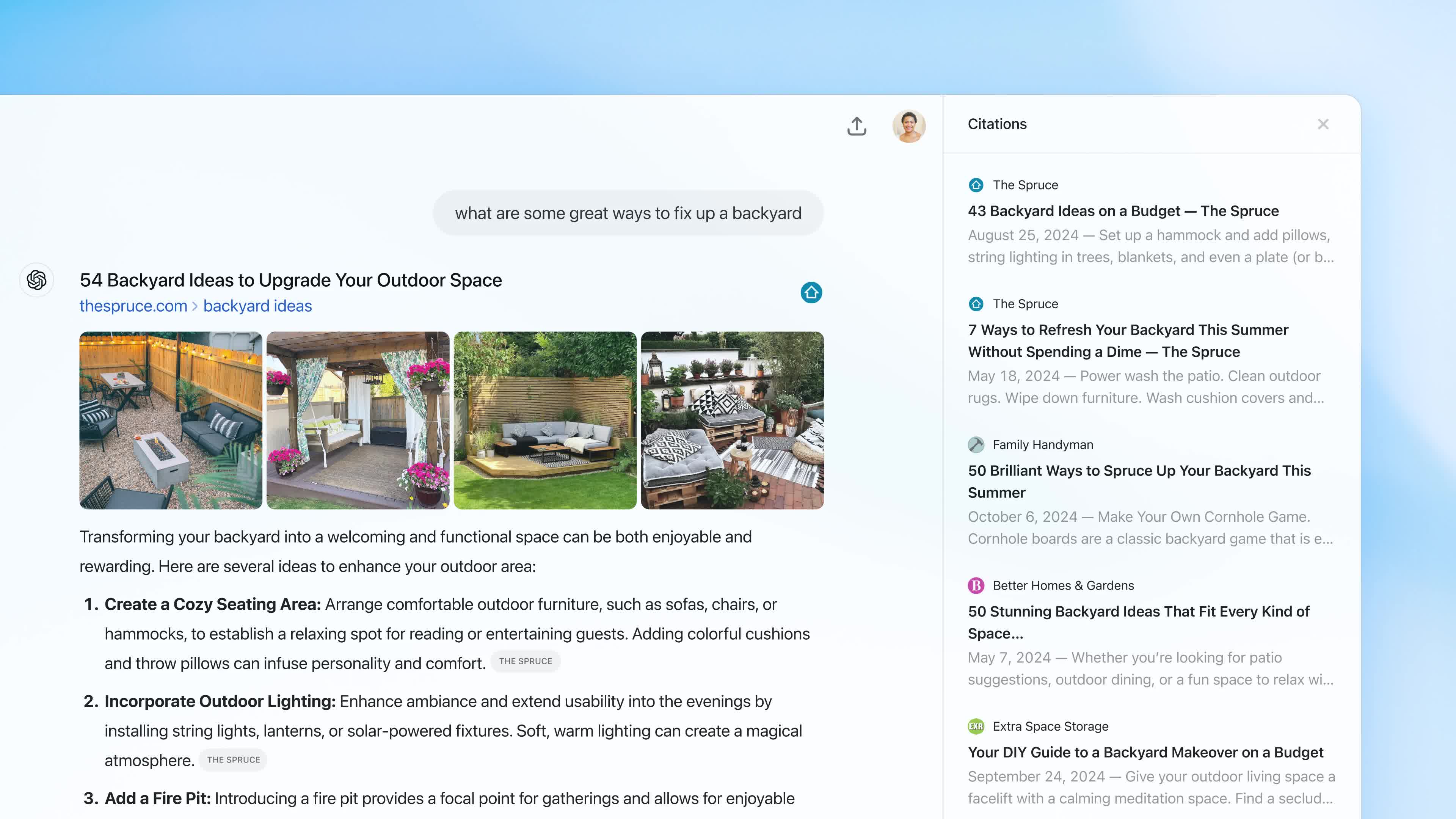
ChatGPT's search feature was developed based on feedback from the earlier SearchGPT prototype, and OpenAI plans continuous improvements to the language model. Key content partners include the Associated Press, Condé Nast, Financial Times, Gedi, Le Monde, Reuters, and Time, among others. Additionally, any publisher can choose to allow OpenAI crawlers to include their site in search results – though likely with no compensation.

Le Monde CEO Louis Dreyfus noted that AI-based search will be the primary way future generations access information, placing the French publication at the forefront of this digital shift. Vox Media President Pam Wasserstein emphasized the "trustworthiness" ChatGPT can offer when paired with reliable news sources, potentially elevating the standard of premium journalism. Here's hoping the AI revolution lifts us up before it fully takes over.

Permalink to story:

 
This is absolutely right, I consider ChatGPT as google on steroids, basically the next version of google entirely. I see ChatGPT and openAI becomming the next websearch giant. They could really do great work at organizing and presenting web search results in a much more robust way. All of society would benefit greatly by ChatGPT likely rebranding and providing not just search results but advanced data organizing of the loose and disorganized web. Likely sometype of merger is appropriate here.
 
This is absolutely right, I consider ChatGPT as google on steroids, basically the next version of google entirely. I see ChatGPT and openAI becomming the next websearch giant. They could really do great work at organizing and presenting web search results in a much more robust way. All of society would benefit greatly by ChatGPT likely rebranding and providing not just search results but advanced data organizing of the loose and disorganized web. Likely sometype of merger is appropriate here.
One problem for replacing Google I suspect will be its ability to simply hold huge amount of info from sites, articles, books.
The people who created all of that GPT learns, they might realize that this tool is no different than a "borrower" borrowing these materials to learn them. What do you do when you borrow a book, and it is not from a public "not for profit" library? You pay.
A lot of people might be waiting to sue, but I guarantee every little place that has anything of use to other people, be it guides or articles, will ask OpenAI to share when it starts making billions from its hundreds of millions subscribers.
 
I'm not saying I'm gonna use em, but they came at the right time. right when google search results are increasingly filled with clickbaits and ads and so on. I used reddit more often when I'm looking for human answer to simple questions because I'd rather have no as a direct answer than visiting clickbait sites.

I think google has lost its way and I can't wait until someone knocked them a lesson in life.
 
Yeah, using a search engine properly takes critical thinking skills and time. So, an easy AI summary that sounds correct will be attractive to most people.
 
First good news I've heard about AI in a while. Without it's search engines dominance Alphabet are nothing.
 
One problem for replacing Google I suspect will be its ability to simply hold huge amount of info from sites, articles, books.
The people who created all of that GPT learns, they might realize that this tool is no different than a "borrower" borrowing these materials to learn them. What do you do when you borrow a book, and it is not from a public "not for profit" library? You pay.
A lot of people might be waiting to sue, but I guarantee every little place that has anything of use to other people, be it guides or articles, will ask OpenAI to share when it starts making billions from its hundreds of millions subscribers.
You are correct when you say holding the data vs accessing the data is an issue. Many people have already expressed negative thoughts about this on the digital publishing arena and publishers have taken action against AI access. However, AI especially GPT 4.0+ is a variable tool with quite a wide application with a steep learning curve. It is going to take sometime for even the developers to monetize and users to adopt. It is year 1 or 2 so by year 5 I would say it could be revolutionary if the pace keeps up.
 
Back