Connecting the dots: OpenAI is upgrading ChatGPT with the ability to run full-fledged, interactive apps directly in the conversation. Announced at DevDay 2025, this move signals OpenAI's ambition to make ChatGPT more than just a chatbot – it aims to become the central interface for everything users do online. If successful, the move could redefine software access, potentially upending the traditional browser-based web in favor of an AI-driven platform.
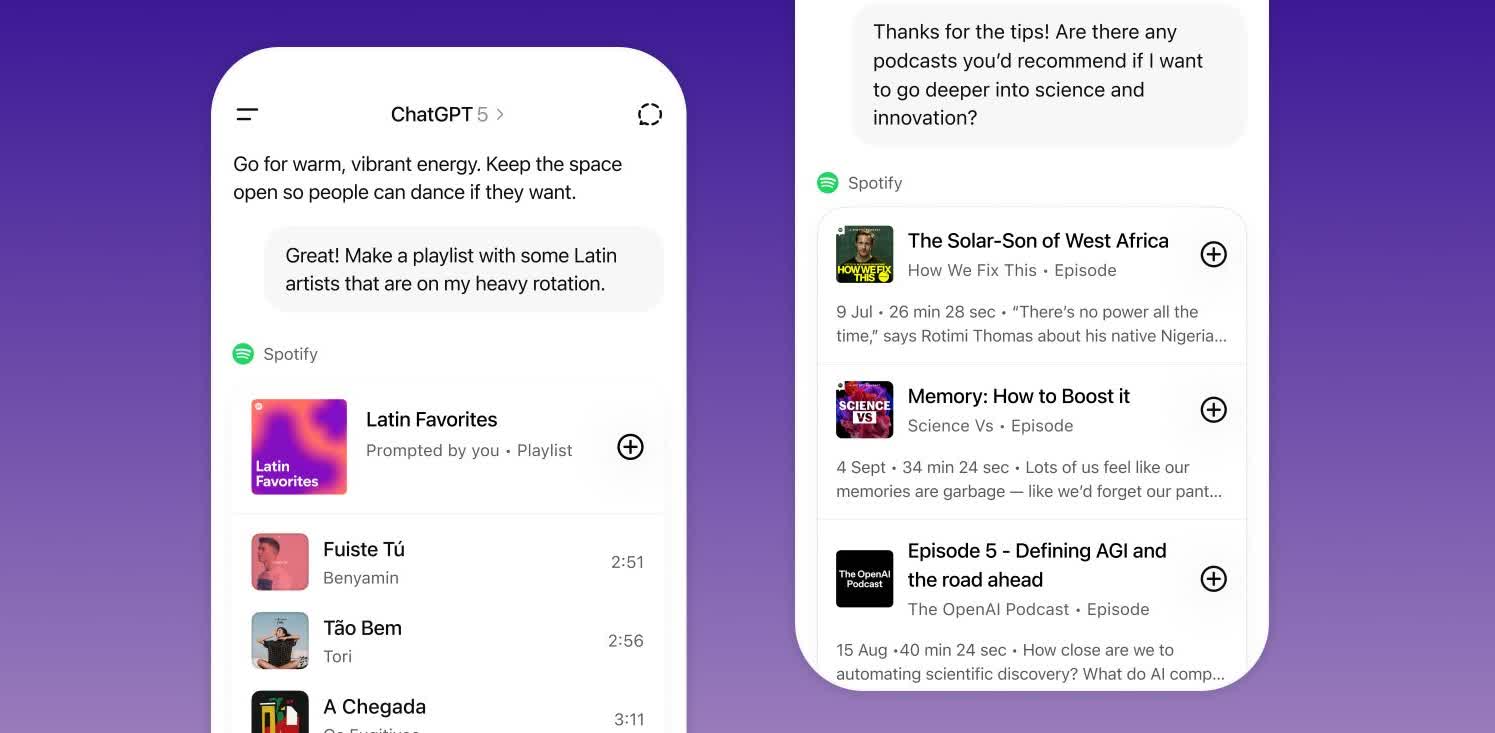
Users can now access applications from well-known companies such as Booking.com, Expedia, Spotify, Figma, Coursera, Zillow, and Canva directly within ChatGPT. Instead of switching between different websites or apps, a user could ask ChatGPT to "find apartments in Seattle under $2,000" and instantly see an interactive map from Zillow embedded in the chat window. Similarly, saying, "Figma, turn this sketch into a workable diagram" opens a design interface right inside the conversation.
OpenAI CEO Sam Altman described the initiative as an effort to make ChatGPT a more useful, integrated environment for everyday tasks. "We want ChatGPT to be a great way for people to make progress, to be more productive, more inventive, to learn faster, to do whatever they're trying to do in their lives better," Altman said. He added that the new internal apps would form "a new generation of apps that are interactive, adaptive, and personalized."
You can now chat with apps in ChatGPT. pic.twitter.com/T9Owi3POim
– OpenAI (@OpenAI) October 6, 2025
The launch redefines the concept of the ChatGPT "plugin," which previously operated as an optional tool. Developers can now create fully immersive app experiences inside the chat using OpenAI's new Apps SDK.
Available in preview, the SDK provides tools for building responsive interfaces within ChatGPT and connecting external data sources through OpenAI's Model Context Protocol. The MCP acts as a secure bridge, allowing apps to access data and trigger actions while maintaining isolation between services.
Unlike OpenAI's earlier GPT Store, which required users to visit a dedicated marketplace to browse and install third-party GPTs, the new system integrates apps directly into the core chat experience. This shift addresses a longstanding challenge for developers: discovery and distribution. Because the new apps can appear contextually, ChatGPT can automatically suggest relevant tools when they might be useful. For example, a user asking for a "playlist for a road trip" might see Spotify appear directly in the conversation, ready to assemble tracks without leaving the chat.
During DevDay demonstrations, OpenAI showcased how users could converse naturally while ChatGPT invoked apps dynamically. A query about nearby apartments produced interactive housing listings from Zillow, complete with embedded map elements. Through the Coursera app, ChatGPT could generate a short course outline or interactive learning interface based on user requests.
Technically, the apps are rendered through a system that allows embedded, reactive UI components to appear directly within the chat thread. Some can even play videos pinned at the top of the interface, updating in real time based on instructions. Users logged into services they already subscribe to can connect their accounts directly within ChatGPT.
OpenAI also said it is designing ways for developers to earn revenue inside ChatGPT. One likely approach involves linking app payments to OpenAI's Instant Checkout feature, announced in September.
Privacy remains an area of scrutiny. OpenAI requires participating developers to collect only the minimum data necessary and to be transparent about permissions. However, the company has not fully detailed the scope of data sharing, such as which portions of a conversation apps can access.
Another unresolved question is how ChatGPT will manage multiple apps competing in the same category, such as DoorDash and Instacart. OpenAI has not specified how it will determine which app is shown first, stating only that user experience will take precedence over commercial relationships.
OpenAI plans to expand the available app selection in the coming months, with companies including DoorDash, Instacart, Uber, and AllTrails expected to join.
ChatGPT now lets you use apps like Expedia, Spotify, and Zillow directly in chat


