
In brief: Remember when Cyberpunk 2077 first launched in 2020 and how much it struggled on the last-gen consoles? Today, the game that is still used to benchmark graphics cards can be emulated on a smartphone, albeit a very powerful one.
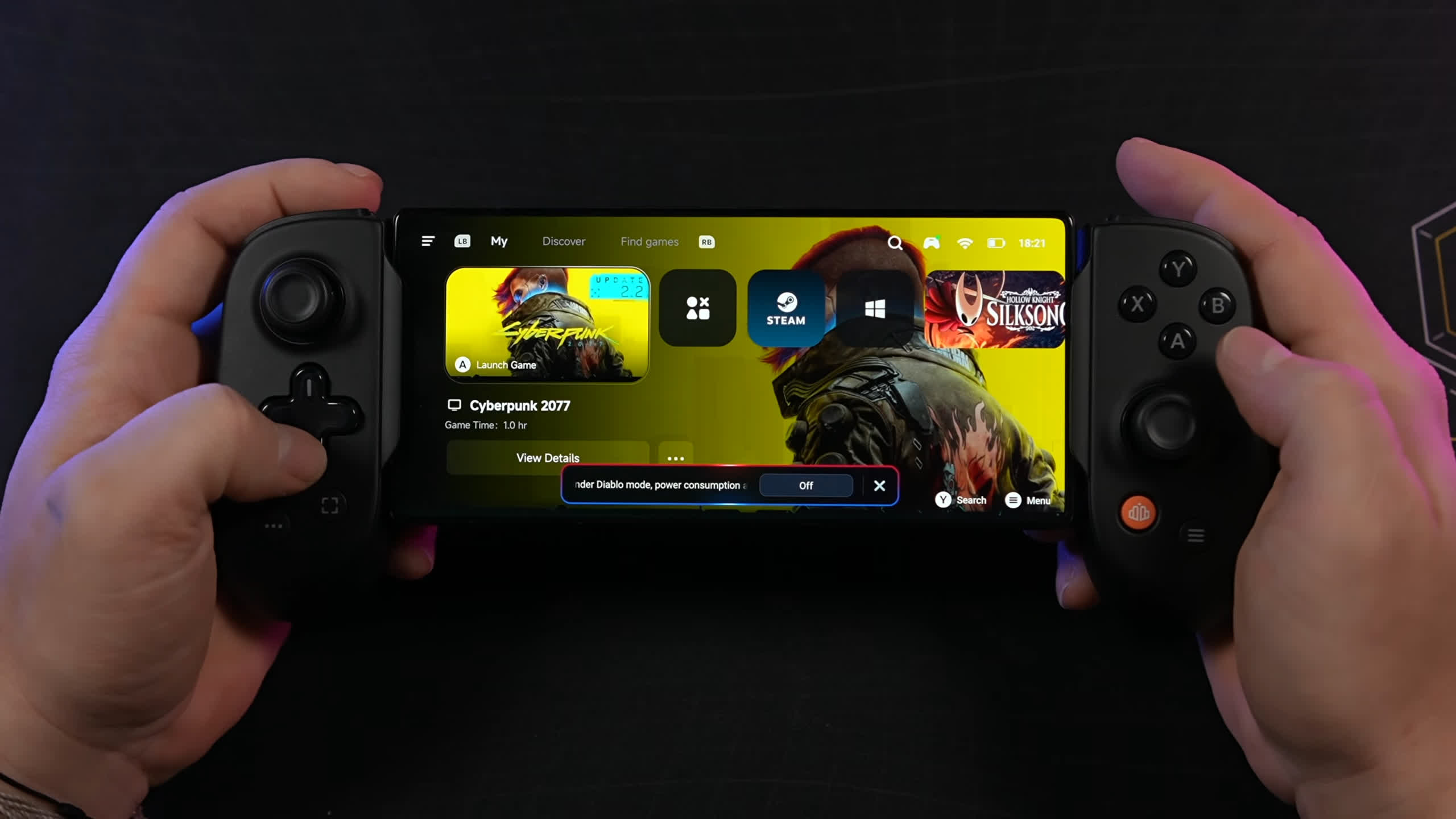
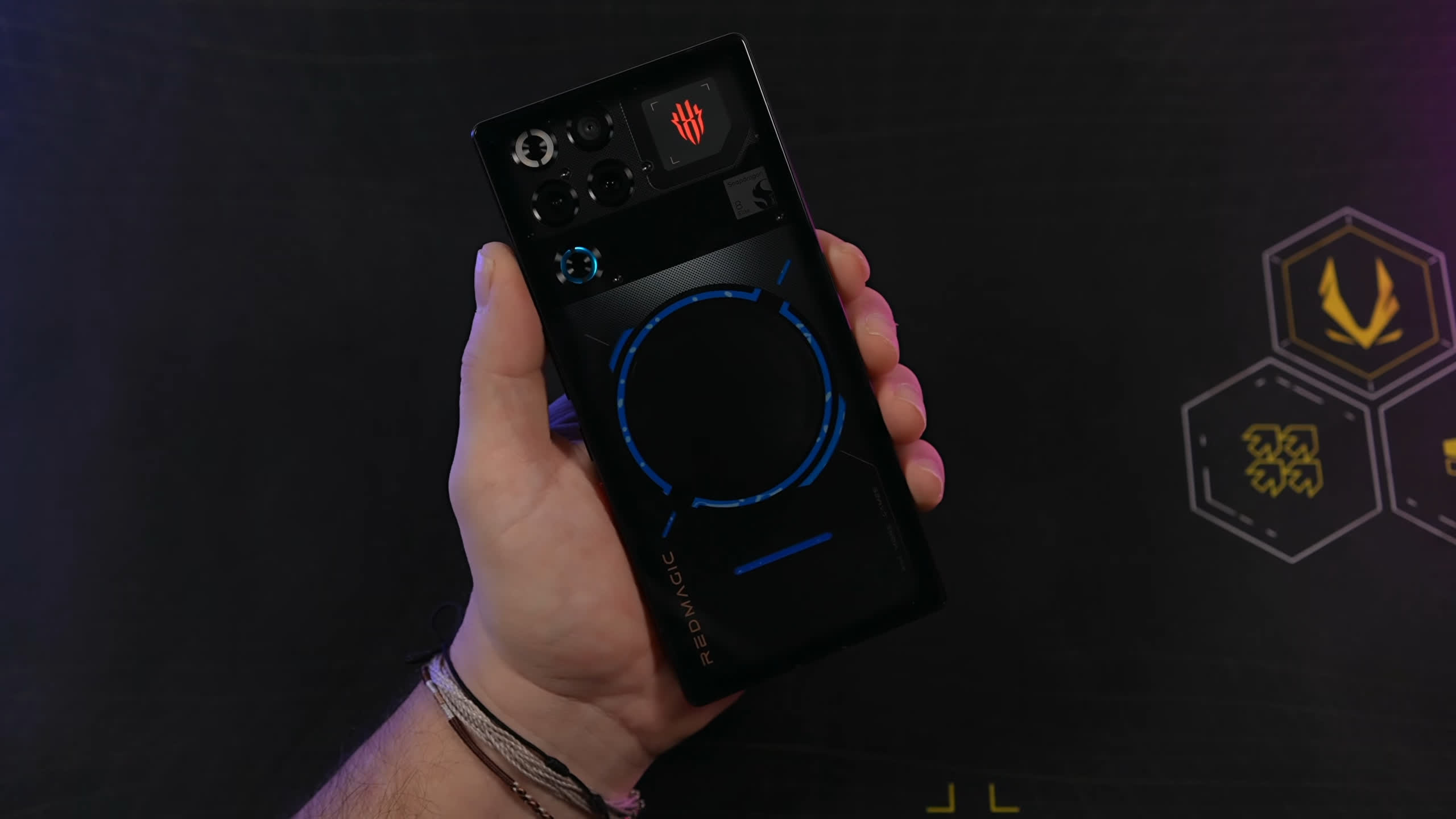
YouTube channel ETA Prime used the Red Magic 11 Pro to run an emulated version of Cyberpunk 2077. It's a suitable handset for the experiment, thanks to its liquid cooler, active cooling fan, and large vapor chamber, all helping keep the Snapdragon 8 Elite Gen 5 SoC temperatures (mostly) under control.
Rather than using the popular method of streaming from a remote PC, the game runs locally through an x86-to-Arm compatibility layer using tools such as GameHub, which translates Windows system calls and x86 instructions for Android hardware.
This type of emulation has improved rapidly over the past year, and the Red Magic's flagship silicon, 16GB of RAM, and aggressive cooling make it one of the few phones capable of sustaining the load.
To achieve playable performance, ETA Prime ran the game at 720p on low settings with FSR 2.1 enabled and set to Balanced mode. Frame rates hovered around the mid-20s to low-30s, occasionally climbing higher depending on scene complexity.
Enabling FSR frame generation pushed performance into the 40 FPS range, though it introduced minor ghosting artifacts and intermittent stutter – expected trade-offs given the layered translation and synthetic frame insertion.
Switching to the Steam Deck preset produced similar results: visuals improved, but frame rates dipped slightly into the mid-20s. Frame generation again lifted performance into the mid-40s.
Thermals remain a major factor. Even with active cooling engaged, the device ran hot under sustained load, reaching up to 100 °C. Memory usage approached 90%, CPU usage was around 60-80%, and GPU usage stayed around 50-60%.
What's happening here is a hybrid approach rather than traditional emulation alone. Low-level instruction translation converts x86 code into Arm instructions, while Wine-based compatibility layers handle Windows system calls and Vulkan wrappers translate DirectX graphics commands.
The method closely resembles Valve's Proton compatibility layer, which lets Windows games run on the Linux systems such as the Steam Deck.
Proton combines Wine with DXVK and vkd3d-proton to convert DirectX 9 – 12 calls into Vulkan, improving compatibility and performance. Android tools are moving in the same direction, aiming to run unmodified Windows PC games on Arm hardware with minimal performance penalties.
Cyberpunk 2077 is now playable on high-end Android phones using PC emulation


