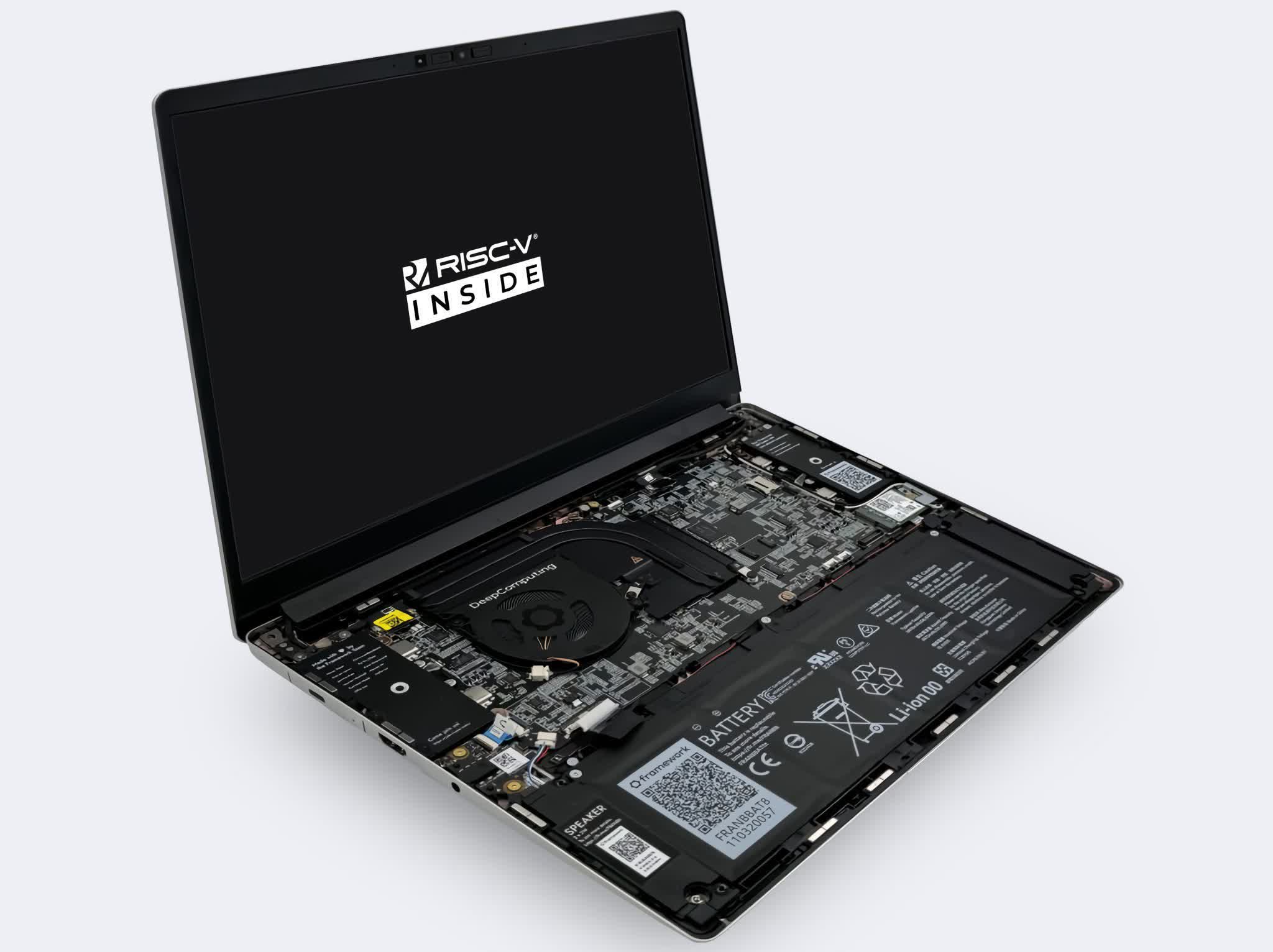
RISC-V Inside: DeepComputing recently announced the DC-ROMA RISC-V mainboard, a limited-edition platform providing a unique way to experiment with the RISC-V instruction set. The Chinese company designed the new device for industry and business customers interested in making modular computer platforms. DeepComputing has partnered with Framework and Cooler Master to provide cases to accommodate the new motherboards.
Some Chinese and Hong Kong ventures have deeply invested in the RISC-V open standard chip architecture. DeepComputing, founded in 2022 by self-declared RISC-V enthusiasts, is now exploring the DIY way with a new motherboard for modular devices. The company says that the DC-ROMA RISC-V mainboard offers "premium" RISC-V hardware, which means it uses a StarFive JH7110 SoC with SiFive U74 cores clocked at up to 1.5 GHz. It also supports an integrated Imagination GPU.
Basic specs include 8GB of memory and a 64GB SD card. However, the board has several tiers so customers can opt for more capable models. The cheapest tier is $200, which includes two USB-C expansion cards and a Framework or Cooler Master case and is enough to build a fully functional Linux mini-PC. There's also an expensive $1,000 "Enterprise" tier with additional ports and expansion cards.
The DC-ROMA RISC-V Mainboard is a limited initiative designed to give enterprise customers a taste of the RISC-V technology, DeepComputing confirmed. The company plans to start mass manufacturing new models of the motherboard in 2025, thus providing an upgrade path to early adopters. The Chinese venture is open to "valuable feedback," although they will only listen to customers who are paying for the aforementioned value-added services.
The board is a limited initiative designed to give enterprise customers a taste of RISC-V technology, DeepComputing confirmed. The company plans to start mass manufacturing new models of the motherboard in 2025, thus providing an upgrade path to early adopters. The is asking for "valuable feedback," although they are only open to customers paying for the bundled value-added packages.
DeepComputing has been making new computing hardware based on the RISC-V instruction set for quite some time. Earlier this year, the company built the first RISC-V laptop designed to run Ubuntu Linux using the same JH7110 SoC as the DC-ROMA RISC-V Mainboard. The DC-Roma RISC-V Pad II tablet, announced a few months ago, employs the K1 SoC developed by the Chinese company SpacemiT.


