European watchdogs demand game companies stop predatory virtual currency sales to children

Cal Jeffrey

Posts: 4,595   +1,682
Staff member
Bottom line: Regulators in Europe are once again trying to crack down on predatory gaming practices. This time, they have set their sights on in-game currencies. It is the EU's stance that in-game currencies are primarily used to manipulate and deceive customers to continue buying, and they aren't wrong.

Europe's Consumer Protection Cooperation Network (CPCN) has initiated an enforcement action with the European Commission (EC) to reign in the predatory monetization of a gaming company called Star Stable Entertainment, maker of the MMORPG/horse simulation "Star Stable Online." The CPCN aims to force the developer to be more transparent about the actual costs of in-game purchases. It's asking for a soft ban on in-game currency since no formal laws explicitly prohibit it.

Like many other game companies, Star Stable obfuscates the actual cost of in-game products by listing them in the game's virtual currency, "star coins." The problem is that star coins aren't a one-to-one conversion to euros. In fact, this monetization model intentionally makes currency conversion practically impossible. It does this through bundled coin packages sold at a "discount." Star Stable Online's target demographic is young players, but even adults would have difficulty confirming exactly how much a purchase costs them.

The CPCN's action stems from a Swedish Consumers' Association complaint. After investigating, the CPCN noted several areas that appear predatory, especially toward children. These include:

  • Direct appeals to children in the advertisements, urging them to buy, or persuade adults to buy for them, in-game currency or items.
  • The use of pressuring techniques such as 'purchase through time-limited practices' to unduly influence children to purchase in-game virtual currency or in-game content.
  • A lack of clear and transparent information, adapted to children, about buying and using in-game virtual currency, leading consumers to spend more than they intend to.
  • Failure by the company to ensure that the influencers promoting their products clearly disclose commercial content and do not unduly influence children with their marketing techniques.

These marketing gimmicks are relatively common and work just as well against adults as with children. The sole difference is that adults spend their money (or credit) instead of their parents' funds. Both organizations are asking the company to be more transparent about the commercial purchases children may encounter in the game.
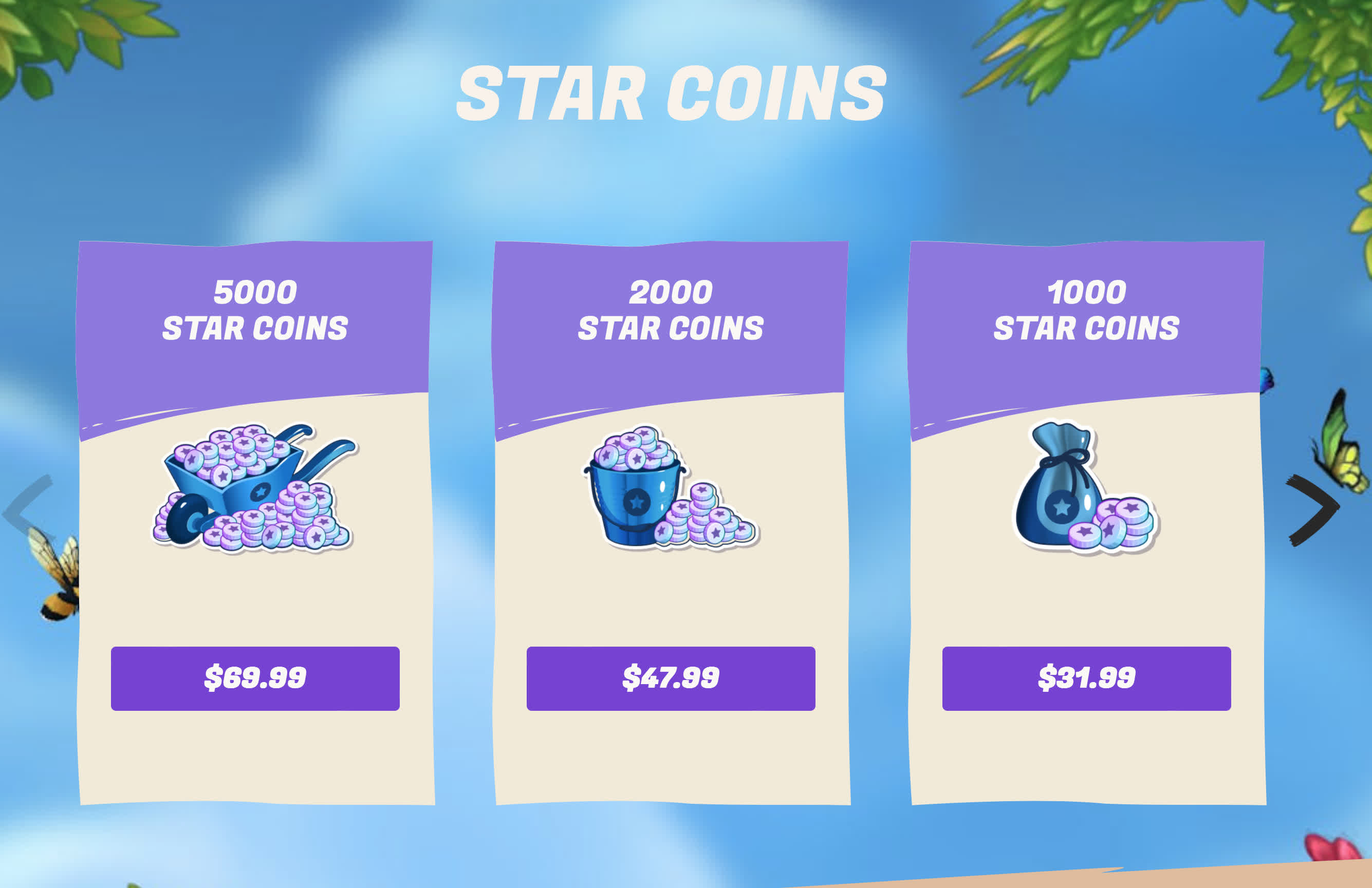
They have asked Star Stable to respond to their requests within one month. As mentioned, the predatory monetization is not strictly prohibited. However, the CPCN said it would take "further action" if the company did not provide commitments and specific remedies to comply.

"With this action, the CPC Network emphasizes the need for video games and their commercial practices to be adapted to children and to not exploit their vulnerabilities," the press release read.

However, the CPCN's goals do not stop at Star Stable. With the EC's help, it has published guidelines for all game developers to follow. The proposed framework generally focuses on transparency. A game listing a product or service in virtual currency should include the "objective" price in undiscounted euros.

The guidelines also ask developers to end the predatory practice of selling coins in bundles and then pricing virtual goods so that it leaves a perpetual balance on players' accounts. This tactic psychologically manipulates players into purchasing more coins to avoid wasting their remaining balance.

Similar actions have been brewing in the US for years. The latest was a rule proposed in January by the Consumer Financial Protection Bureau that looked to extend real-world banking rules to in-game currency accounts. It would allow players to transfer cash into and out of their gaming accounts. However, we have seen proposed remedies for predatory game marketing come and go in the US without much getting done.

It will be interesting to see how Star Stable responds and whether this action will affect other game makers. This enforcement action doesn't seem to have enough teeth for effective change, so we'll have to see what "further actions" the CPCN has in mind.

Permalink to story:

 
Buying game currency with real money should be banned everywhere. In fact, ANY kind of token currency should be illegal. The US made it illegal to pay people in scrip decades ago...I see no difference with forcing customers to convert legal tender into virtual scrip.
 
What? you don't like paying 10$ for something that costs 6$ in the in-game store because you can't pay less?
Frankly I hate paying anything at all, even if the game is free, because the moment you monetize progression you create incentive for the developers to slow down in game progress or artificially increase challenges to promote spending more money to bypass these challenges. And we know how power corrupts.
 
It is unconscionable that we restricted gambling for years, but have had few objections to applying similar tactics to children's video games.

For adults, I'm pro freedom so obviously against an outright ban, but requiring games label their in-game currency in it's real value (I.e., 1 v-buck always costs $1) and allowing purchases in any amount are easy wins for the consumer with minimal governmental oversight.
 
It's how they "hook" you into gambling. Just like the drug dealers do for a new "zone".
"free"...Then little by little charge you more and more and you are hooked!
 
That's one approach. The other approach would be for their parents to give a crap about what their kids are doing.
That would require politicians stand up and tell their constituents to stop being lazy, and that will never happen, because they'd never win another election.
 
That's one approach. The other approach would be for their parents to give a crap about what their kids are doing.

-Por que no los dos?

I am a parent who gives a crap. Kids have limited screen time, dumb phones only, and I actually spend time with them. They're also good well adjusted kids that are easy to trust.

However we also haven't hit full bore teen years yet either.

But the best defense is a layered one, and I won't pass up some low impact regulations that back me up if my kids fall off the wagon and make it harder or more inconvenient for them to **** up in some new and spectacular way that I had not anticipated.
 
Kids usually don't have money of their own they can spend freely online.
Whenever money is wasted on virtual nonsense, it's actually the parents doing that.

The listed 'predatory practices' - direct appeals to children in the advertisements, use of pressuring techniques like expiring offers, lack of clear and transparent information ... all that exists everywhere, it's by no means limited to games. So why targeting games specifically?
 
Kids usually don't have money of their own they can spend freely online.
Whenever money is wasted on virtual nonsense, it's actually the parents doing that.

The listed 'predatory practices' - direct appeals to children in the advertisements, use of pressuring techniques like expiring offers, lack of clear and transparent information ... all that exists everywhere, it's by no means limited to games. So why targeting games specifically?

A lot of games have cards at local stores you can buy for in game currency. If a kid has money and they have access to a store, they very well could be spending their own money.

My son plays Roblox with friends from school. At least twice a year he asks if he can spend his own money on a Roblox bucks card. Every single time I tell him no.

I have to remind him that he plays a game that is free. Spending money for in game currency does nothing for the game play itself, all he would be doing is giving them money so he can change the look of his avatar and it's a waste of money. He's not missing out on anything and doesn't need to waste his money on bullshit game currency.
 
I sold for 250$ of NFT items for Counter-Strike that was on my Steam account. Even if they are saying it has no monetary value, it is false, because I am now using this as my steam wallet.

The Valve marketplace is a money laundry scheme mix with lootbox that act like a casino. It is a problem.

Also, as stated by others, in-game currency is a scam. In Street Fighter 6, a costume cost 300 Fighter Coin, but the lowest amount you can buy is 250 Fighter Coin. So if you want to buy a costume, you need to buy the 610 Fighter Coin bundle.

 
Last edited:
I love how the EU is essentially speedrunning what parents have been yelling at app stores for years. “Stop letting SparkleHorse69 trick my kid into spending €50 on a glitter saddle!”
 
A lot of games have cards at local stores you can buy for in game currency. If a kid has money and they have access to a store, they very well could be spending their own money.

My son plays Roblox with friends from school. At least twice a year he asks if he can spend his own money on a Roblox bucks card. Every single time I tell him no.

I have to remind him that he plays a game that is free. Spending money for in game currency does nothing for the game play itself, all he would be doing is giving them money so he can change the look of his avatar and it's a waste of money. He's not missing out on anything and doesn't need to waste his money on bullshit game currency.
I wasn't aware about cards. When my son was that age about 10 years ago there were no cards. I once bought online some armor, but that's all.

You did what every parent should be doing. I don't think watching after your kids should be outsourced to the EU or whatever bureaucratic entity.
Kids can buy all sorts of non-game cards and other collectibles with their pocket money, buy soda and junk food ... game cards or virtual items are not more dangerous.
 
I wasn't aware about cards. When my son was that age about 10 years ago there were no cards. I once bought online some armor, but that's all.

You did what every parent should be doing. I don't think watching after your kids should be outsourced to the EU or whatever bureaucratic entity.
Kids can buy all sorts of non-game cards and other collectibles with their pocket money, buy soda and junk food ... game cards or virtual items are not more dangerous.

Years ago - talking probably 15 years now - I used to be able to go into my local Target store and have a small section of physical PC games to browse. It wasn't much, but there were probably 3-4 dozen games to look through on a handful of shelves.

Now that same sized area of shelving is dedicated to hang in-game currency cards for games such as:
Apex
Overwatch
Roblox
Minecraft
Elder Scrolls Online
various Tom Clancy games
and a good deal more.

So yeah, a kid has cash and can get to the store they're more than welcome to purchase these in-game currency cards.

My son got $100 gift card to Target from one of the grandparents this past Christmas. He wanted to spend it on Roblox currency card.....no. Not happening.
 
Back