Federal Reserve chair, other economists warn college graduates face difficult hiring challenges

Skye Jacobs

Posts: 2,010   +58
Staff
The big picture: The immediate concern AI poses to the economy is its drag on job creation amid a broader softening. The current weakness is more cyclical than structural. Yet whether AI's influence grows into a more dominant factor – and how much lasting harm it may do to the newest cohort of workers – remains an open question.

Federal Reserve Chair Jerome Powell acknowledged that the US labor market is presenting unusual challenges for young and minority workers, at a time when both a broader economic slowdown and the rapid spread of artificial intelligence are reshaping job opportunities. Speaking after the Federal Open Market Committee's September meeting, Powell described conditions as a "low firing, low hiring environment," with recent graduates particularly vulnerable.

"The economy has simply slowed down and job creation has broadly slowed down with it," he recently told Fortune.

Signs of strain have become more pronounced in recent months. The African American unemployment rate climbed above 7 percent in August, and the jobless rate for new graduates now exceeds the overall national figure – an uncommon reversal. Economists and policymakers are increasingly debating the role AI may be playing in this weaker start for early-career workers. Some research suggests that companies that once relied on new graduates for entry-level tasks are beginning to automate routine work instead, limiting opportunities for those at the very start of their careers.

Powell has walked a careful line on the technology's impact. Testifying before the Senate Banking Committee in June, he warned that AI could replace many jobs in the near term rather than merely augmenting workers' labor. He described AI as a transformational technology whose full effects are impossible to predict and noted that it might boost productivity and expand hiring over time.
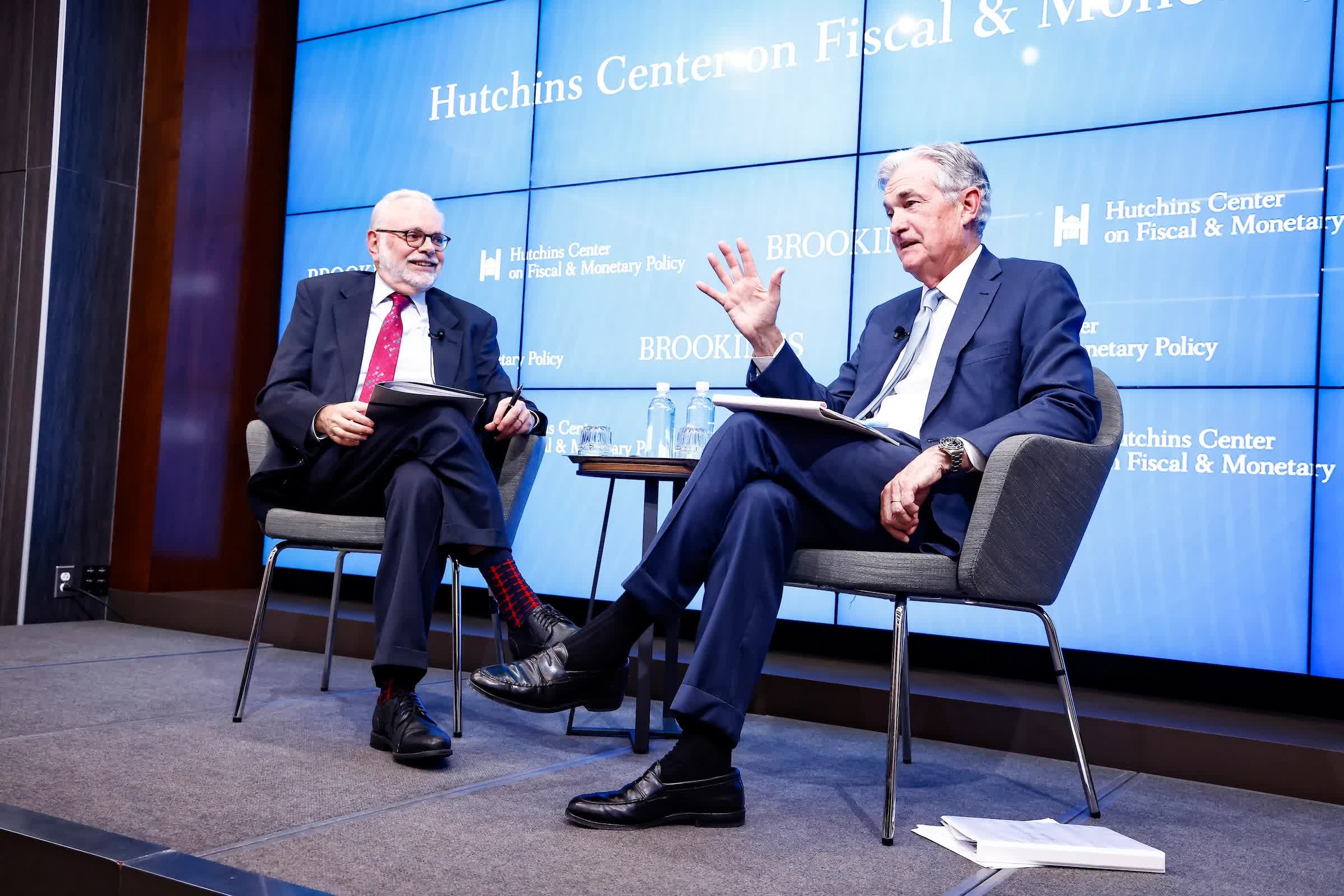
At his most recent press conference, Powell struck a cautious tone, acknowledging significant uncertainty over how much AI adoption is affecting hiring.

"My view, which is also a bit of a guess, but widely shared, I think, is that you are seeing some effects, but it's not the main thing driving it," Powell said.

Even so, he acknowledged the possibility that companies are now relying more heavily on AI tools for work that used to go to entry-level staff. While AI may be making it harder for some younger applicants, Powell emphasized that the larger economic context still matters most.

The latest figures show 7.4 million unemployed workers competing for 7.2 million available jobs, according to Apollo Global Management Chief Economist Torsten Slok. Outcomes also vary by gender, with unemployment rates falling among female graduates but rising among male graduates.

These pressures follow what Deutsche Bank has called "the summer AI turned ugly," a period when companies struggled with implementation even as layoffs and hiring freezes fueled fears that automation was outpacing workplace demand. Stanford economist Erik Brynjolfsson has described AI's rapid impact on entry-level roles as one of the biggest fault lines in today's labor market.

Economists remain divided over whether the current challenges facing Gen Z will leave lasting marks. For decades, scholars have studied whether starting a career during a downturn produces "permanent scars" in wages and career development. Harvard professor David Ellwood coined the phrase in 1982, and Olivier Blanchard and Lawrence Summers expanded on it in 1986, showing the enduring effects of recession-era unemployment.

Others, such as Peterson Institute President Adam Posen, argue that little evidence of long-term damage has emerged since the financial crisis of 2008. Yet researchers, including David Blanchflower of Dartmouth College and Alex Bryson of University College London, highlight another form of fallout: rising despair among young workers, even in years when unemployment figures appeared healthier.

"The despair has been unmistakable across the past decade," Blanchflower told Fortune, noting that this generation now faces added strains from both cyclical weakness and technological disruption.

Permalink to story:

 
And yet the price of everything continues to rise rise rise... Should be interesting to see where this all converges. Honestly, I'm not even remotely concerned.

Did you know squirrels can turn their rear feet around 180 degrees to grip onto things backwards? That's what they're doing when they're attached to the bark of a tree upside down.
 
The man most responsible for the inflation driving the bad economy blaming everything but the Federal Reserve's monetary policy.

Fun fact: Keynesian Economics, upon which central banks exist, says that "small" inflation is good for the economy because it "creates" consumer demand by punishing savings and that "encouraged" consumer demand is what keeps unemployment low.

That is, you cannot have both high inflation and high unemployment in the Keynesian model, because if you do, it shows that the entire inflation is good idea is a sham and should be thrown out with the central banks and fiat money.
 
OK, now control for useless degrees. Remove all the humanitarian degrees and and degree with "studies" in the title. Toss the "criminal justice" degrees as well, as those are completely worthless.

Then control for generic degrees that have outlived their usefulness. Business degrees are a great example. Legal degrees are another, that field is completely oversaturated.

I'd love to see what those numbers look like. How many engineers, doctores, and nurses are struggling to find work?

"Economists remain divided over whether the current challenges facing Gen Z will leave lasting marks."

A better question is "Will gen Z learn from the landmine sign and the remains of gen X and millennials that cover the fields?". Evidence would suggest yes, Gen Z is learning from their predecessors mistakes. Enrollment in college for men has been on a major downturn for years with no sign of stopping, gen Z are embracing skilled trades and making BANK in the process. Gen Z is already outpacing millenials in income, home ownership, and retirement at the same age.

After decades of banging the drum, it seems many have finally realized that you dont HAVE to go to college, that other options are available.
 
OK, now control for useless degrees. Remove all the humanitarian degrees and and degree with "studies" in the title. Toss the "criminal justice" degrees as well, as those are completely worthless.

Then control for generic degrees that have outlived their usefulness. Business degrees are a great example. Legal degrees are another, that field is completely oversaturated.

I'd love to see what those numbers look like. How many engineers, doctores, and nurses are struggling to find work?

"Economists remain divided over whether the current challenges facing Gen Z will leave lasting marks."

A better question is "Will gen Z learn from the landmine sign and the remains of gen X and millennials that cover the fields?". Evidence would suggest yes, Gen Z is learning from their predecessors mistakes. Enrollment in college for men has been on a major downturn for years with no sign of stopping, gen Z are embracing skilled trades and making BANK in the process. Gen Z is already outpacing millenials in income, home ownership, and retirement at the same age.

After decades of banging the drum, it seems many have finally realized that you dont HAVE to go to college, that other options are available.
So what degrees are not useless by your account as you throw quite the gamut under the bus?
 
So what degrees are not useless by your account as you throw quite the gamut under the bus?

Would you like an answer? I suspect your question was rhetorical, but I have one. There are currently 7.6 million skilled trade jobs that are unfilled in the U.S (per MikeroweWorks Foundation and the bureau of labor statistics). While we've been denigrating blue collar work as a country, and selling the dream of a college education, we've created a huge gap between our career preparation and the jobs we require.

This is also due to the tech industry and Wall Street wet dream of making a 100% service economy. Pushing out and devaluing manufacturing and trades has put us in a spot where learning a trade will be far more valuable than any of those liberal arts or boutique degrees that are the current specialty of most of our universities.

But you might have to give up the nice suits and the air conditioned office.
 
Would you like an answer? I suspect your question was rhetorical, but I have one. There are currently 7.6 million skilled trade jobs that are unfilled in the U.S (per MikeroweWorks Foundation and the bureau of labor statistics). While we've been denigrating blue collar work as a country, and selling the dream of a college education, we've created a huge gap between our career preparation and the jobs we require.

This is also due to the tech industry and Wall Street wet dream of making a 100% service economy. Pushing out and devaluing manufacturing and trades has put us in a spot where learning a trade will be far more valuable than any of those liberal arts or boutique degrees that are the current specialty of most of our universities.

But you might have to give up the nice suits and the air conditioned office.
I'd like an answer from the person that claimed business and nursing degrees are useless.

Not everyone should go to college but some college degrees are useful. (My first test is can you get a job other than teaching the next generation of undergrads with your degree.)
 
Would you like an answer? I suspect your question was rhetorical, but I have one. There are currently 7.6 million skilled trade jobs that are unfilled in the U.S (per MikeroweWorks Foundation and the bureau of labor statistics). While we've been denigrating blue collar work as a country, and selling the dream of a college education, we've created a huge gap between our career preparation and the jobs we require.

This is also due to the tech industry and Wall Street wet dream of making a 100% service economy. Pushing out and devaluing manufacturing and trades has put us in a spot where learning a trade will be far more valuable than any of those liberal arts or boutique degrees that are the current specialty of most of our universities.

But you might have to give up the nice suits and the air conditioned office.


I see "now hiring w/bonus" signs all the time. The problem is, not all, but a lot of gen x,y,z
types don't want to sweat and get their hands dirty. Makes it too hard to post to social media
all the time.
 
I'd like an answer from the person that claimed business and nursing degrees are useless.

Not everyone should go to college but some college degrees are useful. (My first test is can you get a job other than teaching the next generation of undergrads with your degree.)

While that person may have been imprecise, I think his point was what I said, the liberal arts and boutique degrees that are all the rage just put students in debt. Keep in mind, skilled degrees (Medical, Engineering, Chemistry, et al) require (at least at this point) many hours, some intelligence, and some persistence and will to stick out the programs. If you were to look at the degrees conferred by discipline, I think you'll find at most diploma mills, those degrees are a shrinking minority, much like the trades (at least according to the companies who massively employ H1-B visas, but that's another conversation.....).
 
Head of the private corporation, the Federal Reserve, beholden to his share holders in Europe and the BIS, cares about the common man. How cute. You have to have been dropped on the back of your head 50 times per hour to believe that he is anything but part of the vampiric system that is the usurious banking system.
 
I'd like an answer from the person that claimed business and nursing degrees are useless.

Not everyone should go to college but some college degrees are useful. (My first test is can you get a job other than teaching the next generation of undergrads with your degree.)
Never claimed nursing was useless, perhaps you should try reading my comment again.

Business degrees ARE useless. Few, if any, successful entrepreneurs have "business degrees". Most people who chase such degrees end up in office jobs doing menial tasks that in no way require college degrees. You dont need a bachelors to run the copy machine or make coffee.
So what degrees are not useless by your account as you throw quite the gamut under the bus?
Medical degrees and Engineering degrees, to name a couple.
 
Fun fact: Keynesian Economics, upon which central banks exist, says that "small" inflation is good for the economy because it "creates" consumer demand by punishing savings and that "encouraged" consumer demand is what keeps unemployment low.

Not quite.

The issue isn't necessarily inflation per se, but the effects of its opposite, deflation. When prices are going down, the logical thing for a consumer to do is to wait for prices to decline farther before making a purchase. This creates a feedback loop driving prices down farther, to the point where it drives the producers out of business (lack of profit due to collapsed prices).

As a result, the Fed tries to keep inflation slightly below GDP, so the overall long-term result is a net economic gain, while avoiding the worst-case outcome (which is *always* deflation).

I also note the US abandoned Kynes's principles starting with Ford, switching to Supply-Side economics instead. And we see how well that worked out for us over the long term, specifically with the drive to reduce costs through foreign produced goods and the collapse of US manufacturing.
 
Did you know squirrels can turn their rear feet around 180 degrees to grip onto things backwards? That's what they're doing when they're attached to the bark of a tree upside down.
Yes. I did know that. Did you know that factoid was the linchpin clue in an Encyclopedia Brown mystery?
 
Never claimed nursing was useless, perhaps you should try reading my comment again.
Then I misunderstood your last bit.
Business degrees ARE useless. Few, if any, successful entrepreneurs have "business degrees". Most people who chase such degrees end up in office jobs doing menial tasks that in no way require college degrees. You dont need a bachelors to run the copy machine or make coffee.
Medical degrees and Engineering degrees, to name a couple.
That is completely untrue.

1) I personally know multiple entrepreneurs with multi-million dollar exits with business degrees.

2) Business schools both teach classes on entrepreneurship and offer free startup support and resources for student entrepreneurs.

3) Many entrepreneurs that have had at least one exit (I.e., are not still running their first business), spend time teaching aspiring entrepreneurs at incubators or -gasp- university classrooms.

4) There are MANY office jobs required to run a business that need more than a high school degree (which often is terrible in this country btw). Accountants doing company taxes is an easy and obvious example.

5) Not everyone wants to be an entrepreneur and is happy to have a normal office job.

6) Finance and accounting degrees are quite lucrative if you don't mind hard work at big firms (similar to law degrees).

6) Admin assistants or interns run copies and make coffee in any company I have ever seen. Because why would anyone pay more for a college grad to do the lowest grunt work? Also do people still make copies?

I could go on, but I have other things to do.

Just because you think your manager is useless doesn't mean everyone in business is useless.
 
Not quite.

The issue isn't necessarily inflation per se, but the effects of its opposite, deflation. When prices are going down, the logical thing for a consumer to do is to wait for prices to decline farther before making a purchase. This creates a feedback loop driving prices down farther, to the point where it drives the producers out of business (lack of profit due to collapsed prices).

As a result, the Fed tries to keep inflation slightly below GDP, so the overall long-term result is a net economic gain, while avoiding the worst-case outcome (which is *always* deflation).

I also note the US abandoned Kynes's principles starting with Ford, switching to Supply-Side economics instead. And we see how well that worked out for us over the long term, specifically with the drive to reduce costs through foreign produced goods and the collapse of US manufacturing.
The Fed's widely public target is 2-3% inflation not minor deflation.

The argument against deflation is always built on showing theoretically that extreme deflation is bad (while never pointing out that same is true for extreme inflation). In practice, reasonable levels of deflation don't work that way. TVs get cheaper every year and yet people still buy them rather than waiting forever for ever cheaper ones while manufacturers fold. Games get cheaper after launch. Yes, some wait for lower prices, but millions pre-order instead. And importantly the US never had deflationary problems before the Fed existed.

Every Fed economist is a Keynesian (because the entire purpose of the Central Bank is to allow increased government spending).

Some (usually republican) politicians have campaigned on Supply Side ideas, but rarely enacted them. And when they have enacted Supply Side it is in tandem with continued Keynesian spending as seen on any chart of federal spending year over year.

A quick summary of the two are below. I think anyone looking at these philosophies would agree the US government is primarily run on Keynesian econ.

  • Supply-Side Economics: Focuses on boosting the production (supply) of goods and services by reducing barriers for businesses and investors. The idea is that lower taxes, fewer regulations, and incentives for investment will lead to more jobs, innovation, and overall growth. Tagline: “Growth comes from producers.”
  • Supply-Side Government should mainly step back—cut taxes, deregulate, and let markets allocate resources efficiently. The belief is that private enterprise is the engine of growth.

  • Keynesian Economics: Emphasizes the role of aggregate demand (spending by consumers, businesses, and government) in driving the economy. It argues that during downturns, demand often falls short, so government spending and policies should stimulate demand to restore growth. Tagline: “Growth comes from spending.”
    • Keynesian Government should play an active role, especially in recessions, by increasing spending or cutting taxes for consumers to boost demand.
 
The argument against deflation is always built on showing theoretically that extreme deflation is bad (while never pointing out that same is true for extreme inflation). In practice, reasonable levels of deflation don't work that way. TVs get cheaper every year and yet people still buy them rather than waiting forever for ever cheaper ones while manufacturers fold. Games get cheaper after launch. Yes, some wait for lower prices, but millions pre-order instead.
Using your TV example: What happens is "costs" go down as production increases, so decreasing price is economically justified. That's perfectly fine. What's *not* OK is prices falling while cost remains constant, due to a collapse in demand.
And importantly the US never had deflationary problems before the Fed existed.
Because Gold Standard, which has the unfortunate side-effect as acting as a cap on a countries wealth

Every Fed economist is a Keynesian (because the entire purpose of the Central Bank is to allow increased government spending).
The Fed has been fairly vocal about the inflationary pressure current spending is, though I do agree the Fed has gotten so used to near-zero interest rates they consider it an economic requirement.

Some (usually republican) politicians have campaigned on Supply Side ideas, but rarely enacted them. And when they have enacted Supply Side it is in tandem with continued Keynesian spending as seen on any chart of federal spending year over year.
The GOP does largely adhere to Supply Side principle (less regulation/oversight and lower taxes), just with massive federal spending to hide the effect their policy doesn't actually work in practice. Leading to an economic situation where the US largely funds economic growth but his little oversight over it.

A quick summary of the two are below. I think anyone looking at these philosophies would agree the US government is primarily run on Keynesian econ.

  • Supply-Side Economics: Focuses on boosting the production (supply) of goods and services by reducing barriers for businesses and investors. The idea is that lower taxes, fewer regulations, and incentives for investment will lead to more jobs, innovation, and overall growth. Tagline: “Growth comes from producers.”
  • Supply-Side Government should mainly step back—cut taxes, deregulate, and let markets allocate resources efficiently. The belief is that private enterprise is the engine of growth.

  • Keynesian Economics: Emphasizes the role of aggregate demand (spending by consumers, businesses, and government) in driving the economy. It argues that during downturns, demand often falls short, so government spending and policies should stimulate demand to restore growth. Tagline: “Growth comes from spending.”
    • Keynesian Government should play an active role, especially in recessions, by increasing spending or cutting taxes for consumers to boost demand.
And as we've seen from the past 60 years of economic policy or so: Supply Side doesn't work in practice.

Raegan's solution to stagflation was relatively simple: Sky high interest rates to keep inflation down (caping north of 25%) and massive federal spending to keep unemployment manageable (he nearly tripled the dollar amount of the debt). Once the economy settled down he gutted oversight by the Federal government, leading industry more or less in charge of driving economic growth.

The fundamental problem with Supply-Side is its focus on production over all else. This naturally drives businesses to cut costs as much as humanly possible so they can maximize the profit per unit produced. This lead to both workers real wages stagnating (and eventually decreasing) relative to economic growth, as well as the push to use foreign workers/countries to lower overall production costs, leading to manufacturing basically vanishing from the US. In turn, this forces them (kicking and screaming) to keep spending high in order to artificially keep economic growth going, as consumers increasingly do not have the necessary wealth to keep purchasing the goods that are being produced.

There's also the additional problem that having workers with less wealth makes the entire system massively sensitive to any price increases, as consumers don't have the spare wealth to absorb any type of price increase (read: Inflation). This leads to much larger economic disruptions the instant anything goes wrong with the economy (as we saw in 2008/2020).

Kynes by contrast understanding that consumer spending drives economic growth: If consumers have money to spend, they will spend it. And if you have a Capitalist economy that works, that demand will encourage higher production (read: Jobs) in order to maximize profits.

Kynes also believes in direct intervention in the name of maximizing consumer spending. This can be anything from direct subsidies of goods to direct employment (think the old WPA). They'd also point out that in both 1937 and 1978 (as well as 2011 to a less degree) government reduced spending during times of economic unease, and it lead directly to a jump in unemployment (in both '37 and '78) as consumers were not in a state to drive the economy out of its recessionary state. By contrast, Biden "didn't" do this, and the US economy proceeded to grow at its fastest rate (6.7%) in ages, albeit at a cost of a high inflation rate (6.2%).

Which in turn highlights Kynes biggest problem: With consumers having much increased spending power, there is a lot more inflationary pressure on the economy. This leads to significant issues with the poor, since they turn to be worse off before factoring in any government intervention.

On the whole, I'm a Kynes adherent, as petty much everything we've seen with the economy over my lifetime easily fits into Kynes principles (EG: What actually happened to the economy would be in line with what you'd predict). I refuse to believe that more people with more money is a net economic negative, although it does need to be managed in such a way that inflation remains tame.
 
This all points to the value of getting trade school training instead of a college degree. AI can't build houses, install plumbing or wiring or repair dented auto bodies. So, you have a choice. You can go in debt to get a college degree to wind up working at a convenience store or you can learn a trade and make six figures.
 
Thirty years ago a degree meant something. Now, with a tech scene in which a 12-year old can outwit a skilled and experienced blue team one must wonder if any merit today exists for degrees or if universities, for their own business sake, have merely become degree mills.
 
I got electronic technician training from a tech school & a home study course. Then, sought college & university for personal fulfillment. Really enjoyed the literature classes.
 
Using your TV example: What happens is "costs" go down as production increases, so decreasing price is economically justified. That's perfectly fine. What's *not* OK is prices falling while cost remains constant, due to a collapse in demand.
Again, asserting your assumption does nothing to prove it. It's like arguing that the world is flat because falling off the edge of the world would be really bad.
Because Gold Standard, which has the unfortunate side-effect as acting as a cap on a countries wealth
A) I'm not arguing for the gold standard, merely sound money with limits on how much the government can create.
B) Sound money does not cap a country's wealth. That is another boogie man created by the people who want to print as much money as they desire.
The Fed has been fairly vocal about the inflationary pressure current spending is, though I do agree the Fed has gotten so used to near-zero interest rates they consider it an economic requirement.
The GOP does largely adhere to Supply Side principle (less regulation/oversight and lower taxes), just with massive federal spending to hide the effect their policy doesn't actually work in practice. Leading to an economic situation where the US largely funds economic growth but his little oversight over it.
That's like saying someone is following a diet because they ordered a diet coke with all their fast food. By definition, you can't be promoting smaller and unintrusive government by growing the size and scope government. Doing some small symbolic gesture towards smaller government doesn't change the vast expansion of the federal government under republicans (and dems too of course).
And as we've seen from the past 60 years of economic policy or so: Supply Side doesn't work in practice.

Raegan's solution to stagflation was relatively simple: Sky high interest rates to keep inflation down (caping north of 25%) and massive federal spending to keep unemployment manageable (he nearly tripled the dollar amount of the debt). Once the economy settled down he gutted oversight by the Federal government, leading industry more or less in charge of driving economic growth.

The fundamental problem with Supply-Side is its focus on production over all else. This naturally drives businesses to cut costs as much as humanly possible so they can maximize the profit per unit produced. This lead to both workers real wages stagnating (and eventually decreasing) relative to economic growth, as well as the push to use foreign workers/countries to lower overall production costs, leading to manufacturing basically vanishing from the US. In turn, this forces them (kicking and screaming) to keep spending high in order to artificially keep economic growth going, as consumers increasingly do not have the necessary wealth to keep purchasing the goods that are being produced.

There's also the additional problem that having workers with less wealth makes the entire system massively sensitive to any price increases, as consumers don't have the spare wealth to absorb any type of price increase (read: Inflation). This leads to much larger economic disruptions the instant anything goes wrong with the economy (as we saw in 2008/2020).
You seem to be under the impression that I am a proponent of Supply Side economics. I am not.
But your strawman arguments about Supply Side to make Keynes look good needed to be pointed out.
Kynes by contrast understanding that consumer spending drives economic growth: If consumers have money to spend, they will spend it.
This is true with or without the Federal Reserve devaluing the currency. It was true before central banks and will still be true if we end the Fed.
And if you have a Capitalist economy that works, that demand will encourage higher production (read: Jobs) in order to maximize profits.

Kynes also believes in direct intervention in the name of maximizing consumer spending. This can be anything from direct subsidies of goods to direct employment (think the old WPA). They'd also point out that in both 1937 and 1978 (as well as 2011 to a less degree) government reduced spending during times of economic unease, and it lead directly to a jump in unemployment (in both '37 and '78) as consumers were not in a state to drive the economy out of its recessionary state. By contrast, Biden "didn't" do this, and the US economy proceeded to grow at its fastest rate (6.7%) in ages, albeit at a cost of a high inflation rate (6.2%).

Which in turn highlights Kynes biggest problem: With consumers having much increased spending power, there is a lot more inflationary pressure on the economy. This leads to significant issues with the poor, since they turn to be worse off before factoring in any government intervention.

On the whole, I'm a Kynes adherent, as petty much everything we've seen with the economy over my lifetime easily fits into Kynes principles (EG: What actually happened to the economy would be in line with what you'd predict). I refuse to believe that more people with more money is a net economic negative, although it does need to be managed in such a way that inflation remains tame.
Keynes wrongly believed that the economy only works with government interventions. This has been repeatedly disproven in practice but it wildly popular with governments that want to intervene, I.e., control, more.

The boom and bust cycle that Keynesian economics claims to solve with its monetary policy is actually exacerbated by it. Look at the housing boom and bust created by cheap home loans as proof. The same is true for cheap loans for businesses + inflationary targets that incentivize taking out loans to chase even low returns. I.e., bad investments. And that is before other direct interventions further skewing market forces.

Inflation is literally driven by increasing the money supply. More money for the same economic value = less value per dollar. Consumer goods' price inflation is merely a more visible sign of this devaluing that, while correlated, does not capture all of the problem.

What's funny is the government has actually changed its measure of (consumer price) inflation several times in ways that always decrease the amount of inflation shown. I'm sure that is a coincidence.

If you want sound economics, you should look into the Austrian school. I used to believe in other econ theories, but Austrian econ is by far the best explanation and the way forward.
 
Back