Fujifilm pours $64 million into magnetic tape production as AI storage demand surges

Alfonso Maruccia

Posts: 2,811   +1,087
Staff
Thanks, AI: Despite their origins in the early days of computing and digital media, magnetic tapes have never completely disappeared from the market. In fact, demand for data storage is so high right now that tape manufacturers are investing millions to expand their production capacity.
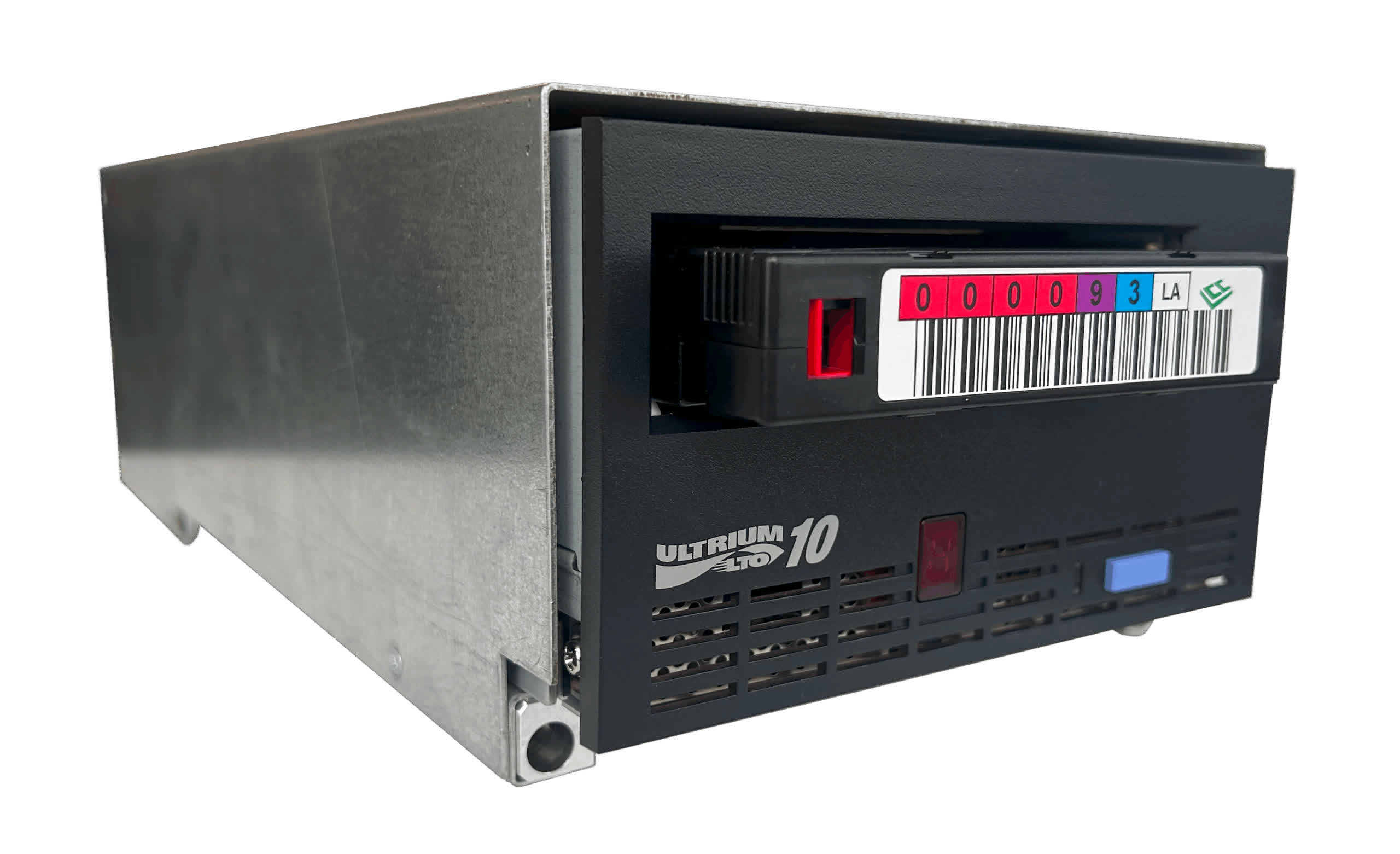
Fujifilm recently announced a significant new investment in its magnetic tape manufacturing operations. The Japanese giant will spend 10 billion yen, or around $64 million, to expand production capacity at its Kanagawa Factory in the city of Odawara. The site manufactures magnetic tapes for data storage workloads, and the IT world is certainly in desperate need of cheap, reliable storage these days.

The new investment will run from fiscal year 2026 through 2028, Fujifilm said. The company will use the newly allocated funds to expand Kanagawa's manufacturing facilities, with new positions expected to open as well. Fujifilm explained that magnetic tape is increasingly being used by cloud providers and data center operators, which is why the company needs to increase its manufacturing output to around five times its current level to better meet market demand.

Needless to say, Fujifilm is citing generative AI and other AI-related services as major drivers behind the growing demand for magnetic tape. The massive amounts of digital data collected by AI companies – for both model training and inference workloads – need a safe place to be stored. Magnetic tapes can hold enormous amounts of data and preserve it for long periods without requiring the significant financial investment associated with SSDs and other modern storage solutions.

Fujifilm's Kanagawa plant will focus on manufacturing the company's version of LTO-10 tapes, based on the LTO Ultrium standard. The LTO format was designed in the 1990s as an open-standard alternative to proprietary tape formats and is managed by a consortium of IT companies, including HPE, IBM, and Quantum Corporation.

LTO-10 tapes were released earlier this year, providing a native capacity of 40 terabytes. With compression, a single LTO-10 tape can store up to 100 TB. The transfer rate is 400 megabytes per second in either case, which shouldn't be an issue considering the "cold" storage workloads for which magnetic tapes are typically used.

Furthermore, the LTO consortium is already planning the next upgrades to its tape technology. The LTO-11 format is expected to arrive in 2029, offering a native capacity of 70 TB. Future plans include tapes capable of storing 120 TB (LTO-12), 210 TB (LTO-13), and even 365 TB (LTO-14) of uncompressed data on a single cartridge. That's frankly an outrageous amount of storage, no matter how you look at it.

Fujifilm also highlighted the company's long history with magnetic tape products. Its initial research efforts began in the 1950s and continued to evolve in response to new formats, including broadcast and consumer videotape systems. Fujifilm launched its first LTO-based product, the LTO Ultrium 1, in 2000, while the latest LTO Ultrium 10 format was introduced just a year ago.

Permalink to story:

 
It hasn't even been a year since everyone was saying that spinning rust is dead and that the future is flash. Now we're going back to magnetic tape.
 
Magnetic tape has always been a thing. It’s low cost and amazing for long term storage. It’s just terrible if toy want fast read and write times.
I know it has always been a thing, I'm talking about the zealots saying HDDS were dying and everything was going to be Flash based because it was getting so cheap. And here we are investing more into tape storage.
 
I know it has always been a thing, I'm talking about the zealots saying HDDS were dying and everything was going to be Flash based because it was getting so cheap. And here we are investing more into tape storage.
Oh HDDs are probably dead as they were the middle ground but tape for long term storage has always been the value king it’s just not very good for data you need quick access to or frequent access to.
 
Oh HDDs are probably dead as they were the middle ground but tape for long term storage has always been the value king it’s just not very good for data you need quick access to or frequent access to.
Maybe.
It will be a while though if we talk big capacity drives ie. 10 TB or more, simply because they are much cheaper than chip storage. In fact the price of hard drives have been going up, a 20 TB is about double of when it was at the cheapest.
As for small capacity 1-2 TB and less, that market is almost dead. The base cost of the mechanical in a spinning drive means they can't compete price wise, so even in applications where it is cost over performance everything is chip based.
 
Tape has not gone anywhere!
It is great for air gap backup storage. Tapes in a safe can't be destroyed by hackers.
 
I know it has always been a thing, I'm talking about the zealots saying HDDS were dying and everything was going to be Flash based because it was getting so cheap. And here we are investing more into tape storage.

You are mixing subjects:
- HDDs are "dead" for the OS and gaming, as they didn't enjoy an proper evolution
- HDDs will be for many years to come the best balance between speed, size and cost. SSDs are still way too costly per TB.
- Tape is great for very long storage, usually banks or big companies that need a big backup that hopefully will never be used again. Very slow, but very cheap per TB.

So, each storage is useful. As long as SSDs are at least 3x more expensive than a HDD, HDDs will have a space in our homes or workplaces.
 
Got a local company here, National Audio Company that produces a HUGE amount of audio tape. Suppose to be the largest producer of audio tape in the world. If tape for computer storage picks up, wouldn't surprise me if they start making tape for that market too.
They also press vinyl & do CD's.
Thanks to the AI nonsense, people are reverting back to older proven technology.
 
I know it has always been a thing, I'm talking about the zealots saying HDDS were dying and everything was going to be Flash based because it was getting so cheap. And here we are investing more into tape storage.

rust drives for normal usage is 100% dead.....

*unless* you need a thing that fails slowly giving you warning sings, or has density far far FAR surpassing flash and suppers bit-creep more slowly, or your editing 10-20TB video streams unless your filthy rich.

for a storage medium HDD murders flash in the crib, and tape clubs HDDs like a baby seal on national geographic.
I have a NAS filled with HDDS because they're cheap for game backups, movies, music, images. I run my plex server off of it and it streams 4k videos just fine. If I was to have 60TB of flash storage I would probably. If you don't have a NAS you can still benefit from having a large HDD in your PC for stuff that doesn't need to run at 7GB/s. I also don't know what people need gen5 m.2 drives for. Gen5 doesn't feel anymore instant than gen3 when booting or loading games.

Also, flash isn't as super reliable as everyone says it is, either. For many applications flash is better than HDDs, but it isn't the end all-be all everyone says it is.
 
Back