Winners & losers: Once a high-profile experiment in large-scale, cloud-backed gaming, Amazon's New World has now become a cautionary tale of how quickly technical ambition and early adoption can collide with the challenges of sustaining an online community. With the game's shutdown looming, the only remaining question is whether a determined player base can keep its world alive on their own terms.
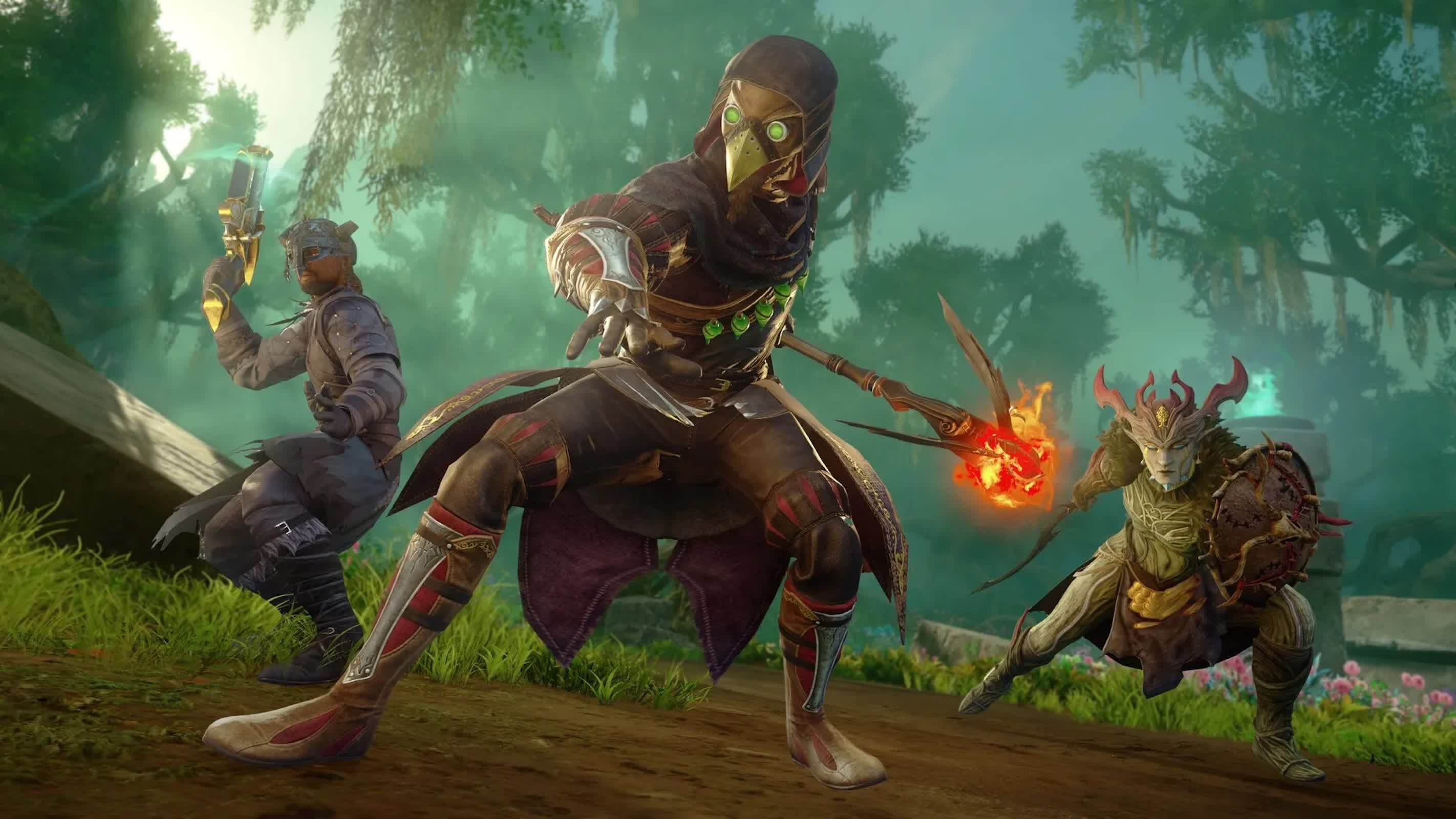
Amazon's ambitious online role-playing game New World is headed for closure, marking the end of a turbulent chapter in the company's game development efforts. The company announced earlier this week that servers for New World: Aeternum will go offline at the end of January.
Effective immediately, the title has been delisted from console and PC storefronts, meaning new players can no longer purchase or join the game as it enters its final year.
When New World launched in 2021, it became one of Steam's biggest multiplayer hits, drawing nearly one million concurrent players at its peak. Despite this record-setting start, the MMO struggled to maintain engagement amid criticism of repetitive quest design, technical inconsistencies, and a thin endgame. Even as Amazon rolled out content updates and attempted to stabilize server performance across its global data center network, the player base continued to shrink.
What was once positioned as Amazon's entry into the blockbuster MMO space has now dwindled into an end-of-service announcement. Yet the game's pending shutdown has sparked an unexpected response from one of the industry's most outspoken developers.
25m, final offer @amazongames
– Alistair McFarlane (@Alistair_McF) January 15, 2026
Alistair McFarlane, COO and director at Facepunch Studios – the team behind Rust – publicly offered $25 million to purchase New World from Amazon Game Studios. His post on X described the bid as a "final offer," anchored by the belief that "games should never die."
While the message appeared in a thread filled with humor among developers, it captured widespread attention, raising the question of whether McFarlane's sentiment was more serious than it seemed.
In a follow-up message, McFarlane suggested that New World's developers could instead give greater control to the community by making servers publicly hostable. That approach, he argued, would allow the game to outlive official corporate support. "A game will live forever in the hands of a dedicated community," he wrote – a philosophy that has defined Facepunch's approach to its own long-lived sandbox titles.
Other developers joined the conversation with light-hearted commentary. Palworld's communications director, Bucky, replied with an offer to "go halfs" on the purchase if they could relaunch New World's original alpha as a distinct mode. McFarlane responded enthusiastically. Simon Collins-Laflamme, creator of the newly launched Hytale, also chimed in, jokingly offering advice on "buying cancelled games."
Whether or not McFarlane's proposal had substance, it spotlighted a growing debate in gaming communities over the ownership and preservation of online worlds. As more large-scale titles operate entirely on proprietary data centers, their eventual shutdowns can erase years of collaborative player history. Developers like McFarlane continue to advocate for open, hostable infrastructures that allow fans to sustain those worlds beyond their commercial lifespans.
"Games should never die": Rust dev offers $25M to save Amazon's MMO New World


