Geely's new charging system takes EVs from 10% to 70% in 4 minutes, 30 seconds

Skye Jacobs

Posts: 2,215   +63
Staff
Forward-looking: Geely says its next-generation EV charging system uses AI to charge a battery from 10% to 70% in 4 minutes and 30 seconds. The system will debut with the company's latest smart charging station, which can deliver up to 2,250 kilowatts of peak power. The rollout means to put Geely in closer competition with BYD as Chinese automakers use charging technology to differentiate themselves in an increasingly crowded EV market.
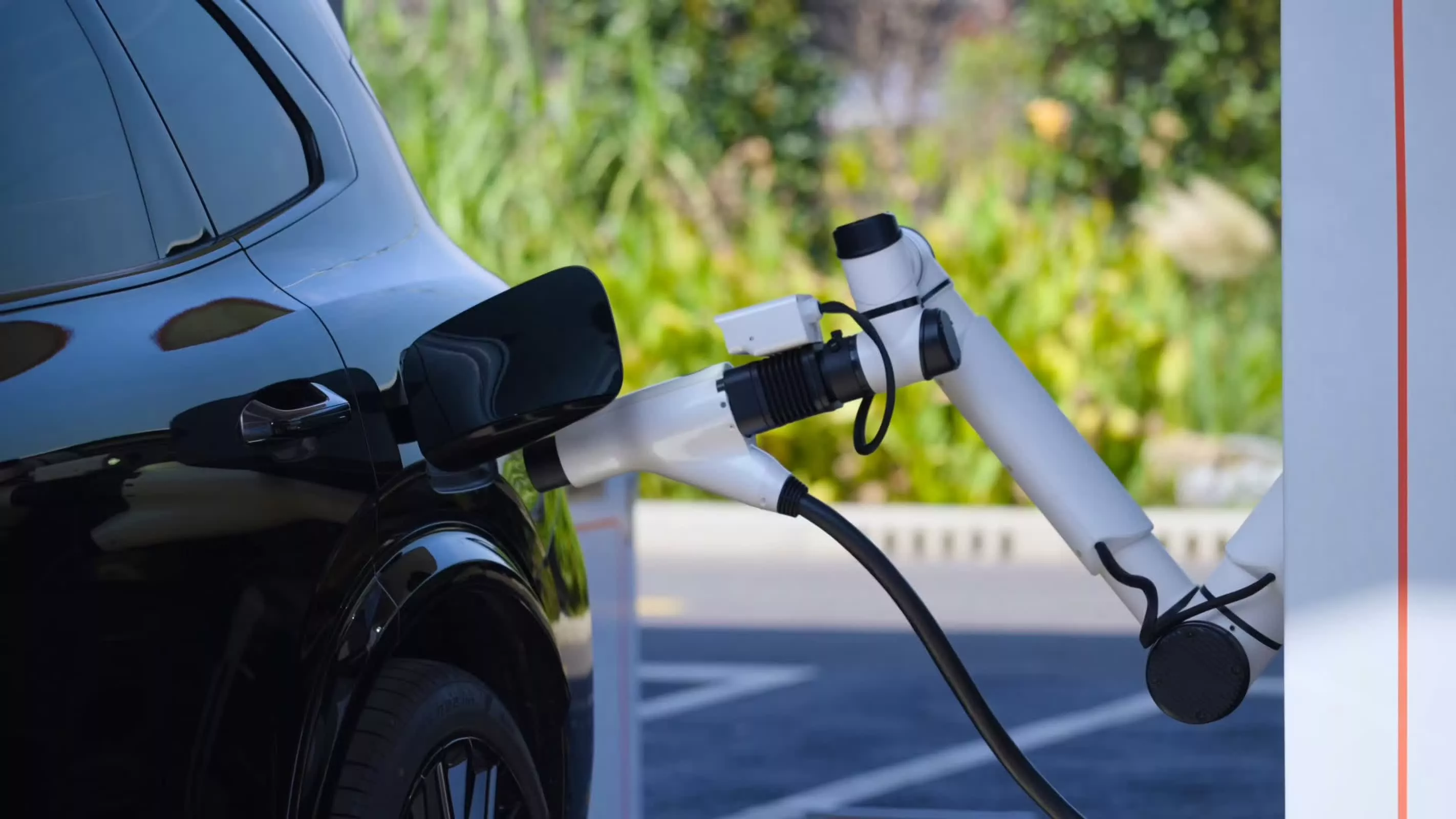
The Chinese automaker said it tested the system on a Zeekr 001 sedan and a Lynk & Co 10 hybrid. In both cases, the vehicles reached a 97% charge in less than nine minutes. Geely said its software predicts battery temperature during charging and adjusts power flow accordingly.

The company explains that high-speed charging is not simply about delivering more electricity. Batteries can overheat or degrade if they are pushed too hard, particularly at high states of charge. Geely says its algorithms help manage those limits by anticipating changes in battery temperature and tailoring the charging process in real time.

Earlier this year, BYD introduced a charging system that it said could take a battery from 10% to 70% in five minutes. Both companies are betting that faster charging will become a bigger selling point as China's EV market becomes increasingly crowded.

For automakers, cutting charging times could help address one of the persistent concerns around electric vehicles: how long drivers must wait at a charger, especially on longer trips. Battery range remains important, but charging speed, charger availability, and the ability to maintain high power without damaging the battery are increasingly part of the purchasing decision.

Geely has been building out its own battery and charging technology as it seeks to narrow the gap with BYD, China's top-selling auto brand since 2023. BYD has also surpassed Tesla to become the world's largest electric vehicle manufacturer.

Based in Hangzhou, Geely has been developing products that compete directly with BYD's vehicles, batteries, and charging systems. Its latest announcement suggests the company wants to compete not only on vehicle models and pricing, but also on the charging experience that supports those vehicles.

The company briefly pulled ahead of BYD in sales during the first two months of the year, recording its largest lead over the rival since 2022. Geely fell behind again in the months that followed, however.

Geely's reported result is only 30 seconds faster than BYD's claim for charging from 10% to 70%. But the company is also emphasizing the role of AI in managing the process. If the system works as described outside controlled tests, Geely could use it to make ultra-fast charging more reliable across different vehicle models and battery conditions.

Permalink to story:

 
That's great. I own a Chevy Equinox EV. I drive 4 miles to work and 4 miles back home, and it takes 3 hours to recover that charge on average with a level 2 charger.

That's nearly a half hour of charge time to recover the battery for each mile driven. It's fine for me because I don't drive much, but if you're someone who drives a lot, you'll never be able to keep up with the time required for charging.
 
That's great. I own a Chevy Equinox EV. I drive 4 miles to work and 4 miles back home, and it takes 3 hours to recover that charge on average with a level 2 charger.

That's nearly a half hour of charge time to recover the battery for each mile driven. It's fine for me because I don't drive much, but if you're someone who drives a lot, you'll never be able to keep up with the time required for charging.
So... you use a garbage charger, THEREFORE you'll never be able to keep up. How or why, never found out. I guess you also drive while you sleep or something.
 
In the 50-60's, America was the king of auto manufacturing. During the "oil crisis" the land yachts were pretty much shelved and the Japanese moved in and captured a lot of the car market. Then the Koreans came along and now it is the Chinese.
 
That's great. I own a Chevy Equinox EV. I drive 4 miles to work and 4 miles back home, and it takes 3 hours to recover that charge on average with a level 2 charger.

That's nearly a half hour of charge time to recover the battery for each mile driven. It's fine for me because I don't drive much, but if you're someone who drives a lot, you'll never be able to keep up with the time required for charging.
That makes absolutely no sense.

Even the most basic of garbage level 2 chargers can do 6kw charging, and most are capable of 10+. Even on 110v, in 3 hours you should be able to handle 4kW of total power, and if you are tearing through that in just 8 miles of presumably city traffic, you have to be HOONING this thing while running both the AC and heated seats and towing a sailboat.

You're also likely trying to do 100% charging, which is a bad idea. You should be doing 80-20% charge before plugging in, then charge up to just 80%, since you are not covering long distance. And get that garbage no name charger fixed or replaced.
That's incredible, now let's see them deployed nationwide at scale so we can do more than read about them.
Most of these uber fast systems are manufacturer specific. like NACS was 15 years ago.

That being said, current standard 800v systems can charge the likes of the kia EV6 from 10-80 in just 17 minutes, and that tops out at just 230kW. Hypothetically, with 500kW you could do it in 9 minutes. What we need is proper standardization of the 800v system first. Many cables are limited to just 40 amps which kneecaps the 800v charging system. Aging Wheels has some great breakdowns on the limitations of stations on Youtube.

800v chargers that could do 100 amp like the spec is designed for could take most of the slack out of EV charging.
 
That's great. I own a Chevy Equinox EV. I drive 4 miles to work and 4 miles back home, and it takes 3 hours to recover that charge on average with a level 2 charger.

That's nearly a half hour of charge time to recover the battery for each mile driven. It's fine for me because I don't drive much, but if you're someone who drives a lot, you'll never be able to keep up with the time required for charging.
Honest Abe, don’t be dishonest. You’re describing the worst level 1 charging possible at 850W. You couldn’t even power a small microwave (1100W) or hair dryer (1600W) at the charge rate you describe: https://grok.com/share/bGVnYWN5_2223791c-8967-45a2-a295-31e0010659ee
Grok said:
The Chevy Equinox EV’s EPA combined efficiency is about 31 kWh/100 miles (roughly 3.2 miles per kWh) for FWD models (slightly worse for AWD, around 2.8–3.1 mi/kWh depending on exact rating).

Power received (in kW) ≈ charging rate (mi/h) ÷ efficiency (mi/kWh).
Using the EPA figure:
2.66 mi/h ÷ 3.2 mi/kWh ≈ 0.83 kW.

This aligns with real-world Level 1 (120 V) behavior. Standard 120 V charging is typically limited to ~8–12 A continuous (roughly 0.96–1.44 kW theoretical max before losses), and observed rates of ~2.5–4.5 mi/h are commonly reported depending on the exact amperage setting, temperature, and efficiency. A 2.66 mi/h rate is consistent with the lower end (around 8 A or with some charging losses).
 
Its good theres another option other then ice cars but for me ev are a no no. I dont trust the battery life of these. fast charging stresses the batteries over time.

an ice engine with maintenance can hold its power/efficiency over years. not the the same with ev. friends tesla range has gone down and down. for certain fast charging wears out the batteries more then slow charging.
 
Back